

Phase or delay matching of test RF cable for differential singal test
Leave a message
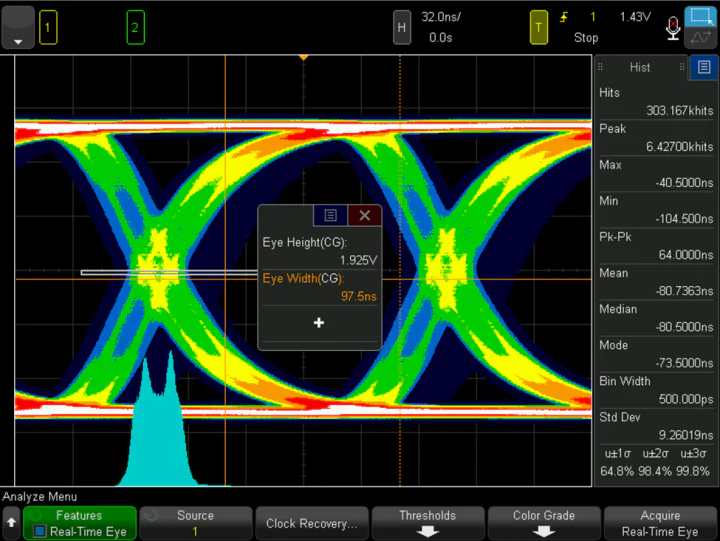
In differential signal testing, the requirement for phase or delay matching of test RF cables is primarily determined by the transmission characteristics of differential signals and the accuracy requirements of the testing scenario. This can be understood from the following key perspectives:
1. Safeguarding the Essential Characteristic of Differential Signals - The Foundation for Interference Cancellation
The core advantage of differential signals lies in their ability to cancel common-mode interference (such as electromagnetic interference and noise) through "difference calculation" at the receiver, relying on the fact that "signals on the two lines have equal amplitude and opposite polarity." If there is a mismatch in phase or delay between the two cables, it will cause a time difference or phase difference between the two signals arriving at the receiver, disrupting the synchronous relationship of "equal amplitude and opposite polarity." In such cases, interference cannot be effectively canceled and may even be amplified, directly undermining the anti-interference capability of differential signals.
2. Avoiding Signal Distortion to Ensure Testing Accuracy
The transmission of differential signals depends on the "symmetry" of the two lines:
A delay mismatch will cause the two signals to arrive at the receiver asynchronously, leading to disordered waveform overlap (e.g., misalignment between rising and falling edges) and resulting in waveform distortion;
A phase mismatch (especially in high-frequency RF scenarios) will cause the phase relationship of the signals to deviate from the designed expectations, disrupting the timing logic of the signals.
These distortions will directly affect the authenticity of test results, leading to misjudgments about signal quality and transmission performance.
3. Preventing Timing Errors to Adapt to High-Speed Signal Scenarios
In high-speed differential signal transmission (such as USB, PCIe, HDMI, etc.), the signal period is extremely short (nanosecond or even picosecond level). Even a tiny delay or phase deviation (e.g., a delay difference of a few picoseconds) may exceed the "setup time" or "hold time" of the signal, causing timing errors. This will lead to misjudgment of data logic (confusion between 0 and 1) at the receiver, increase the bit error rate, or even cause system communication failure. As an "intermediate link" in signal transmission, the matching performance of test cables directly determines whether additional timing deviations will be introduced, affecting the accurate evaluation of high-speed system performance.
4. Maintaining Signal Integrity and Reducing Secondary Interference
Cables with mismatched phase or delay will disrupt the impedance continuity of the transmission line, causing signal reflection and crosstalk:
Reflection will lead to signal superposition and oscillation, resulting in waveform distortions such as overshoot and undershoot;
Crosstalk will cause unnecessary electromagnetic coupling between the two signal lines, further interfering with the signals.
Matched cables, on the other hand, can minimize these issues, ensuring the "integrity" of the signal from the transmitter to the receiver and making test results more consistent with the actual state of the system.
In summary, phase or delay matching is a core prerequisite for ensuring the accuracy and reliability of differential signal testing. Especially in high-frequency and high-speed scenarios, its impact directly relates to the validity of test conclusions and the accuracy of system performance evaluation.


