

Your Professional Antennas Supplier
Flexi RF Inc. was founded in 2023 in Santa Clara, California - at the heart of Silicon Valley, by a team of experienced RF engineers. We specialize in the design, manufacture, and supply of passive and active RF components. Our product line includes passive components such as antennas, connectors, adapters, cable assemblies, attenuators, and loads; and active components such as amplifiers, switches, and select custom modules.


Why Choose Us
OEM and ODM
We offer both OEM and ODM services with no minimum order quantity. Whether you are developing a next-generation system or require a mature RF module solution, we provide products and technical support that scale with your innovation.
Our Services
Flexi RF offers a one-year warranty on standard products, ensuring that our service remains reliable and efficient.
Real-Time Response
Our cross-border team, spanning China and the United States, can respond to customer needs around the clock, ensuring seamless and efficient service across time zones.
Professional Team
With decades of industry experience and professional R&D as well as manufacturing facilities, our team of experienced engineers possesses strong independent innovation capabilities, enabling us to provide customers with high-quality customized RF solutions.
Specification
|
Sku |
Connector Series |
Frequency |
Gain |
Polarization |
|
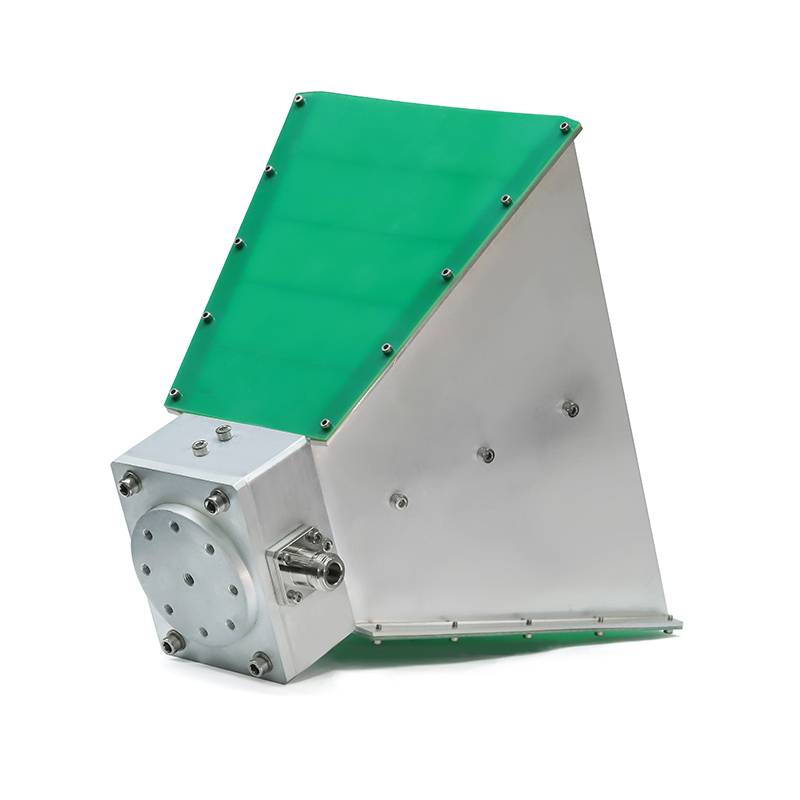
GHA7501100-WR10-25 |
WR10 |
75GHz~110GHz |
25dBi |
Linear |
|
Antenna Type |
Flange Designation |
Body Material |
Connector Material |
Number of Bands |
|
Horn |
UG-385/U |
Brass Plating Gold |
Brass Plating Gold |
Wide |
Antennas are crucial for enabling reliable and efficient wireless communication. They provide flexibility in design, allowing for optimization based on frequency range, directionality, and environmental conditions.
Antennas are fundamental in supporting emerging technologies such as 5G, the Internet of Things (IoT), and beyond, where advancements in antenna technology are essential to meet the growing demands of modern communication systems.
Antennas remain vital in our increasingly connected world, enabling the seamless transmission of data across wireless networks, satellite systems, and more.
Types of Antennas
Dipole Antenna
Consists of two conductive elements, typically straight wires or metal rods, commonly used for radio and television broadcasting.
Monopole Antenna
Similar to a dipole but with a single conductive element. Often used in applications where a ground plane is present, such as in mobile devices.
Yagi-Uda Antenna
Directional antenna with multiple parallel elements, including a driven element, reflector, and one or more directors. Widely used for television reception and amateur radio.
Patch Antenna
A flat, planar antenna with a radiating patch on a substrate; commonly used in Wi-Fi and RFID applications.
Parabolic Reflector Antenna
Features a parabolic dish with a feed antenna at its focal point, used in satellite communication, radar systems, and microwave point-to-point links.
Horn Antenna
Shaped like a horn, suitable for wideband applications and high-frequency ranges, used in microwave and millimeter-wave systems.
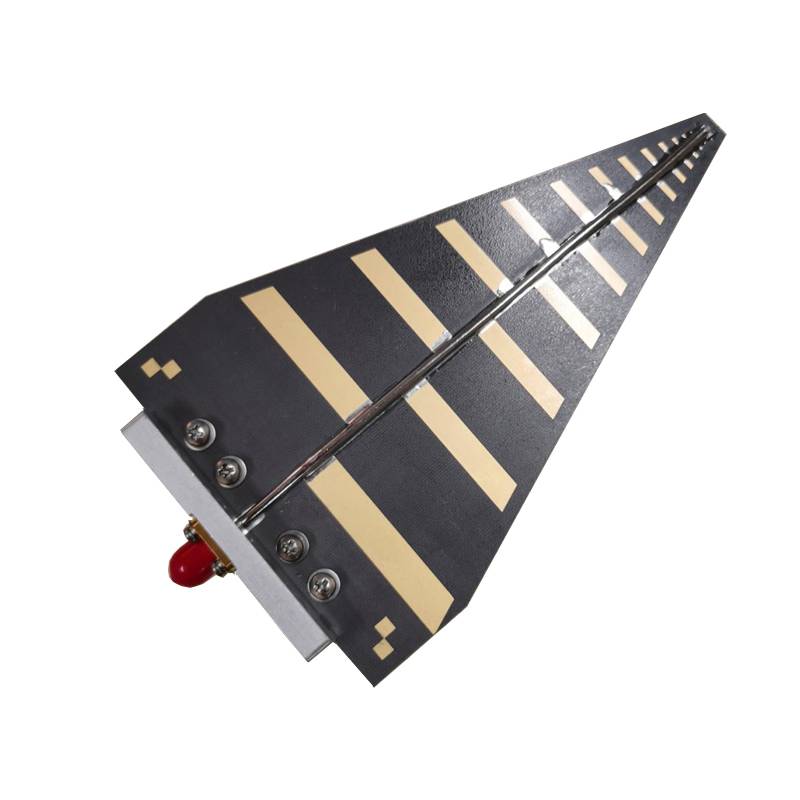
Log-Periodic Antenna
Contains a series of dipole elements of varying lengths. Exhibits consistent performance over a wide frequency range and is used in TV antennas.
Loop Antenna
Forms a closed loop of conductive material and is used in AM radio reception and inductive coupling applications.
Helical Antenna
Helical antennas are spiral-shaped with a helix structure, used for satellite communication, radio astronomy, and RFID.
Whip Antenna
A simple, vertical, and flexible antenna, commonly used in portable and mobile communication devices, such as walkie-talkies.
Cone Antenna
Shaped like a cone, used for broadband and ultra-wideband (UWB) applications.
Slot Antenna
Consists of a slot or opening in a conductive surface. Commonly used in radar and communication systems.
An antenna consists of a metal conductor that conveys radio frequency (RF) waves between two points in space. This device can either transmit a signal or receive one. When a voltage is applied to a transmitting antenna, it generates radio signals which travel to a receiving antenna where the signal is converted back into electrical energy in the form of information.
The Application of Antennas
Telecommunications: Antennas are essential for wireless communication systems. They facilitate seamless voice calls, data transmission, and internet connectivity. From cellular network towers to antennas embedded in smartphones, they enable us to stay connected and access information on the go.
Broadcasting: Antennas play a crucial role in distributing radio and television signals. Broadcasting antennas, whether on towers or built into devices, ensure the delivery of entertainment, news, and information to millions of households.
Satellite Communication: Antennas enable the transmission of signals between Earth and satellites, facilitating global communication, weather forecasting, navigation, and remote sensing. Satellite-based applications like GPS navigation, satellite TV, and internet services rely on antennas.
Aerospace: Antennas are vital for communication and navigation systems in aircraft. They enable pilots to stay connected with air traffic control, exchange critical information, and ensure safe flights. Antennas also contribute to space exploration missions, enabling data transmission between spacecraft and ground stations.
Internet of Things (IoT): Antennas enable wireless connectivity for a wide range of devices in the IoT ecosystem. They facilitate data exchange and communication between interconnected devices, powering smart home systems, wearable gadgets, industrial sensors, and autonomous vehicles.
Radar Systems: Antennas are integral components of radar systems used in weather monitoring, air traffic control, and military surveillance. They enable accurate detection, tracking, and imaging of objects in the air, on land, and at sea.
Scientific Research: Antennas find applications in scientific research, such as radio astronomy and space exploration. They enable the collection and analysis of electromagnetic signals from celestial bodies, contributing to our understanding of the universe.
Medical Devices: Antennas are used in medical applications like wireless monitoring systems, implantable devices, and diagnostic equipment. They enable the transmission of vital data and support wireless communication in healthcare settings.
Scientific Research: Antennas find applications in scientific research, such as radio astronomy and space exploration. They enable the collection and analysis of electromagnetic signals from celestial bodies, contributing to our understanding of the universe.
Military and Defense: Antennas are essential in military applications for communication, surveillance, and radar systems. They facilitate secure and reliable wireless communication in challenging environments.
Customization Services
To better meet the diverse needs of different industries and customers, we can tailor antennas professional solutions to your specific application scenarios and special requirements. For further information or support, please feel free to contact us.
Order Process
Contact Customer Service
1
>>
Submit Order
2
>>
Obtain a Quote
3
>>
Confirm Order
4
>>
Arrange Payment
5
>>
Track Order
6
>>
Receive and Inspect Goods
7
Packaging and Shipping
|
Packaging |
Plastic bags, paper boxes |
|
Transportation methods |
Road transport, rail transport, sea transport, air transport |
FAQ
We're professional antennas manufacturers and suppliers in USA, specialized in providing high quality customized service. We warmly welcome you to buy high-grade antennas in stock here from our factory.
Brass Plating Gold Horn antennas, 75GHz 110GHz Horn antennas, Horn Antennas