

Can phase trimmers be used in DC circuits?
Leave a message

In the world of electrical engineering and circuit design, the choice of components can significantly impact the performance and functionality of a system. One such component that often sparks curiosity is the phase trimmer. As a supplier of Phase Trimmers, I am frequently asked whether phase trimmers can be used in DC (Direct Current) circuits. In this blog post, I will delve into the technical aspects of phase trimmers, explore their typical applications, and analyze the feasibility of using them in DC circuits.
Understanding Phase Trimmers
A phase trimmer is a device designed to adjust the phase angle of an electrical signal. It is commonly used in alternating current (AC) circuits, where the voltage and current vary sinusoidally with time. The phase angle between the voltage and current waveforms is crucial in many applications, such as power transmission, signal processing, and communication systems.
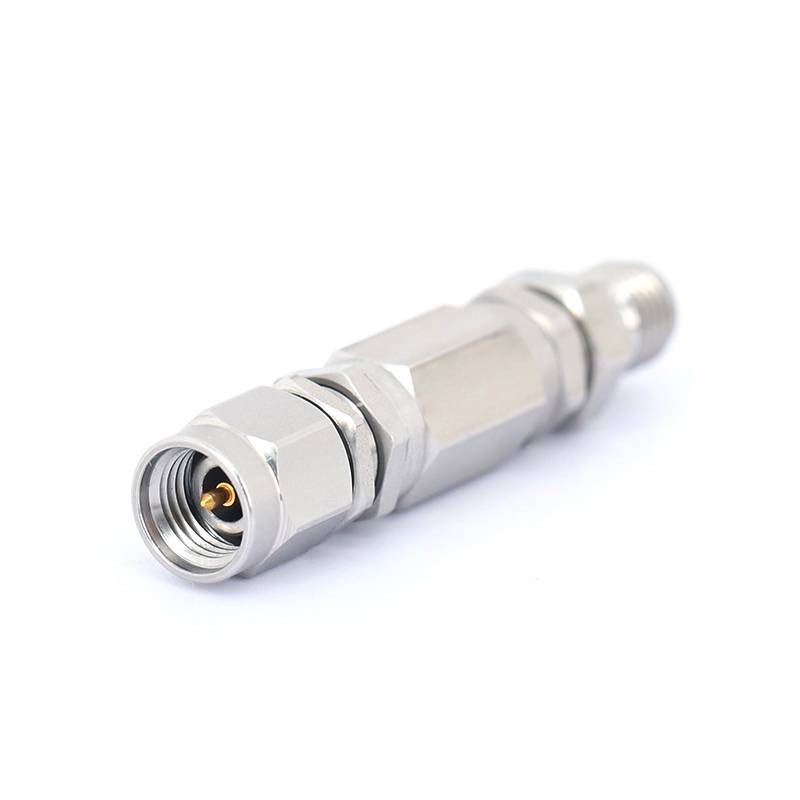
Phase trimmers work by introducing a variable phase shift in the signal path. They typically consist of a variable capacitor or inductor, which can be adjusted manually or electronically. By changing the capacitance or inductance value, the phase angle of the signal passing through the trimmer can be altered. This allows engineers to fine - tune the phase relationship between different signals in a circuit, optimizing the overall performance.

Typical Applications of Phase Trimmers
In AC circuits, phase trimmers find a wide range of applications. In power systems, they are used to improve power factor correction. Power factor is a measure of how effectively electrical power is being used. A low power factor can result in increased energy consumption and higher electricity bills. Phase trimmers can be used to adjust the phase angle between the voltage and current waveforms, bringing the power factor closer to unity and reducing energy losses.
In communication systems, phase trimmers are used to align the phases of different signals. For example, in a multi - antenna system, the signals received by each antenna may have different phase offsets. By using phase trimmers, the phases of these signals can be adjusted to ensure proper beamforming and interference cancellation, improving the overall signal quality and communication range.
In audio systems, phase trimmers are used to correct phase imbalances between different audio channels. This helps to create a more immersive and accurate soundstage, enhancing the listening experience.
Characteristics of DC Circuits
Before we can determine whether phase trimmers can be used in DC circuits, it is important to understand the characteristics of DC circuits. In a DC circuit, the voltage and current are constant over time. Unlike AC circuits, where the voltage and current vary sinusoidally, DC circuits have a fixed polarity and magnitude.
The concept of phase angle, which is central to the operation of phase trimmers, is not applicable in DC circuits. Phase angle is defined as the angular difference between two sinusoidal waveforms, and since DC signals do not have a sinusoidal variation, there is no phase angle to adjust.
Feasibility of Using Phase Trimmers in DC Circuits
Based on the above understanding, it may seem that phase trimmers have no place in DC circuits. However, there are some scenarios where the functionality of a phase trimmer can be adapted for use in DC applications, albeit in a different way.
One such scenario is in DC - to - DC converters. In a DC - to - DC converter, the input DC voltage is converted to an output DC voltage of a different level. Some advanced DC - to - DC converters use pulse - width modulation (PWM) techniques to control the output voltage. In these converters, the phase relationship between different PWM signals can affect the performance of the converter, such as its efficiency and output ripple.
Although strictly speaking, there is no phase angle in the traditional sense for DC signals, the relative timing or delay between different control signals in a DC - to - DC converter can be adjusted in a way similar to phase adjustment. A phase trimmer, in this case, could be used as a variable delay element. By adjusting the capacitance or inductance in the trimmer, the time delay of a control signal can be changed, allowing engineers to optimize the operation of the DC - to - DC converter.
Another possible application is in DC motor control. In a DC motor, the speed and torque can be controlled by varying the voltage applied to the motor. Some advanced motor control systems use multiple control signals to regulate the motor's performance. The relative timing of these control signals can be adjusted using a device similar to a phase trimmer to improve the motor's efficiency, reduce torque ripple, and enhance overall control accuracy.
Limitations and Considerations
While there are some potential applications for phase trimmers in DC circuits, it is important to note that there are also limitations and considerations.
First, the design of phase trimmers is optimized for AC applications. They are typically designed to operate over a specific frequency range, and their performance may degrade when used in DC applications. For example, the parasitic components in a phase trimmer, such as resistance and stray capacitance, may have a different impact on DC signals compared to AC signals.
Second, the cost - effectiveness of using a phase trimmer in a DC circuit needs to be evaluated. Phase trimmers can be relatively expensive components, and there may be more cost - effective alternatives available for achieving the same functionality in DC applications. For example, simple RC or RL circuits can be used as variable delay elements in some cases, providing a more economical solution.
Conclusion
In conclusion, while phase trimmers are primarily designed for use in AC circuits, there are some niche applications in DC circuits where their functionality can be adapted. The concept of phase adjustment in DC circuits is different from that in AC circuits, mainly involving the adjustment of relative timing or delay between control signals. However, there are limitations and cost - effectiveness considerations that need to be taken into account.
As a supplier of Phase Trimmers, I understand the diverse needs of our customers. Whether you are working on an AC or DC circuit project, our team of experts is ready to assist you in selecting the right components for your application. If you have any questions or are interested in purchasing phase trimmers for your project, we encourage you to contact us for a detailed discussion and to explore the best solutions for your specific requirements.
References
- Electric Circuits, 10th Edition, James W. Nilsson and Susan A. Riedel.
- Power Electronics: Converters, Applications, and Design, 4th Edition, Ned Mohan, Tore M. Undeland, and William P. Robbins.
- Communication Systems Engineering, 2nd Edition, John G. Proakis and Masoud Salehi.


