

What is the contact resistance of Coax Connectors?
Leave a message

Contact resistance is a critical parameter when it comes to coax connectors. As a leading supplier of coax connectors, we understand the significance of this concept and its implications for the performance of electronic systems. In this blog, we will delve into what contact resistance is, why it matters, and how it affects the functionality of coax connectors.
Understanding Contact Resistance
Contact resistance refers to the resistance encountered at the interface between two conductors when they are in contact with each other. In the context of coax connectors, it is the resistance that occurs at the points where the connector makes contact with the cable or other mating components. This resistance is not a fixed value and can be influenced by several factors, including the material properties of the conductors, the surface finish, the contact force, and the presence of contaminants.
The basic principle behind contact resistance can be explained by the fact that when two conductors come into contact, the actual area of contact is much smaller than the apparent area. This is due to the microscopic irregularities on the surfaces of the conductors. As a result, the current has to flow through these small contact spots, which increases the resistance. The formula for contact resistance is based on the constriction of the current path and the resistivity of the materials involved.
Factors Affecting Contact Resistance
Material Properties
The choice of materials for the coax connector plays a significant role in determining the contact resistance. Metals with high conductivity, such as copper and silver, are commonly used because they offer low resistance. For example, copper has a relatively low resistivity, which means that it allows current to flow more easily. However, the surface of these metals can oxidize over time, especially in the presence of moisture and oxygen. Oxidation can increase the contact resistance as the oxide layer is less conductive than the base metal. To mitigate this issue, connectors are often plated with materials like gold or nickel, which are more resistant to oxidation.
Surface Finish
The surface finish of the connector also affects contact resistance. A smooth and clean surface provides a larger effective contact area, which reduces the resistance. Rough surfaces, on the other hand, have fewer contact points, leading to higher resistance. Additionally, the surface finish can influence the adhesion of contaminants. A well - finished surface is less likely to trap dirt, dust, or other particles that can increase the contact resistance.
Contact Force
The force applied at the contact interface is another crucial factor. Adequate contact force ensures a good electrical connection by increasing the effective contact area. When the contact force is too low, the conductors may not be in full contact, resulting in higher resistance. Conversely, excessive contact force can damage the connector or the cable, which can also have a negative impact on the contact resistance. Therefore, it is essential to design connectors with the appropriate contact force to maintain a stable and low - resistance connection.
Contaminants
Contaminants such as dirt, oil, and moisture can significantly increase the contact resistance. These substances can act as insulators, preventing the smooth flow of current between the conductors. For example, a thin layer of oil on the contact surface can create a barrier that increases the resistance. To prevent contamination, connectors should be stored and handled properly, and protective caps can be used when the connectors are not in use.
Importance of Low Contact Resistance in Coax Connectors
Signal Integrity
In high - frequency applications, low contact resistance is essential for maintaining signal integrity. Coax connectors are commonly used in applications such as telecommunications, aerospace, and test and measurement, where accurate signal transmission is crucial. High contact resistance can cause signal attenuation, distortion, and reflection. Signal attenuation refers to the loss of signal strength as it travels through the connector. Distortion can change the shape of the signal, leading to errors in data transmission. Reflection occurs when a portion of the signal is bounced back due to impedance mismatches caused by high contact resistance.
Power Efficiency
In power - handling applications, low contact resistance is necessary to minimize power loss. When current flows through a connector with high resistance, some of the electrical energy is converted into heat. This not only wastes power but can also cause the connector to overheat, which can damage the connector and other components in the system. By reducing the contact resistance, we can improve the power efficiency of the system and extend the lifespan of the components.
System Reliability
Low contact resistance contributes to the overall reliability of the system. Connectors with stable and low contact resistance are less likely to experience intermittent connections or failures. In critical applications such as military and medical devices, system reliability is of utmost importance. A single connector failure can lead to system malfunctions, which can have serious consequences.
Measuring Contact Resistance
There are several methods for measuring the contact resistance of coax connectors. One common method is the four - point probe technique. In this method, two outer probes are used to apply a known current through the connector, while two inner probes are used to measure the voltage drop across the contact interface. By using Ohm's law (V = IR), the contact resistance can be calculated. Another method is the two - point probe technique, which is simpler but less accurate as it includes the resistance of the test leads in the measurement.
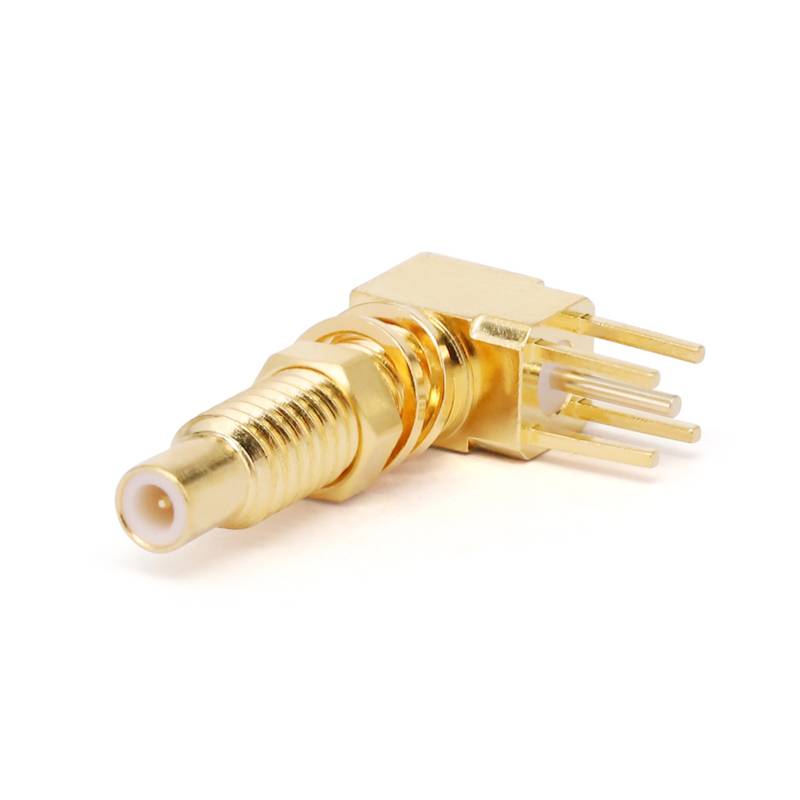

Our Coax Connector Solutions
As a supplier of coax connectors, we offer a wide range of products designed to minimize contact resistance. Our connectors are made from high - quality materials with excellent conductivity and are plated with corrosion - resistant finishes to ensure long - term performance. We pay close attention to the surface finish of our connectors, using advanced manufacturing processes to achieve smooth and clean surfaces. Our engineering team carefully designs the connectors to provide the optimal contact force, ensuring a reliable and low - resistance connection.
We offer different types of coax connectors, including Multi - coax Connectors, Terminal Connectors, and PCB Connectors. Each type is tailored to specific applications, providing the best possible performance in terms of contact resistance and other electrical parameters.
Conclusion
Contact resistance is a vital aspect of coax connector performance. Understanding the factors that affect contact resistance and how to measure it is essential for ensuring the proper functioning of electronic systems. As a supplier, we are committed to providing high - quality coax connectors with low contact resistance. Whether you are looking for connectors for high - frequency signal transmission or power - handling applications, our products are designed to meet your needs.
If you are interested in our coax connectors or have any questions about contact resistance, we invite you to contact us for a detailed discussion. Our team of experts is ready to assist you in selecting the right connectors for your specific requirements and to provide you with the best possible solutions.
References
- "RF and Microwave Engineering Handbook" by Inder Bahl, Prakash Bhartia, and Amitabh Trivedi.
- "Connectors: Technology and Applications" by E. J. Rymaszewski.
- Technical papers on coax connector design and performance from industry research institutions.


