
What is the difference between coaxial and non - coaxial PCB connectors?
Leave a message

Hey there! As a supplier of PCB connectors, I often get asked about the difference between coaxial and non - coaxial PCB connectors. So, I thought I'd break it down for you in this blog post.
Let's start with coaxial PCB connectors. Coaxial connectors are designed to carry high - frequency signals with minimal loss. They consist of a central conductor, which is surrounded by an insulating layer, and then an outer conductor. This structure helps to isolate the signal in the central conductor from external interference.
One of the key advantages of coaxial connectors is their excellent shielding properties. The outer conductor acts as a shield, preventing electromagnetic interference (EMI) from affecting the signal in the central conductor. This makes them ideal for applications where signal integrity is crucial, such as in telecommunications, aerospace, and high - speed data transmission.
For example, in a telecommunications network, coaxial connectors are used to connect antennas to base stations. The high - frequency signals transmitted between these components need to be as pure as possible, and the shielding provided by coaxial connectors ensures that. If you're interested in coaxial connectors, you can check out our Coax Connectors page.
Another type of coaxial connector worth mentioning is the end - launch connector. End - launch connectors are specifically designed to be mounted at the edge of a PCB. They provide a convenient way to connect a coaxial cable to a PCB, and they're often used in applications where space is limited. You can find more about them on our End Launch Connectors page.
Now, let's talk about non - coaxial PCB connectors. Non - coaxial connectors come in a wide variety of types, such as pin headers, sockets, and board - to - board connectors. Unlike coaxial connectors, they don't have the same shielding structure.
Non - coaxial connectors are generally used for lower - frequency applications or where cost is a major factor. For instance, in consumer electronics like smartphones and tablets, non - coaxial connectors are commonly used to connect different internal components. These devices don't always require the high - performance shielding that coaxial connectors offer, so non - coaxial connectors are a more cost - effective solution.

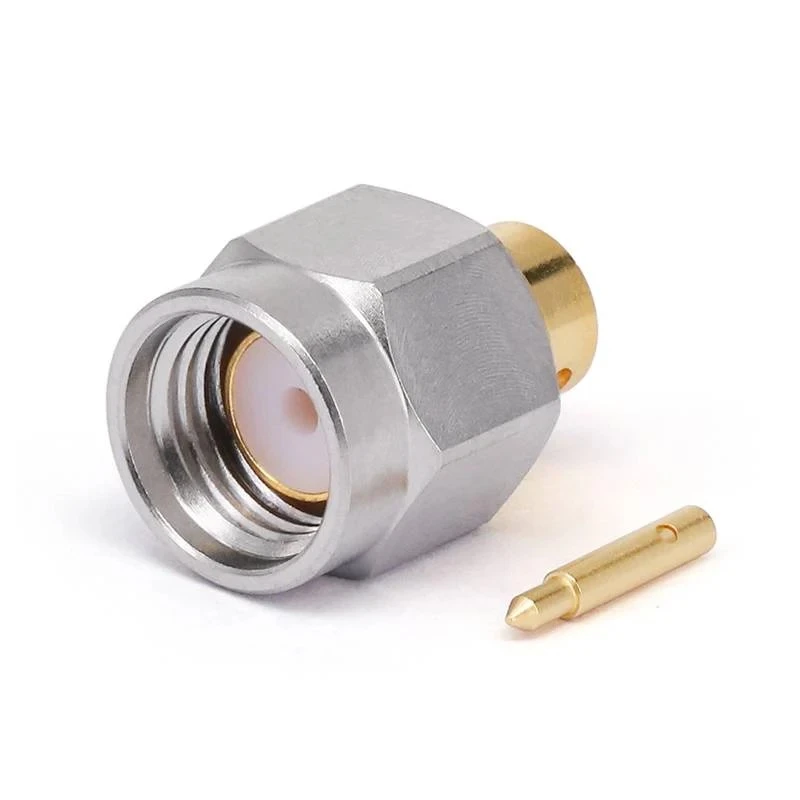
One of the main differences between coaxial and non - coaxial connectors is their impedance characteristics. Coaxial connectors are designed to have a specific impedance, usually 50 or 75 ohms, which is crucial for maintaining signal integrity at high frequencies. Non - coaxial connectors, on the other hand, may have a wider range of impedance values, depending on their design and application.
In terms of installation, coaxial connectors can be a bit more challenging to install compared to non - coaxial connectors. Coaxial connectors often require precise alignment and soldering techniques to ensure proper electrical contact and shielding. Non - coaxial connectors, especially simple pin headers and sockets, are relatively easy to install and can be quickly attached to a PCB.
Another aspect to consider is the durability. Coaxial connectors are typically more robust and can withstand higher levels of vibration and shock. This makes them suitable for use in harsh environments, such as in automotive or industrial applications. Non - coaxial connectors may be more delicate, especially some of the smaller connectors used in consumer electronics.
When it comes to signal capacity, coaxial connectors can handle higher data rates and frequencies. This is because of their shielding and the way they're designed to minimize signal loss. Non - coaxial connectors are usually limited in terms of the frequency and data rate they can support.
Now, let's talk about dust protection. Whether you're using coaxial or non - coaxial connectors, dust can be a problem. Dust can accumulate on the connectors and cause poor electrical contact or even damage the connectors over time. That's why we offer Connector Dust Caps to protect your connectors from dust and other contaminants.
In summary, the choice between coaxial and non - coaxial PCB connectors depends on several factors. If you need high - frequency performance, excellent shielding, and can afford the cost, coaxial connectors are the way to go. On the other hand, if you're working on a lower - frequency application or need a cost - effective solution, non - coaxial connectors are a better choice.
As a PCB connectors supplier, we have a wide range of both coaxial and non - coaxial connectors to meet your needs. Whether you're a small - scale electronics hobbyist or a large - scale manufacturer, we've got you covered.
If you're interested in purchasing our PCB connectors or have any questions about which type of connector is right for your project, don't hesitate to get in touch. We're here to help you make the best choice for your application.
References:
- Various industry standards and technical documents related to PCB connectors
- Internal product knowledge and experience from our R & D and sales teams


