

What are the applications of lumped - element RF isolators?
Leave a message

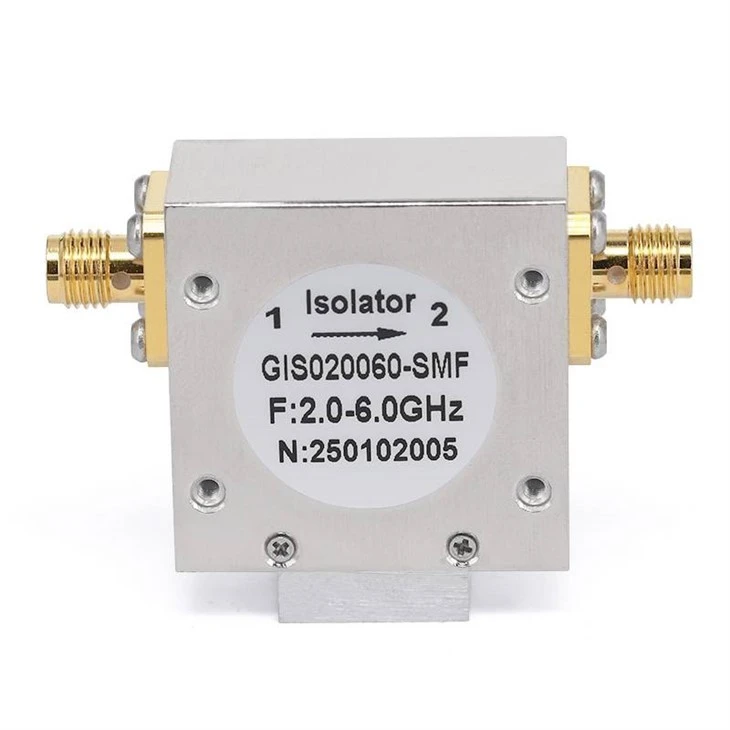
Hey there! As a supplier of RF isolators, I'm super stoked to dive into the world of lumped - element RF isolators and chat about their cool applications. So, what exactly are lumped - element RF isolators? Well, they're passive two - port devices that let RF signals flow in one direction while blocking them in the opposite direction. This unidirectional property makes them a must - have in loads of RF and microwave systems.
Wireless Communication Systems
Let's kick things off with wireless communication systems. In today's world, we're all about staying connected, whether it's through our smartphones, tablets, or smartwatches. Lumped - element RF isolators play a crucial role in these systems.
In a base station, for example, the isolator is placed between the power amplifier (PA) and the antenna. The PA pumps out a high - power RF signal to send data over the airwaves. But sometimes, there can be reflections coming back from the antenna due to impedance mismatches or environmental factors. These reflections can mess with the performance of the PA, causing it to overheat or even fail. That's where the lumped - element RF isolator steps in. It absorbs the reflected power, protecting the PA and ensuring that the signal goes out smoothly to the antenna.
For mobile devices, like our beloved smartphones, space is at a premium. Lumped - element RF isolators are great here because they're compact and can be easily integrated into the small form factor of these devices. They help in maintaining the quality of the transmitted and received signals, which is essential for clear voice calls and fast data transfer. If you're interested in high - frequency isolators for wireless communication, check out our 18GHz RF Coaxial Isolators.
Radar Systems
Radar systems are another area where lumped - element RF isolators shine. Radar is used in a wide range of applications, from air traffic control to military surveillance.
In a radar transmitter, the isolator is used to protect the high - power RF source from reflections. The radar sends out a short pulse of RF energy and then listens for the echoes that bounce back from objects. But just like in wireless communication, there can be reflections within the system itself. These reflections can cause interference and reduce the accuracy of the radar. The isolator prevents these unwanted reflections from reaching the RF source, ensuring that the radar can operate at its best.
On the receiver side, isolators are used to improve the isolation between different stages of the receiver. This helps in reducing noise and improving the sensitivity of the radar, allowing it to detect even small objects at long distances. Our 40GHz RF Coaxial Isolators are well - suited for high - frequency radar applications.
Test and Measurement Equipment
Test and measurement equipment is all about getting accurate results. Lumped - element RF isolators are essential components in this field.
In signal generators, isolators are used to prevent the load impedance from affecting the output of the generator. A signal generator is supposed to produce a clean and stable RF signal. But if the load connected to it has an impedance that's different from the generator's output impedance, it can cause reflections that distort the signal. The isolator acts as a buffer, ensuring that the signal generator sees a constant load impedance and can produce a high - quality signal.
Spectrum analyzers also benefit from isolators. These devices are used to analyze the frequency spectrum of an RF signal. Isolators help in reducing the interference between the input signal and the internal circuitry of the spectrum analyzer. This improves the accuracy of the measurements and allows for more precise analysis of the signal. If you're looking for isolators for test and measurement, our 26.5GHz RF Coaxial Isolators could be a great fit.
Medical Equipment
Medical equipment is another area where lumped - element RF isolators are making a difference. In devices like MRI machines and RF ablation systems, isolators are used to ensure the safety and performance of the equipment.
In an MRI machine, RF isolators are used to protect the RF transmitters from reflections. The MRI uses RF pulses to create detailed images of the inside of the body. These RF pulses need to be precise and stable. Reflections can cause variations in the RF field, which can lead to artifacts in the images. The isolator helps in maintaining the quality of the RF pulses, resulting in clear and accurate MRI images.
RF ablation systems use high - frequency RF energy to destroy abnormal tissue, such as tumors. Isolators are used in these systems to protect the RF generator from the complex electrical environment inside the body. They ensure that the RF energy is delivered accurately to the target tissue, minimizing the risk of damage to surrounding healthy tissue.
Satellite Communication
Satellite communication is all about sending and receiving signals over long distances through space. Lumped - element RF isolators are vital in satellite systems.
In the satellite's transmitter, the isolator protects the high - power amplifier from reflections that can occur due to changes in the antenna's impedance as the satellite moves in orbit. These reflections can cause power loss and reduce the efficiency of the amplifier. The isolator ensures that the amplifier operates at its optimal level, allowing the satellite to send strong and clear signals back to Earth.

On the ground station side, isolators are used to improve the isolation between different parts of the receiving system. This helps in reducing noise and interference, which is crucial for receiving weak signals from satellites that are millions of miles away.
Conclusion
As you can see, lumped - element RF isolators have a wide range of applications across various industries. Whether it's keeping our wireless devices connected, making radar systems more accurate, ensuring the precision of test and measurement equipment, improving the safety of medical devices, or enabling satellite communication, these little devices play a big role.
If you're in the market for high - quality RF isolators for your specific application, we've got you covered. We offer a wide range of isolators with different frequencies and specifications to meet your needs. Don't hesitate to reach out to us for more information or to start a procurement discussion. We're here to help you find the perfect RF isolators for your project.
References
- Pozar, D. M. (2011). Microwave Engineering (4th ed.). Wiley.
- Collin, R. E. (2001). Foundations for Microwave Engineering (2nd ed.). Wiley.


