

What are the disadvantages of SMA attenuators?
Leave a message

As a supplier of SMA Attenuators, I've had the privilege of witnessing firsthand the widespread use and versatility of these essential RF components. SMA Attenuators are widely used in various RF and microwave applications to control signal levels, impedance matching, and more. However, like any technology, they come with their own set of disadvantages. In this blog post, I'll delve into some of the drawbacks associated with SMA Attenuators to provide a comprehensive understanding for potential users.
Frequency Limitations
One of the primary disadvantages of SMA Attenuators is their frequency limitations. SMA connectors are designed to operate within a certain frequency range, typically up to around 18 GHz. While this is sufficient for many applications, there are scenarios where higher frequencies are required. For instance, in modern 5G communication systems and high - speed data transmission, frequencies can exceed 20 GHz or even reach millimeter - wave frequencies. In such cases, SMA Attenuators may not be able to provide the necessary performance.
When compared to other types of attenuators like 1.85mm Attenuators and 2.92mm Attenuators, SMA Attenuators fall short in terms of high - frequency performance. 1.85mm Attenuators can operate up to 65 GHz, and 2.92mm Attenuators can reach up to 40 GHz. This limited frequency range restricts the use of SMA Attenuators in cutting - edge, high - frequency applications.
Power Handling Capacity
Another significant drawback is the power handling capacity of SMA Attenuators. SMA connectors are relatively small in size, which means they have a limited ability to dissipate heat generated by high - power signals. As a result, the power handling capacity of SMA Attenuators is generally lower compared to larger - sized attenuators.
In high - power RF systems, such as those used in radar and some wireless base stations, the power levels can be quite high. SMA Attenuators may not be able to handle these high - power signals without experiencing performance degradation or even damage. Excessive power can cause the attenuator to overheat, leading to changes in its attenuation characteristics and potentially reducing its lifespan.
Insertion Loss Variation
Insertion loss is an important parameter in attenuators, which refers to the amount of signal power that is lost when passing through the attenuator. While SMA Attenuators are designed to provide a specific attenuation value, there can be variations in insertion loss over different frequencies and operating conditions.

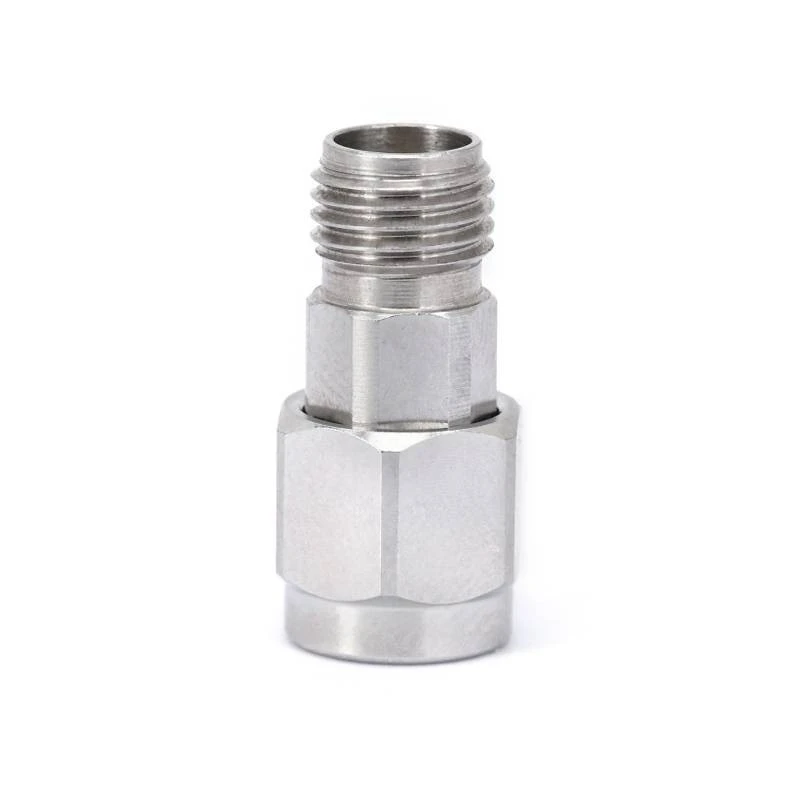
These variations can be a problem in applications where precise signal level control is required. For example, in test and measurement equipment, even small variations in insertion loss can lead to inaccurate measurements. Temperature changes can also affect the insertion loss of SMA Attenuators. As the temperature rises, the resistance of the attenuator's internal components may change, resulting in a shift in the insertion loss.
Mechanical Durability
The mechanical design of SMA Attenuators can also be a disadvantage in some applications. SMA connectors are threaded, which requires proper tightening to ensure a good electrical connection. However, over - tightening or improper installation can damage the threads, leading to poor contact and signal integrity issues.
In addition, the small size of SMA connectors makes them more vulnerable to physical damage. In environments where there is a lot of vibration, shock, or rough handling, SMA Attenuators may be more likely to break or become loose compared to larger, more robust connectors. This can lead to intermittent signal problems and increased maintenance requirements.
Cost - Benefit Consideration
When considering the overall cost - benefit ratio, SMA Attenuators may not always be the most economical choice for certain applications. While they are relatively inexpensive compared to some high - end attenuators, the need for additional components or replacement due to their limitations can increase the overall cost.
For example, if a system requires high - frequency performance and the SMA Attenuators do not meet the requirements, users may need to invest in more expensive 1.85mm or 2.92mm Attenuators. Also, the potential for mechanical damage and the need for frequent maintenance can add to the long - term cost of using SMA Attenuators.
Signal Distortion
SMA Attenuators can introduce signal distortion, especially at high frequencies or when handling complex signals. The internal components of the attenuator, such as resistors and capacitors, can cause non - linearities in the signal. These non - linearities can result in harmonic distortion, intermodulation distortion, and other forms of signal degradation.
In applications where signal purity is crucial, such as in high - fidelity audio systems or some communication systems, this signal distortion can be a major problem. The distorted signal may contain unwanted frequencies that can interfere with other signals in the system or cause errors in data transmission.
Limited Impedance Options
SMA Attenuators typically come with a limited range of impedance options. Most commonly, they are available with a 50 - ohm impedance, which is suitable for many RF applications. However, in some specialized systems, different impedance values may be required.
For example, in some military or aerospace applications, 75 - ohm impedance may be used. The lack of a wide range of impedance options can limit the flexibility of SMA Attenuators in these specialized applications. Users may need to use additional impedance - matching components, which can increase the complexity and cost of the system.
Conclusion
Despite their widespread use, SMA Attenuators have several disadvantages that need to be carefully considered when selecting RF components for a particular application. Their frequency limitations, power handling capacity, insertion loss variation, mechanical durability, cost - benefit ratio, signal distortion, and limited impedance options can all pose challenges in different scenarios.
However, it's important to note that SMA Attenuators still have their place in many applications, especially those that do not require high - frequency, high - power, or extremely precise signal control. As a supplier of SMA Attenuators, I'm committed to providing our customers with the best - possible products and solutions. If you're facing challenges in your RF system and need to evaluate whether SMA Attenuators are the right choice for you, I encourage you to reach out to us. Our team of experts can help you analyze your requirements and recommend the most suitable attenuators for your application. Whether it's SMA Attenuators or other types, we're here to support your RF needs.
References
- "RF and Microwave Engineering Handbook", by David M. Pozar
- "Microwave Devices and Circuits", by Samuel Y. Liao


