

What are the RF attenuators for RF signal generator applications?
Leave a message

RF attenuators play a crucial role in RF signal generator applications. As a supplier of RF attenuators, I am excited to share in - depth knowledge about their uses, types, and importance in this blog post.
Understanding RF Signal Generators
Before delving into the role of RF attenuators, it's essential to understand RF signal generators. These devices are used to generate radio - frequency signals with specific characteristics such as frequency, amplitude, and modulation. They are widely employed in various fields, including telecommunications, radar systems, and electronic device testing. RF signal generators are designed to produce high - quality signals, but in many real - world applications, the generated signal may be too strong for the subsequent stages of the system. This is where RF attenuators come into play.
What are RF Attenuators?
RF attenuators are passive electronic devices that reduce the amplitude of an RF signal without significantly distorting its waveform. They work by absorbing a portion of the signal's power, thereby reducing its strength. Attenuation is typically measured in decibels (dB), and the amount of attenuation can be fixed or variable.
Applications of RF Attenuators in RF Signal Generator Applications
1. Signal Level Adjustment
One of the primary applications of RF attenuators in RF signal generator setups is to adjust the signal level. In many testing scenarios, the signal generated by the RF signal generator may be too powerful for the device under test (DUT). For example, when testing sensitive RF receivers, a high - amplitude signal can cause the receiver to saturate, leading to inaccurate test results. By using an RF attenuator, the signal level can be reduced to a suitable range for the DUT. This ensures that the DUT operates within its linear range, providing reliable and accurate test data.
2. Impedance Matching
RF attenuators can also be used for impedance matching in RF signal generator applications. In RF systems, impedance matching is crucial to ensure maximum power transfer between components. When the impedance of the signal generator and the load do not match, reflections can occur, leading to signal loss and degradation. Some RF attenuators are designed with specific impedance values (e.g., 50 ohms or 75 ohms) to help match the impedance between the signal generator and the load. This improves the overall performance of the RF system by reducing reflections and minimizing signal distortion.
3. Test Environment Simulation
In some cases, RF attenuators are used to simulate real - world conditions in a test environment. For example, in wireless communication systems, the signal strength received by a mobile device can vary depending on the distance from the base station, the presence of obstacles, and other factors. By using RF attenuators, engineers can simulate different signal strengths and propagation conditions to test the performance of the wireless device under various scenarios. This helps in developing more robust and reliable wireless communication systems.
Types of RF Attenuators for RF Signal Generator Applications
Fixed Attenuators
Fixed attenuators provide a constant amount of attenuation. They are simple, reliable, and cost - effective. Fixed attenuators are available in a wide range of attenuation values, typically from a few dB to several tens of dB. They are commonly used in applications where a specific and stable attenuation level is required. For example, in a production testing environment, fixed attenuators can be used to ensure that all devices under test are exposed to the same signal level.
Variable Attenuators
Variable attenuators allow the user to adjust the attenuation level continuously or in discrete steps. This provides flexibility in RF signal generator applications, especially when the required signal level may change during the testing process. Variable attenuators can be controlled manually or electronically. Electronic variable attenuators are often used in automated test systems, where the attenuation level can be adjusted remotely using a computer or a control unit.
Step Attenuators
Step attenuators are a type of variable attenuator that provides attenuation in discrete steps. They are useful when a precise and repeatable attenuation change is required. Step attenuators typically have a set of switchable attenuation values, such as 1 dB, 2 dB, 5 dB, etc. This allows the user to adjust the signal level in a controlled manner.
Our RF Attenuator Offerings
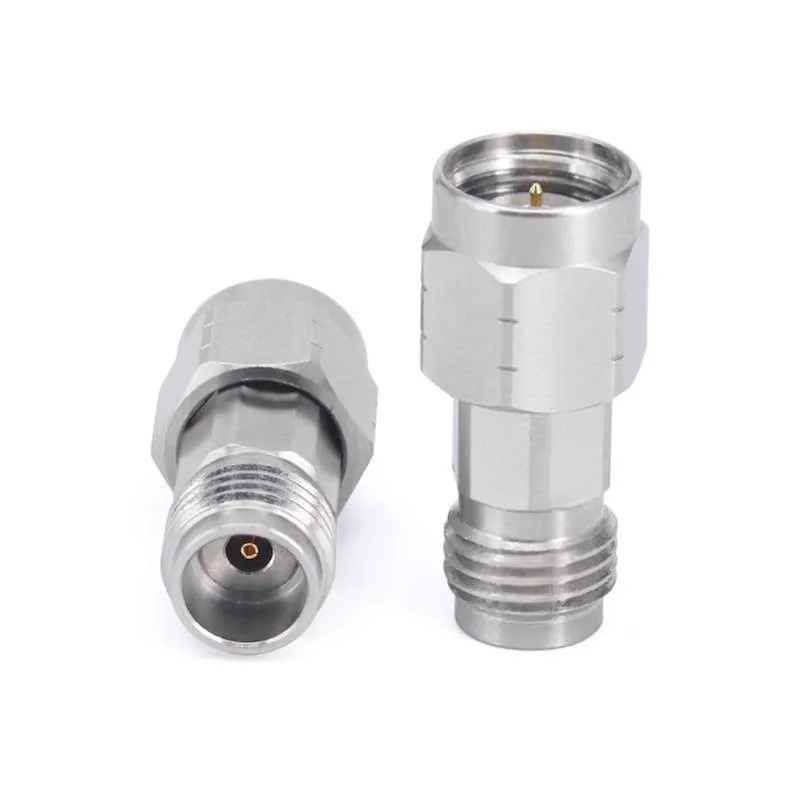
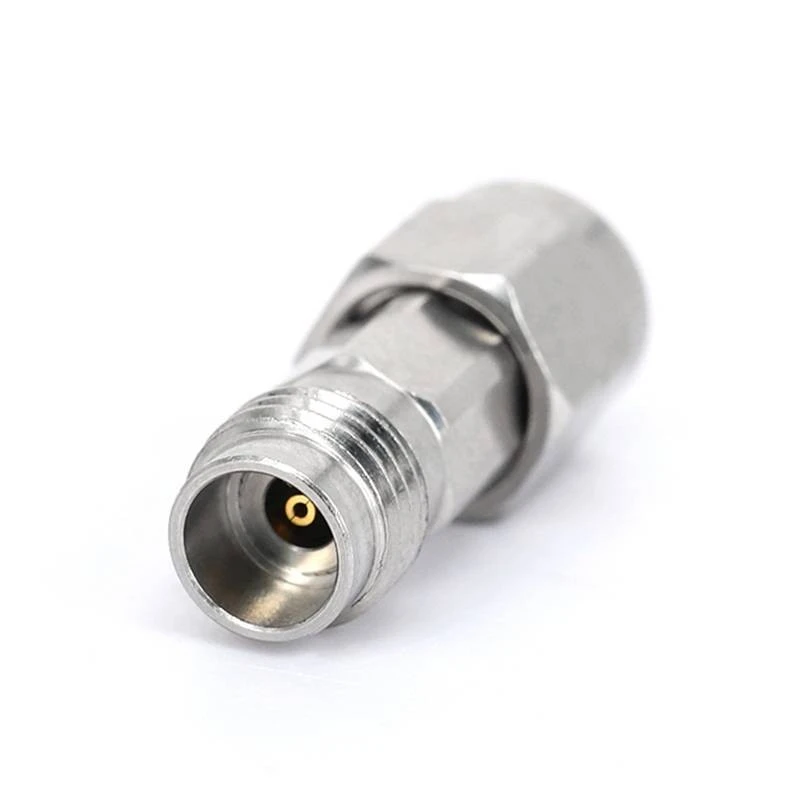
As an RF attenuator supplier, we offer a wide range of high - quality RF attenuators suitable for RF signal generator applications. Our product portfolio includes 2.92mm Attenuators, 1.85mm Attenuators, and 2.4mm Attenuators.
Our 2.92mm attenuators are designed for high - frequency applications up to 40 GHz. They offer excellent performance in terms of low insertion loss, high return loss, and accurate attenuation values. These attenuators are ideal for use in high - speed communication systems, radar systems, and other RF applications that require high - frequency operation.
The 1.85mm attenuators are suitable for even higher - frequency applications, up to 67 GHz. They are designed to meet the demanding requirements of modern RF systems, providing low - distortion and high - precision attenuation. These attenuators are commonly used in research and development laboratories, military applications, and advanced telecommunications systems.
Our 2.4mm attenuators offer a good balance between frequency performance and cost - effectiveness. They are capable of operating up to 50 GHz and are widely used in a variety of RF signal generator applications, including wireless communication testing, RF component characterization, and RF system troubleshooting.
Quality and Reliability
We understand the importance of quality and reliability in RF attenuator applications. That's why all our products are manufactured using high - quality materials and advanced manufacturing processes. Our attenuators are rigorously tested to ensure that they meet or exceed industry standards. We also provide comprehensive technical support to our customers, helping them select the right attenuator for their specific applications and providing assistance with installation and troubleshooting.
Why Choose Our RF Attenuators?
- Wide Frequency Range: Our attenuators cover a wide frequency range from a few MHz to over 67 GHz, making them suitable for a variety of RF signal generator applications.
- High Precision: We offer high - precision attenuators with accurate attenuation values and low insertion loss, ensuring reliable and consistent performance.
- Customization Options: We can customize our attenuators to meet the specific requirements of our customers. Whether you need a specific attenuation value, impedance, or form factor, we can work with you to develop a customized solution.
Contact Us for Purchase and Consultation
If you are looking for high - quality RF attenuators for your RF signal generator applications, we would be delighted to assist you. Our team of experts can provide you with detailed product information, technical advice, and competitive pricing. Whether you are a small - scale research laboratory or a large - scale manufacturing company, we have the right RF attenuator solution for you. Please feel free to contact us to discuss your requirements and start the procurement process.
References
- Pozar, D. M. (2011). Microwave Engineering (4th ed.). Wiley.
- Collin, R. E. (2001). Foundations for Microwave Engineering (2nd ed.). Wiley.
- Vendelin, G. D., Pavio, A. M., & Rohde, U. L. (1990). Microwave Circuit Design Using Linear and Nonlinear Techniques. Wiley.


