
What are the signal routing capabilities of RF circulators?
Leave a message

Hey there! As a supplier of RF circulators, I'm super stoked to chat with you about the signal routing capabilities of these awesome devices. RF circulators are pretty nifty components in the world of radio frequency technology, and they play a crucial role in a bunch of applications.
So, what exactly is an RF circulator? Well, it's a non - reciprocal three - or four - port device that routes RF signals in a specific direction. You can think of it like a traffic cop for RF signals, directing them where they need to go. The key feature of an RF circulator is its non - reciprocity, which means the signal flow is different depending on the direction it's coming from.
Let's start by looking at how these circulators work. Inside an RF circulator, there's a magnetic field that interacts with the RF signals. This magnetic field is created by a ferrite material, which is a type of ceramic with magnetic properties. When an RF signal enters one port of the circulator, the magnetic field guides it to the next port in a predefined sequence. For example, in a three - port circulator, if a signal enters port 1, it will exit through port 2; if it enters port 2, it will exit through port 3; and if it enters port 3, it will exit through port 1.
One of the main advantages of using RF circulators for signal routing is their ability to isolate different parts of a system. In a communication system, for instance, you might have a transmitter and a receiver. The circulator can be used to separate the outgoing and incoming signals, preventing the transmitter signal from interfering with the receiver. This isolation is crucial for maintaining the quality of the received signal and ensuring the proper functioning of the system.
Another cool thing about RF circulators is their low insertion loss. Insertion loss is the amount of signal power that is lost as the signal passes through the circulator. A good RF circulator will have very low insertion loss, which means that most of the signal power is transferred from one port to the next without significant attenuation. This is important because it helps to preserve the strength of the RF signal, which is especially critical in long - distance communication or high - frequency applications.
Now, let's talk about some of the specific signal routing capabilities of RF circulators in different frequency ranges.
18GHz RF Coaxial Circulators
18GHz RF Coaxial Circulators are commonly used in applications that require high - frequency signal routing. At this frequency, the circulators need to be designed with precision to ensure proper signal flow and low insertion loss. These circulators are often used in satellite communication systems, radar systems, and wireless backhaul applications. In satellite communication, for example, the 18GHz circulators can be used to route signals between the satellite transceiver and the antenna, ensuring efficient signal transmission and reception.
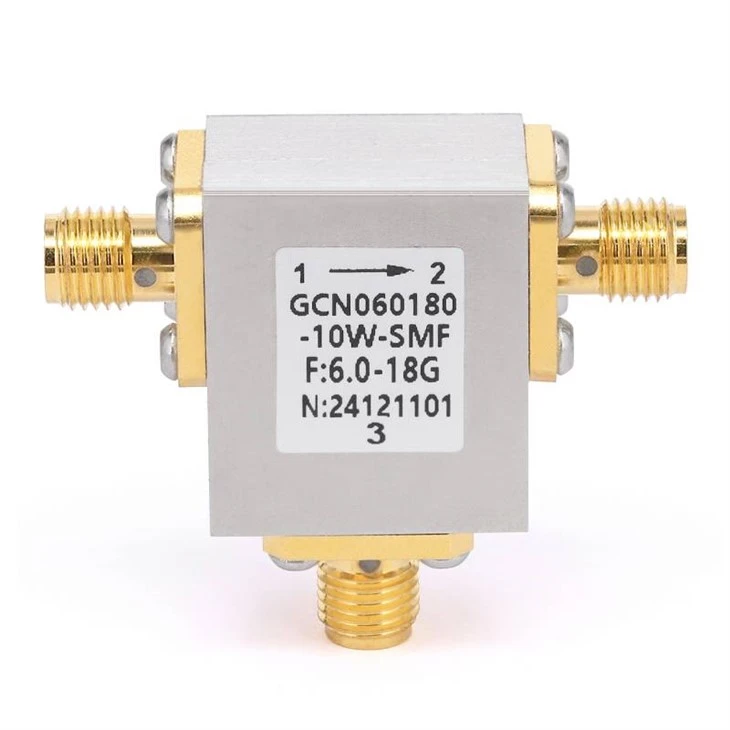
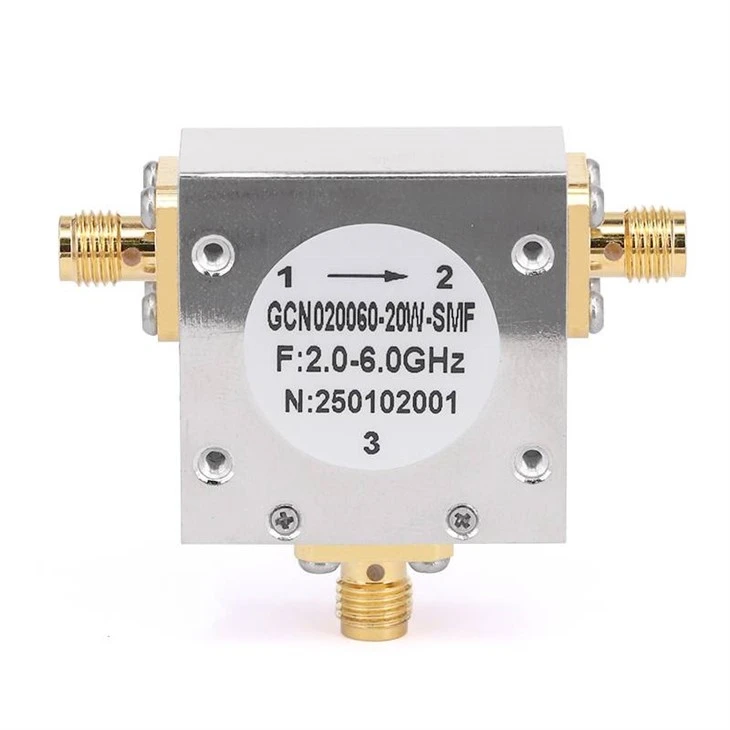
26.5GHz RF Coaxial Circulators
Moving up in frequency, 26.5GHz RF Coaxial Circulators are used in even more advanced applications. This frequency range is often associated with millimeter - wave technology, which is used in 5G communication systems, high - speed data transfer, and automotive radar. The signal routing capabilities of these circulators are crucial for the proper functioning of these systems. For example, in a 5G base station, the circulator can be used to separate the transmit and receive signals, allowing for simultaneous transmission and reception of data at high speeds.
40GHz RF Coaxial Circulators
40GHz RF Coaxial Circulators are at the higher end of the frequency spectrum and are used in very specialized applications. These circulators are often found in military communication systems, high - resolution radar, and space - based communication. At this frequency, the design and manufacturing of the circulators become even more challenging, but they offer excellent signal routing capabilities for high - frequency, high - performance applications.
In addition to their frequency - specific capabilities, RF circulators also offer flexibility in terms of their physical design. They can be designed in different sizes and configurations to fit the specific requirements of a system. For example, there are surface - mount circulators that are ideal for compact printed circuit board (PCB) designs, and there are also coaxial circulators that are suitable for larger systems or applications that require high - power handling.
When it comes to choosing an RF circulator for your application, there are a few things to consider. First, you need to determine the frequency range that your system operates in. This will help you select a circulator that is optimized for that frequency. You also need to consider the power handling capabilities of the circulator. If your system operates at high power levels, you'll need a circulator that can handle that power without overheating or causing damage.
Another important factor is the isolation requirements of your system. As mentioned earlier, isolation is crucial for preventing signal interference. You'll need to choose a circulator that provides the appropriate level of isolation for your application.
So, if you're in the market for RF circulators and are looking for high - quality products with excellent signal routing capabilities, look no further! We're a leading supplier of RF circulators, and we offer a wide range of products to meet your specific needs. Whether you need a 18GHz, 26.5GHz, or 40GHz RF coaxial circulator, we've got you covered.
If you have any questions or want to discuss your requirements in more detail, feel free to reach out to us. We're always happy to help you find the right RF circulator for your application and guide you through the procurement process. Let's work together to make your RF system perform at its best!
References
- Pozar, D. M. (2011). Microwave Engineering. John Wiley & Sons.
- Collin, R. E. (2001). Foundations for Microwave Engineering. McGraw - Hill.


