
What is the impact of RF isolators on the input impedance of antennas?
Leave a message

Hey there! As a supplier of RF isolators, I'm super stoked to chat with you about how these nifty devices impact the input impedance of antennas. It's a topic that might seem a bit technical at first, but trust me, it's pretty fascinating once you dig in.
Let's start with the basics. Antennas are all about transmitting and receiving electromagnetic waves. And for them to work efficiently, the input impedance of the antenna needs to match the impedance of the transmission line that's connected to it. If there's a mismatch, it can lead to all sorts of problems, like signal loss and reflections. That's where RF isolators come in.
RF isolators are one - way devices. They allow RF signals to pass through in one direction while blocking them in the opposite direction. They're designed to protect sensitive RF equipment from unwanted reflections and to improve the overall performance of the RF system.
Now, let's talk about how RF isolators affect the input impedance of antennas. When an RF isolator is connected between the antenna and the transmission line, it can change the effective input impedance seen by the antenna.
One of the key ways an RF isolator impacts the input impedance is by providing a high - impedance load in the reverse direction. This means that any reflected signals from the antenna or the transmission line are absorbed by the isolator instead of being sent back to the source. By doing so, the isolator helps to stabilize the input impedance of the antenna.
For example, in a mobile phone antenna system, the RF isolator can prevent the reflected signals from the power amplifier from reaching the antenna. This not only improves the antenna's efficiency but also ensures that the input impedance of the antenna remains within the desired range. This is crucial because a stable input impedance allows the antenna to radiate the RF energy more effectively, leading to better signal strength and quality.
Another aspect to consider is the insertion loss of the RF isolator. Insertion loss is the amount of power that is lost when the signal passes through the isolator. A low - insertion - loss isolator is preferred because it minimizes the power loss and has less impact on the input impedance of the antenna. When the insertion loss is low, the isolator can maintain the impedance match between the antenna and the transmission line more accurately.
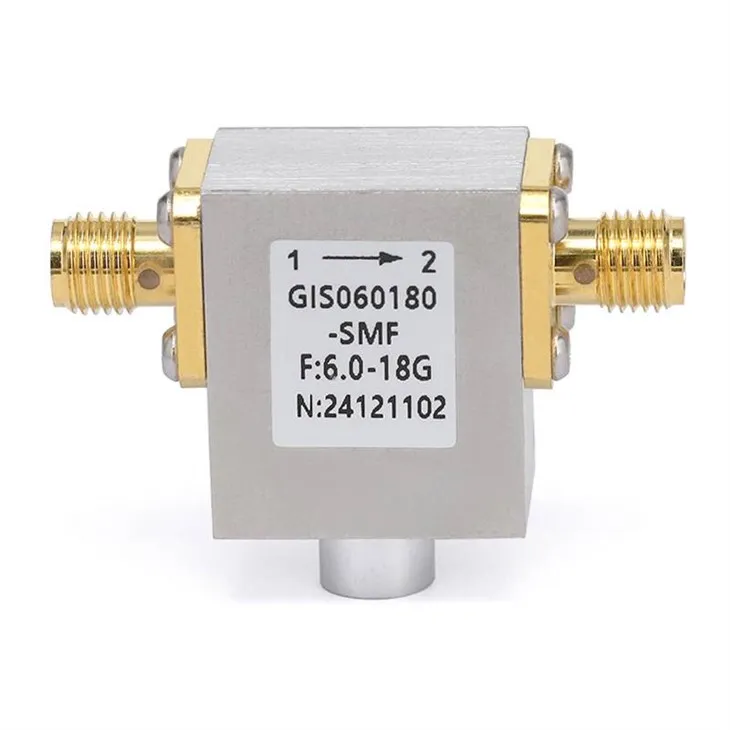
There are different types of RF isolators, and each type can have a different impact on the input impedance of antennas. For instance, RF Coaxial Lsolators are widely used in many RF systems. These isolators are designed to work with coaxial cables, which are commonly used to connect antennas to other RF components.
Coaxial isolators can provide a very stable input impedance for the antenna. They are engineered to have a specific characteristic impedance, usually 50 ohms, which is a standard impedance value in RF systems. When an antenna is connected to a coaxial isolator with the same characteristic impedance, it can achieve a good impedance match, resulting in optimal performance.
In some cases, the RF isolator can also act as a buffer between the antenna and the rest of the RF system. This buffer effect can protect the antenna from any impedance variations that might occur in the downstream components. For example, if there are changes in the impedance of the power amplifier or the receiver, the isolator can prevent these changes from affecting the input impedance of the antenna.
Let's take a look at a real - world scenario. In a wireless base station, the antenna is a critical component. It needs to transmit and receive signals over a wide area. The RF isolator is used to ensure that the input impedance of the antenna remains stable, even when there are changes in the environmental conditions or the load on the system.
When the weather changes, for example, the electrical properties of the antenna can be affected, which might lead to a change in its input impedance. The RF isolator can compensate for these changes by absorbing the reflected signals and maintaining the impedance match. This helps the base station to maintain a reliable connection with the mobile devices in its coverage area.
Now, you might be wondering how to choose the right RF isolator for your antenna system. Well, there are a few factors to consider. First, you need to look at the frequency range of the isolator. It should match the operating frequency of your antenna. If the frequency range of the isolator is too narrow, it might not work effectively with your antenna.
Second, the insertion loss is an important factor. As I mentioned earlier, a low - insertion - loss isolator is better because it has less impact on the input impedance of the antenna. You also need to consider the power handling capacity of the isolator. If your antenna system operates at high power levels, you need an isolator that can handle that power without getting damaged.
In addition, the physical size of the isolator can also be a consideration. In some applications, space is limited, so you might need a compact isolator. And of course, the cost is always a factor. You want to get the best value for your money while still ensuring that the isolator meets your requirements.
As a supplier of RF isolators, I've seen firsthand how these devices can make a huge difference in the performance of antenna systems. Whether you're working on a small - scale consumer product or a large - scale industrial application, the right RF isolator can help you achieve better results.
If you're in the market for RF isolators and want to learn more about how they can impact the input impedance of your antennas, or if you have any questions about choosing the right isolator for your specific needs, I'd love to hear from you. We can have a detailed discussion about your requirements and find the perfect solution for you. Don't hesitate to reach out and start a conversation about your RF isolator needs. We're here to help you make the most of your antenna systems.
References

- "RF and Microwave Circuit Design for Wireless Applications" by Chris Bowick
- "Antenna Theory: Analysis and Design" by Constantine A. Balanis


