
What is the insertion loss of RF isolators?
Leave a message

In the realm of radio frequency (RF) technology, RF isolators play a crucial role in ensuring the smooth and efficient operation of various RF systems. One of the key parameters that define the performance of an RF isolator is the insertion loss. As a leading supplier of RF isolators, I am excited to delve into the concept of insertion loss in RF isolators, exploring its significance, factors affecting it, and how it impacts the overall performance of RF systems.
Understanding Insertion Loss
Insertion loss is a fundamental metric used to quantify the amount of signal power that is lost when a signal passes through a device, such as an RF isolator. It is typically expressed in decibels (dB) and represents the ratio of the power of the input signal to the power of the output signal. In the context of RF isolators, insertion loss is a measure of how much the isolator attenuates the desired signal as it travels from the input port to the output port.
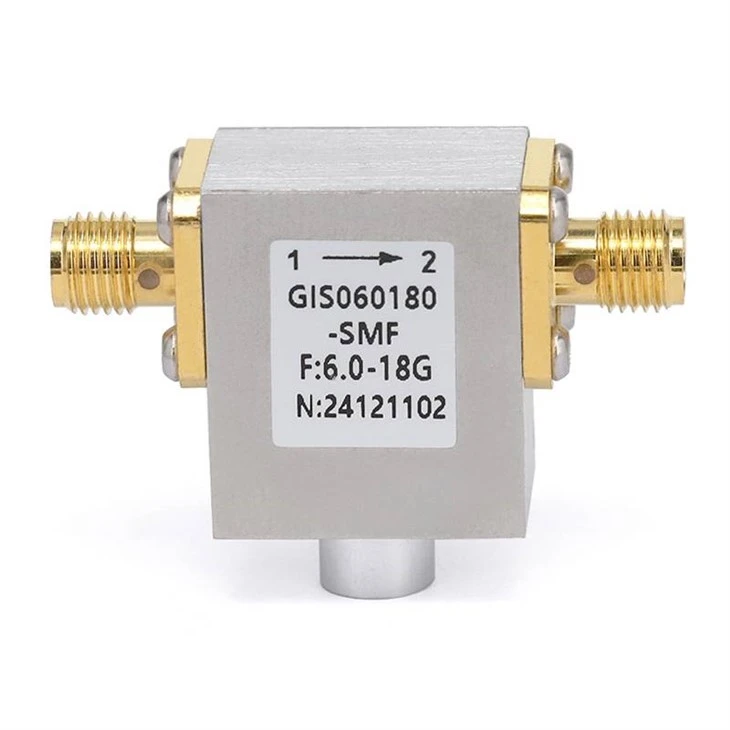

Mathematically, insertion loss (IL) can be calculated using the following formula:
[ IL = 10 \log_{10} \left( \frac{P_{in}}{P_{out}} \right) ]
where ( P_{in} ) is the power of the input signal and ( P_{out} ) is the power of the output signal.
A lower insertion loss indicates that the isolator is more efficient at transmitting the signal with minimal attenuation, while a higher insertion loss means that a significant portion of the signal power is being lost within the isolator.
Significance of Insertion Loss in RF Isolators
The insertion loss of an RF isolator is a critical parameter that has a direct impact on the performance of RF systems. Here are some key reasons why insertion loss is important:
Signal Integrity
In RF systems, maintaining the integrity of the signal is crucial for accurate communication and reliable operation. High insertion loss can lead to a significant reduction in the signal strength, which can result in degraded signal quality, increased noise, and reduced range. By minimizing insertion loss, RF isolators help to ensure that the signal remains strong and clear throughout the system.
Power Efficiency
In many RF applications, power efficiency is a major concern. High insertion loss means that more power is being dissipated within the isolator, which can lead to increased energy consumption and reduced battery life in portable devices. By using RF isolators with low insertion loss, system designers can improve power efficiency and extend the operating time of their devices.
System Performance
The insertion loss of an RF isolator can also affect the overall performance of the RF system. In some cases, high insertion loss can cause signal reflections and interference, which can degrade the performance of other components in the system. By choosing RF isolators with low insertion loss, system designers can minimize these issues and ensure that the system operates at its optimal performance.
Factors Affecting Insertion Loss in RF Isolators
Several factors can affect the insertion loss of an RF isolator. Understanding these factors is essential for selecting the right isolator for a specific application. Here are some of the key factors:
Frequency
The insertion loss of an RF isolator is typically frequency-dependent. In general, the insertion loss increases with increasing frequency. This is because at higher frequencies, the electromagnetic fields within the isolator interact more strongly with the materials and components, leading to increased losses. When selecting an RF isolator, it is important to choose one that is designed to operate within the desired frequency range with minimal insertion loss.
Material Properties
The materials used in the construction of the RF isolator can also have a significant impact on its insertion loss. For example, the magnetic materials used in the isolator's ferrite core can affect the magnetic properties of the isolator, which in turn can affect the insertion loss. Additionally, the quality of the dielectric materials used in the isolator can also affect the insertion loss by influencing the electromagnetic fields within the isolator.
Design and Construction
The design and construction of the RF isolator can also play a role in its insertion loss. For example, the shape and size of the isolator's components, the quality of the manufacturing process, and the way the components are assembled can all affect the insertion loss. By using advanced design techniques and high-quality manufacturing processes, RF isolator manufacturers can minimize insertion loss and improve the performance of their products.
Measuring Insertion Loss in RF Isolators
Measuring the insertion loss of an RF isolator is a relatively straightforward process that can be performed using a network analyzer. Here are the basic steps involved in measuring insertion loss:
- Set up the network analyzer: Connect the network analyzer to the RF isolator according to the manufacturer's instructions. Make sure that the analyzer is properly calibrated and configured for the desired frequency range.
- Measure the input power: Apply a known input power to the input port of the RF isolator and measure the power using the network analyzer.
- Measure the output power: Measure the power at the output port of the RF isolator using the network analyzer.
- Calculate the insertion loss: Use the formula mentioned earlier to calculate the insertion loss based on the measured input and output powers.
It is important to note that the insertion loss of an RF isolator can vary depending on the measurement conditions, such as the frequency, temperature, and input power level. Therefore, it is recommended to perform multiple measurements under different conditions to obtain an accurate and reliable measurement of the insertion loss.
Selecting RF Isolators with Low Insertion Loss
When selecting an RF isolator for a specific application, it is important to choose one that has low insertion loss within the desired frequency range. Here are some tips to help you select the right RF isolator:
Consider the Frequency Range
As mentioned earlier, the insertion loss of an RF isolator is typically frequency-dependent. Therefore, it is important to choose an isolator that is designed to operate within the desired frequency range with minimal insertion loss. For example, if you are working with a 6 GHz RF system, you may want to consider using 6GHz RF Coaxial Isolators that are specifically designed for this frequency range.
Look for High-Quality Materials
The materials used in the construction of the RF isolator can have a significant impact on its insertion loss. Look for isolators that are made from high-quality materials, such as low-loss ferrites and dielectrics, to minimize insertion loss and improve performance.
Consider the Application Requirements
The specific requirements of your application will also play a role in determining the appropriate RF isolator. For example, if you are working with a high-power RF system, you may need to choose an isolator that can handle high power levels without significant insertion loss. On the other hand, if you are working with a low-power RF system, you may be able to choose an isolator with a lower power handling capacity but a lower insertion loss.
Conclusion
In conclusion, the insertion loss of RF isolators is a critical parameter that has a direct impact on the performance of RF systems. By understanding the concept of insertion loss, its significance, and the factors that affect it, system designers can make informed decisions when selecting RF isolators for their applications. As a leading supplier of RF isolators, we offer a wide range of high-quality isolators with low insertion loss, including 6GHz RF Coaxial Isolators, 18GHz RF Coaxial Isolators, and 26.5GHz RF Coaxial Isolators. If you have any questions or need assistance in selecting the right RF isolator for your application, please feel free to contact us. We are here to help you find the best solution for your RF needs.
References
- Pozar, D. M. (2011). Microwave Engineering (4th ed.). Wiley.
- Collin, R. E. (2001). Foundations for Microwave Engineering (2nd ed.). Wiley.
- Matthaei, G. L., Young, L., & Jones, E. M. T. (1964). Microwave Filters, Impedance-Matching Networks, and Coupling Structures. McGraw-Hill.


