
What is the phase shift of RF attenuators?
Leave a message

What is the phase shift of RF attenuators?
As a supplier of RF attenuators, I often encounter questions from customers about various technical aspects of these devices. One of the frequently asked questions is about the phase shift of RF attenuators. In this blog post, I will delve into the concept of phase shift in RF attenuators, its significance, and how it relates to the performance of these essential components in RF systems.
Understanding Phase Shift
Before we discuss the phase shift of RF attenuators, let's first understand what phase shift means in the context of radio frequency signals. In a sinusoidal RF signal, the phase represents the position of the waveform relative to a reference point. Phase shift is the change in this position, usually measured in degrees or radians. When a signal passes through a component such as an RF attenuator, the phase of the signal may change.
Phase shift can occur due to various factors, including the electrical properties of the materials used in the attenuator, the physical length of the signal path within the device, and the frequency of the signal. In an ideal RF attenuator, the phase shift would be zero, meaning that the output signal would have the same phase as the input signal. However, in real - world applications, some degree of phase shift is inevitable.
Why Phase Shift Matters in RF Attenuators
Phase shift in RF attenuators can have a significant impact on the performance of RF systems. In many applications, such as phased - array antennas, radar systems, and communication networks, maintaining a precise phase relationship between different signals is crucial.
For example, in a phased - array antenna system, multiple antennas are used to transmit or receive signals. By controlling the phase of the signals sent to each antenna, the direction of the radiation pattern can be steered. If the RF attenuators used in the system introduce unwanted phase shifts, it can distort the radiation pattern and reduce the overall performance of the antenna system.
In communication systems, phase shift can also affect the quality of the received signal. In a multi - path environment, where the signal can reach the receiver via multiple paths, phase differences between the different paths can cause interference. If the RF attenuators in the receiver introduce additional phase shifts, it can exacerbate the interference problem and lead to a decrease in signal - to - noise ratio and data transmission errors.
Factors Affecting Phase Shift in RF Attenuators
Several factors can influence the phase shift of RF attenuators.
- Frequency: Phase shift is often frequency - dependent. As the frequency of the signal changes, the electrical properties of the materials in the attenuator, such as the dielectric constant and the magnetic permeability, can vary. This can cause the phase shift to change with frequency. In general, higher frequencies tend to be more sensitive to phase shift effects.
- Attenuation Level: The amount of attenuation provided by the RF attenuator can also affect the phase shift. In some attenuator designs, as the attenuation level increases, the phase shift may also increase. This is because higher attenuation levels often require more complex circuit configurations, which can introduce additional phase - changing elements.
- Design and Construction: The physical design and construction of the RF attenuator play a crucial role in determining the phase shift. For example, the length of the transmission lines within the attenuator can cause a phase delay. The type of resistive elements used, such as thin - film or thick - film resistors, can also have different phase characteristics.
Measuring Phase Shift in RF Attenuators
To accurately measure the phase shift of RF attenuators, specialized test equipment is required. One common method is to use a vector network analyzer (VNA). A VNA can measure both the magnitude and the phase of the input and output signals of the attenuator over a wide range of frequencies.
The VNA sends a known RF signal into the attenuator and measures the phase difference between the input and output signals. By sweeping the frequency across the desired range, a phase - frequency response curve can be obtained, which shows how the phase shift changes with frequency.
Minimizing Phase Shift in RF Attenuators
As a supplier of RF attenuators, we take several steps to minimize the phase shift in our products.
- Advanced Design Techniques: We use advanced circuit design techniques to reduce the phase - changing elements in the attenuator. For example, we carefully select the lengths of the transmission lines and the types of resistive elements to minimize the phase delay.
- High - Quality Materials: We use high - quality materials with stable electrical properties. This helps to ensure that the phase shift remains consistent over a wide range of frequencies and operating conditions.
- Precision Manufacturing: Our manufacturing processes are highly precise to ensure that the physical dimensions of the attenuators are accurate. This helps to reduce the variability in phase shift between different units of the same product.
Our Product Range and Phase Shift Performance
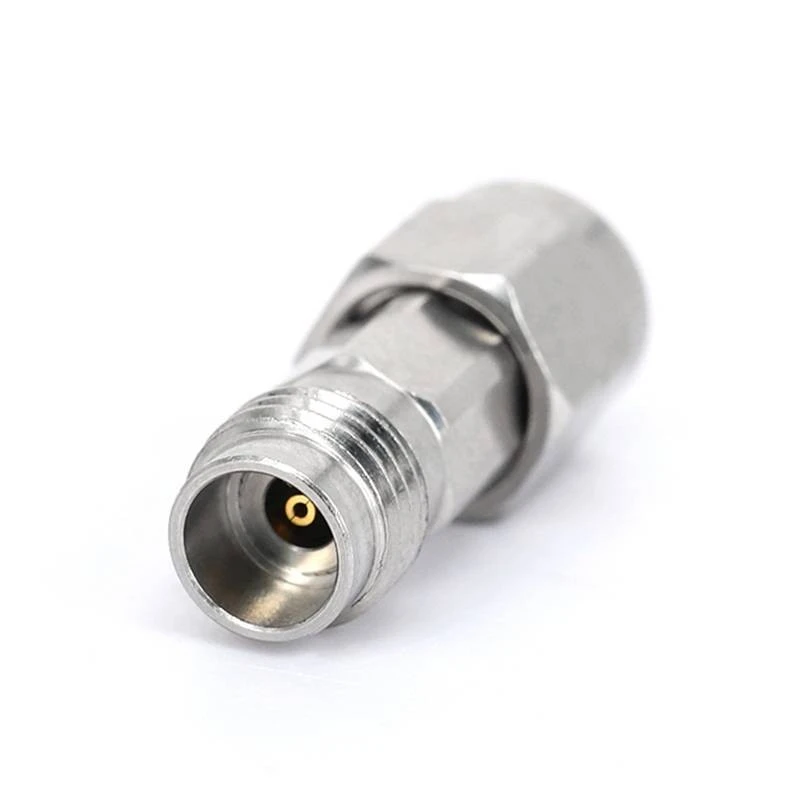
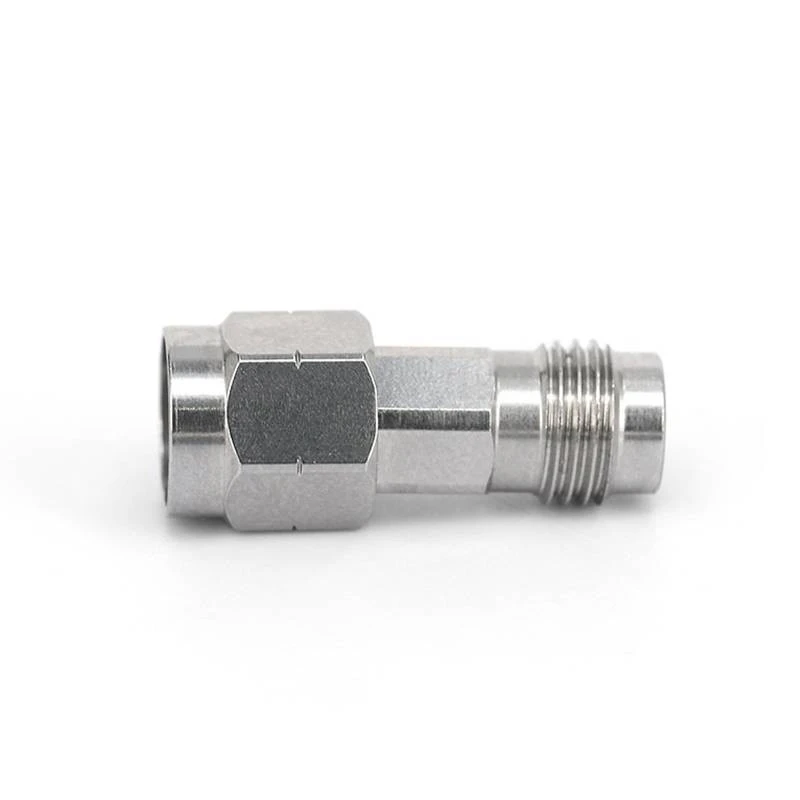
We offer a wide range of RF attenuators, including SMA Attenuators, 2.4mm Attenuators, and 2.92mm Attenuators. Each of these product lines is designed to provide excellent phase shift performance.
Our SMA attenuators are widely used in various RF applications due to their compact size and high - frequency capabilities. They are carefully designed to minimize phase shift, especially in the frequency ranges commonly used in wireless communication systems.
The 2.4mm and 2.92mm attenuators are suitable for high - frequency applications, such as millimeter - wave communication and radar systems. These attenuators are engineered to maintain low phase shift even at very high frequencies, ensuring the reliable performance of the overall system.
Contact Us for RF Attenuator Procurement
If you are in need of RF attenuators with low phase shift and high performance, we are here to help. Our team of experts can provide you with detailed technical information and assist you in selecting the right attenuators for your specific application. Whether you are working on a small - scale research project or a large - scale industrial deployment, we have the products and the expertise to meet your requirements.
Please feel free to reach out to us to start a procurement discussion. We look forward to working with you to ensure the success of your RF systems.
References
- Pozar, D. M. (2011). Microwave Engineering. Wiley.
- Collin, R. E. (2001). Foundations for Microwave Engineering. Wiley.
- Vendelin, G. D., Pavio, A. M., & Rohde, U. L. (1990). Microwave Circuit Design Using Linear and Nonlinear Techniques. Wiley.


