

What is the principle of DC blocks?
Leave a message

Hey there! As a supplier of DC blocks, I often get asked about what the principle of DC blocks is. So, I thought I'd write this blog to break it down for you in a simple and easy - to - understand way.
First off, let's talk about what DC stands for. DC is short for Direct Current. In an electrical circuit, direct current flows in one direction only. You can find DC in things like batteries and some power supplies. On the other hand, we have AC, or Alternating Current, which changes its direction periodically. Now, DC blocks are devices that are designed to stop the flow of direct current while allowing alternating current to pass through.
So, why would we want to do that? Well, there are a bunch of reasons. In many electronic systems, we might have a situation where we don't want DC to interfere with the AC signals. For example, in radio frequency (RF) circuits, DC can cause problems like biasing issues, which can mess up the performance of the whole system. By using a DC block, we can isolate the DC component and make sure that only the AC signals are processed.
Let's dig a bit deeper into how DC blocks work. The basic principle behind a DC block is based on the properties of capacitors. A capacitor is an electrical component that stores and releases electrical energy. It consists of two conductive plates separated by an insulating material called a dielectric.

When an AC signal is applied to a capacitor, the capacitor allows the signal to pass through. This is because the changing voltage of the AC signal causes the capacitor to charge and discharge continuously. As the voltage of the AC signal goes up and down, the capacitor alternately stores and releases energy, effectively allowing the AC signal to flow through the circuit.
However, when it comes to DC, things are different. A capacitor acts as an open circuit for DC. Once the capacitor is fully charged by the DC voltage, no more current can flow through it. So, if we have a DC voltage source trying to pass through a capacitor, the capacitor will block the DC current after it has reached its full charge.
In a typical DC block, a capacitor is used as the main component to block the DC. You can think of it as a kind of filter. The DC block allows the AC signals with frequencies above a certain cut - off frequency to pass through, while blocking the DC component. The cut - off frequency is determined by the capacitance value of the capacitor and the resistance in the circuit.
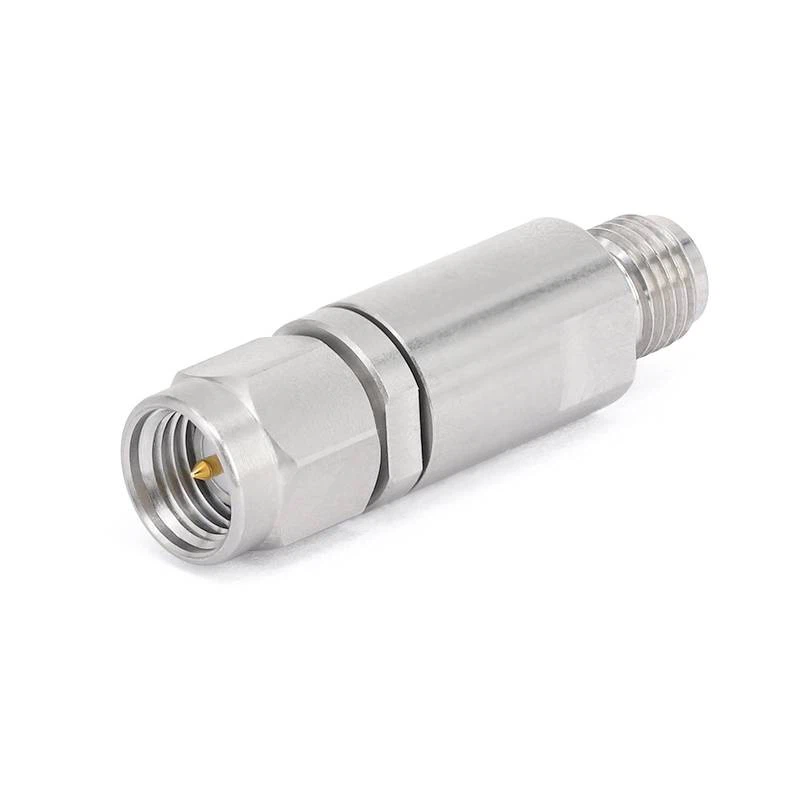
There are different types of DC blocks available in the market. One type is the Inner DC Blocks. These are designed for specific applications where space might be limited or where you need a more integrated solution. You can check out more about Inner DC Blocks here.
Inner DC Blocks often have a more compact design compared to other types of DC blocks. They are commonly used in high - frequency circuits, such as those found in telecommunications equipment and radar systems. In these applications, the Inner DC Blocks help to ensure that the DC components don't interfere with the sensitive AC signals, which are crucial for the proper functioning of the equipment.
Another important aspect of DC blocks is their performance characteristics. One key characteristic is the insertion loss. Insertion loss refers to the amount of signal power that is lost when the signal passes through the DC block. A good DC block should have a low insertion loss, so that the AC signals can pass through with minimal attenuation.
Isolation is also a crucial factor. Isolation measures how well the DC block can block the DC component. A high - isolation DC block can effectively prevent DC from leaking through to the other side of the circuit. This is especially important in applications where even a small amount of DC interference can cause significant problems.
Now, let's talk about some real - world applications of DC blocks. In the field of wireless communication, DC blocks are used in antenna systems. Antennas are designed to receive and transmit AC signals, but sometimes there can be a DC component present due to factors like electrical interference or power leakage. By using a DC block in the antenna circuit, we can make sure that only the AC signals are processed, improving the overall performance of the antenna system.
In audio systems, DC blocks are also used. For example, in an amplifier circuit, a DC block can be used to prevent the DC bias voltage from reaching the speaker. If the DC voltage were to reach the speaker, it could cause damage to the speaker cone over time. So, the DC block acts as a safeguard, allowing only the AC audio signals to pass through to the speaker.
As a supplier of DC blocks, we understand the importance of providing high - quality products. We test our DC blocks rigorously to ensure that they meet the required performance standards. Our team of experts is always working on improving the design and performance of our DC blocks to meet the ever - changing needs of our customers.
If you're in the market for DC blocks, whether it's Inner DC Blocks or other types, we'd love to have a chat with you. We can help you choose the right DC block for your specific application. Our products are designed to be reliable, efficient, and cost - effective. So, if you're looking for a trusted supplier of DC blocks, don't hesitate to reach out. We'll be more than happy to discuss your requirements and provide you with the best solutions.
In conclusion, DC blocks play a vital role in many electrical and electronic systems. Their principle of operation, based on the properties of capacitors, allows them to block DC while allowing AC signals to pass through. Whether it's in telecommunications, audio systems, or other applications, DC blocks are essential for ensuring the proper functioning of the circuits. So, if you have any questions or need more information about our DC blocks, feel free to get in touch. We're here to help you make the right choice for your project.
References:
- Electrical Engineering textbooks on circuit theory and components
- Industry whitepapers on DC block applications and performance


