

What is the purpose of RF attenuators?
Leave a message

Hey there! As a supplier of RF attenuators, I often get asked, "What's the purpose of RF attenuators?" Well, let's dive right in and break it down.
First off, RF, which stands for Radio Frequency, is all about those electromagnetic waves used in all sorts of communication systems, from your cell phone to satellite TV. RF attenuators are like the traffic cops of these radio - frequency signals. Their main job is to reduce the power of an RF signal without significantly distorting its waveform.
One of the most common reasons for using RF attenuators is to prevent signal overload. In many electronic devices and communication systems, the incoming RF signal can be too strong. If this high - power signal hits a sensitive receiver or amplifier, it can cause all sorts of problems. It might lead to distortion, where the original signal gets messed up and the information it's carrying becomes hard to understand. For example, in a radio receiver, an overly strong signal could make the audio sound garbled or full of static. RF attenuators step in and bring that signal power down to a level that the receiver can handle properly.
Another important purpose is for signal level matching. Different components in an RF system often have different power - handling capabilities. Let's say you have a powerful transmitter that sends out a high - power RF signal, and you want to connect it to a less - powerful receiver. Without an RF attenuator, the receiver might get overwhelmed. By using an attenuator, you can adjust the signal level so that it matches the input requirements of the receiver. This ensures that the whole system works smoothly and efficiently.
RF attenuators are also super useful in testing and measurement. When engineers are testing RF equipment, they need to be able to control the signal strength precisely. Attenuators allow them to do just that. They can gradually reduce the signal power to see how the equipment responds at different power levels. This helps in finding the optimal operating conditions, identifying any weaknesses in the system, and ensuring that the equipment meets the required standards.
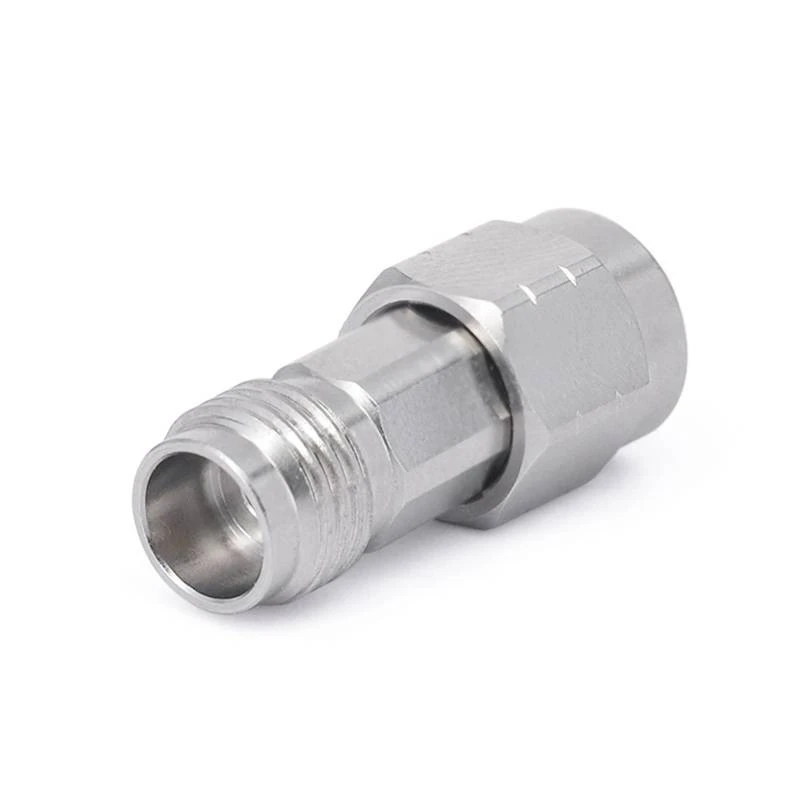
Now, let's talk about the different types of RF attenuators we offer. We have some great 2.92mm Attenuators. These are known for their high - frequency performance. They're often used in applications where you need to work with very high - frequency signals, like in some advanced radar systems or high - speed data communication networks. The 2.92mm connectors provide a good balance between size and performance, making them a popular choice in many industries.
Our 1.85mm Attenuators are even more high - end. They're designed for extremely high - frequency applications, up to millimeter - wave frequencies. These are used in cutting - edge research, military applications, and some of the most advanced communication technologies. They offer excellent electrical performance and low insertion loss, which means they can reduce the signal power with very little additional loss or distortion.
Then there are the SMA Attenuators. SMA connectors are one of the most widely used in the RF industry. These attenuators are versatile and can be used in a wide range of applications, from consumer electronics to industrial equipment. They're easy to install and work well with many different types of RF systems.
In addition to these types, we also offer fixed attenuators and variable attenuators. Fixed attenuators have a set attenuation value, which means they always reduce the signal power by the same amount. They're great for applications where you know exactly what level of attenuation you need and it doesn't change. Variable attenuators, on the other hand, allow you to adjust the attenuation level. This is useful in situations where the signal strength or the requirements of the system might change over time.

When it comes to choosing the right RF attenuator, there are a few things to consider. First, you need to think about the frequency range of your application. Different attenuators are designed to work best within certain frequency bands. You also need to consider the attenuation value. This is usually measured in decibels (dB). The higher the dB value, the more the signal power will be reduced. And of course, you should think about the power - handling capacity. You don't want an attenuator that will overheat or get damaged when it's handling a high - power signal.
We've put a lot of effort into making sure our RF attenuators are of the highest quality. We use top - notch materials and advanced manufacturing processes to ensure that they perform well and last a long time. Our team of experts is always on hand to help you choose the right attenuator for your specific needs.
If you're in the market for RF attenuators, whether it's for a small - scale project or a large - scale industrial application, we'd love to hear from you. We can provide you with detailed product information, answer any questions you might have, and even offer some samples if needed. Working with us means getting high - quality products at competitive prices and excellent customer service. So, don't hesitate to reach out and start a conversation about your RF attenuator needs. We're here to help you find the perfect solution for your RF system.
References
- Pozar, D. M. (2011). Microwave Engineering. Wiley.
- Collin, R. E. (2001). Foundations for Microwave Engineering. Wiley.


