
What is the VSWR of RF attenuators?
Leave a message

In the realm of radio frequency (RF) technology, RF attenuators play a crucial role in controlling signal strength. One of the key performance metrics associated with RF attenuators is the Voltage Standing Wave Ratio (VSWR). Understanding what VSWR is and its significance in RF attenuators is essential for both engineers and those involved in the procurement of these components. As a supplier of RF attenuators, I am well - versed in the technicalities of VSWR and its implications for our products.
What is VSWR?
VSWR, or Voltage Standing Wave Ratio, is a measure of how efficiently radio - frequency power is transmitted from a source, through a transmission line, to a load. In an ideal scenario, all the power from the source would be delivered to the load, and there would be no reflection of power back towards the source. However, in real - world situations, impedance mismatches between the source, the transmission line, and the load can cause some of the power to be reflected.
Mathematically, VSWR is defined as the ratio of the maximum voltage to the minimum voltage along the transmission line. It can be expressed using the following formula:
[VSWR=\frac{V_{max}}{V_{min}}]
where (V_{max}) is the maximum voltage on the transmission line and (V_{min}) is the minimum voltage.
VSWR values range from 1 to infinity. A VSWR of 1 indicates a perfect match, where all the power is transmitted to the load and there is no reflection. As the VSWR value increases, it means that there is a greater amount of power being reflected back towards the source. For example, a VSWR of 2 means that there is approximately 11% of the power being reflected, while a VSWR of 3 implies around 25% of the power is being reflected.
Why is VSWR Important in RF Attenuators?
For RF attenuators, VSWR is a critical parameter as it directly impacts the performance of the entire RF system. Here are some of the reasons why VSWR matters:
Signal Integrity
A high VSWR can cause signal distortion. When power is reflected back towards the source, it can interfere with the forward - traveling signal, leading to fluctuations in the amplitude and phase of the signal. This can result in errors in data transmission, reduced signal - to - noise ratio, and overall degradation of the signal quality.
Power Loss
As mentioned earlier, a high VSWR means that a significant amount of power is being reflected. This reflected power represents a loss of energy that could have been used effectively at the load. In RF systems, where power efficiency is often a concern, minimizing power loss due to high VSWR is crucial.
System Stability
High VSWR can also affect the stability of the RF system. The reflected power can cause the source to operate in an unstable manner, leading to oscillations or other unwanted behaviors. This can be particularly problematic in high - power RF systems, where even small instabilities can have a significant impact on the overall performance.
Factors Affecting VSWR in RF Attenuators
Several factors can influence the VSWR of RF attenuators:
Impedance Mismatch
The most common cause of high VSWR is impedance mismatch between the attenuator and the connected components, such as the source or the load. RF attenuators are typically designed to have a specific characteristic impedance, such as 50 ohms or 75 ohms. If the impedance of the source or the load does not match the impedance of the attenuator, it will result in power reflection and a higher VSWR.
Component Quality
The quality of the components used in the RF attenuator can also affect the VSWR. Poorly manufactured resistors, connectors, or other internal components can introduce additional impedance variations, leading to a higher VSWR. At our company, we use high - quality components and strict manufacturing processes to ensure low VSWR in our RF attenuators.
Frequency Range
VSWR is frequency - dependent. The impedance of the attenuator and the connected components can change with frequency, which can cause the VSWR to vary across different frequency bands. It is important to choose an RF attenuator that has a low VSWR over the specific frequency range of your application.
Measuring VSWR in RF Attenuators
There are several methods for measuring the VSWR of RF attenuators:
Network Analyzer
A network analyzer is a commonly used instrument for measuring VSWR. It can measure the scattering parameters (S - parameters) of the RF attenuator, including the reflection coefficient ((\Gamma)). The VSWR can then be calculated from the reflection coefficient using the following formula:
[VSWR=\frac{1 + |\Gamma|}{1-|\Gamma|}]
VSWR Meter
A VSWR meter is a simpler and more portable device for measuring VSWR. It measures the forward and reflected power in the transmission line and calculates the VSWR based on the power ratio. While not as accurate as a network analyzer, a VSWR meter can provide a quick and easy way to check the VSWR of an RF attenuator in the field.
Our RF Attenuators and VSWR
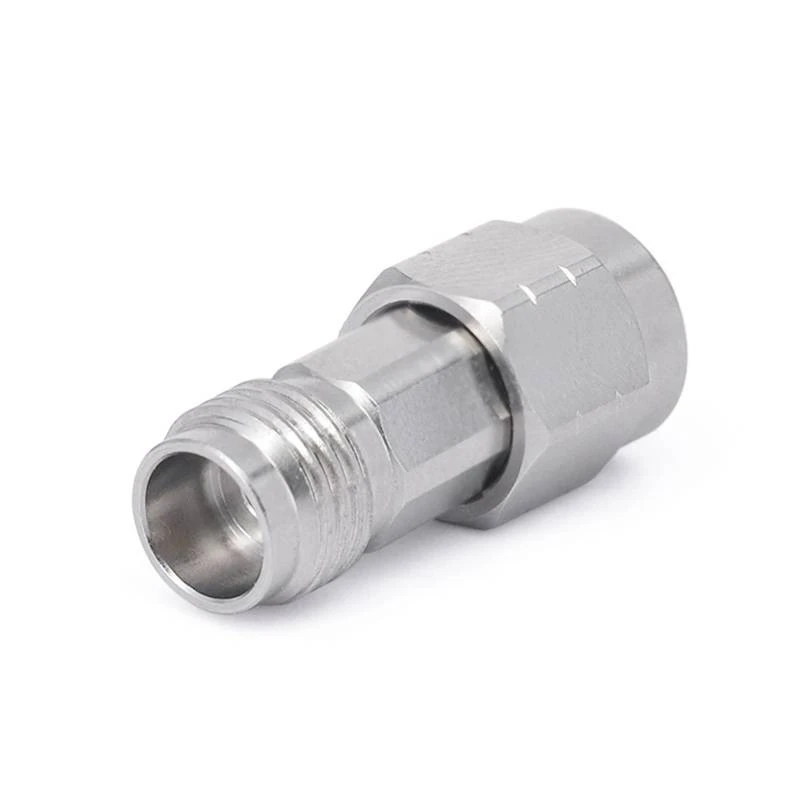
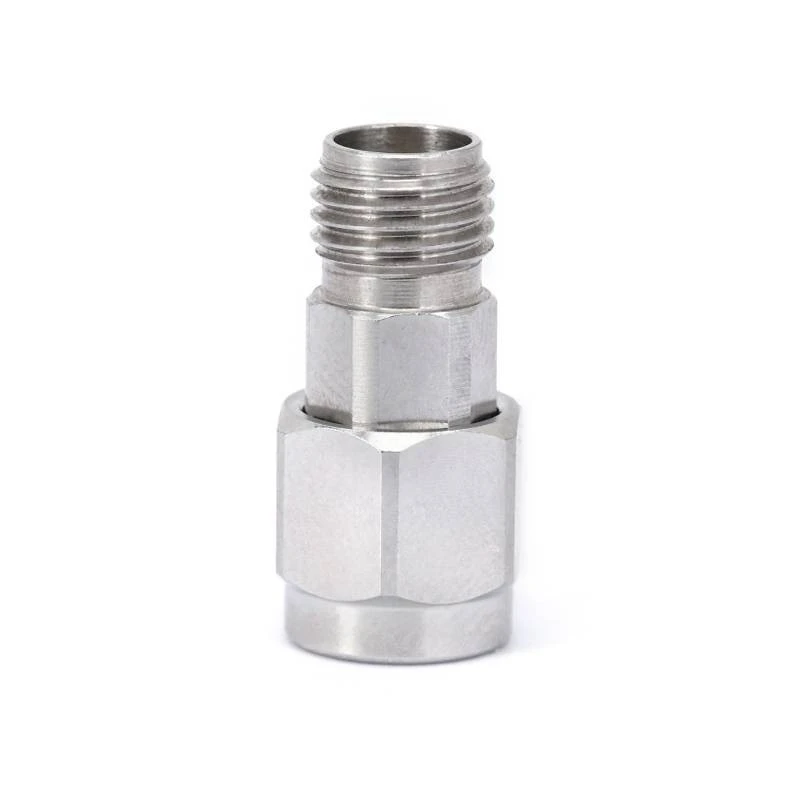
As a supplier of RF attenuators, we understand the importance of low VSWR in our products. We offer a wide range of RF attenuators, including 1.85mm Attenuators, SMA Attenuators, and 2.92mm Attenuators, all designed to have low VSWR over a wide frequency range.
Our engineers use advanced design techniques and high - quality materials to minimize impedance mismatches and ensure optimal performance. We conduct rigorous testing on each attenuator to verify its VSWR and other performance parameters before it leaves our factory.
Conclusion
VSWR is a crucial parameter in RF attenuators that affects signal integrity, power loss, and system stability. Understanding what VSWR is, why it is important, and the factors that influence it is essential for anyone involved in RF systems. As a supplier of RF attenuators, we are committed to providing high - quality products with low VSWR to meet the needs of our customers.
If you are in the market for RF attenuators and are concerned about VSWR and other performance parameters, we invite you to contact us for procurement and further technical discussions. Our team of experts is ready to assist you in selecting the right RF attenuators for your specific application.
References
- Pozar, D. M. (2011). Microwave Engineering (4th ed.). Wiley.
- Collin, R. E. (2001). Foundations for Microwave Engineering (2nd ed.). McGraw - Hill.


