

Types of Why Do RF Attenuators Have Male Input and Female Output?
Leave a message
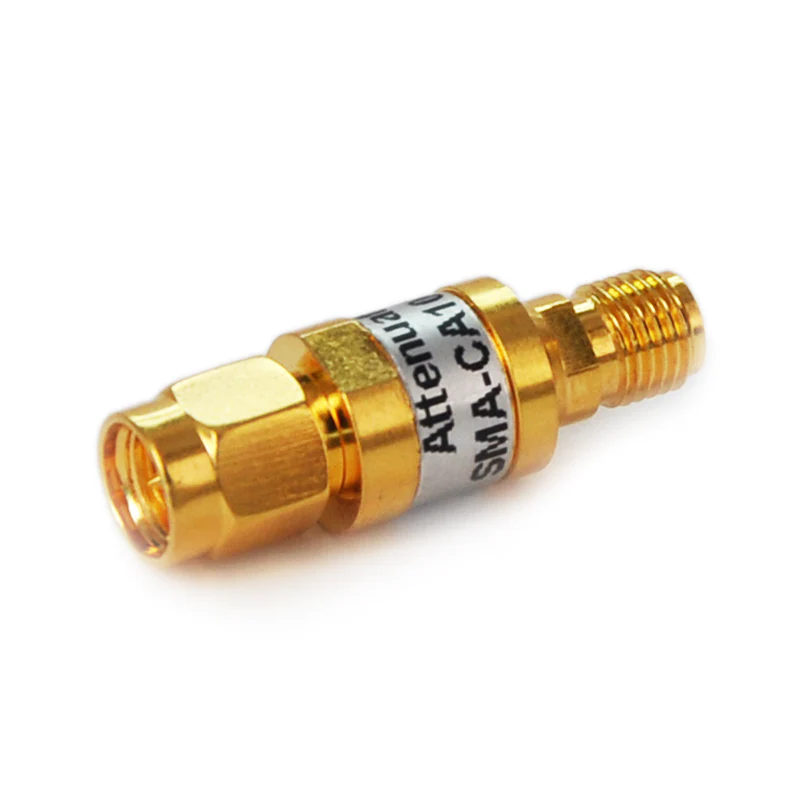
The main function of a radio frequency (RF) attenuator is to reduce signal power, and it is usually directly connected to signal sources such as RF generators and power amplifiers. RF attenuators typically adopt a design with a male connector for input and a female connector for output, which is related to factors such as connection stability, compatibility, industry standardization, and damage prevention. The details are as follows:
1. Connection stability
Male connectors usually have a pin - type structure, while female connectors have a jack - type structure. This male - female connection method can provide a relatively stable connection effect. The pin of the male connector can be well embedded in the jack of the female connector, and it is not easy to loosen due to external forces, thus ensuring the stability of RF signal transmission and reducing signal attenuation and interference caused by poor contact.
2.Compatibility and standardization of industry equipment
In the RF field, signal sources are usually equipped with female connectors (such as RF instruments and amplifiers). If the attenuator has a male input, it can be directly inserted into the signal source without additional adapters, thereby minimizing connection loss to the greatest extent.
RF cables usually have a male connector at one end and a female connector at the other end. As an intermediate device, the attenuator must comply with these standards.
Therefore, an attenuator with a male input can be directly connected to the female output end of the signal source, and its female output end can easily connect to other RF devices.
3.Protecting RF test equipment
A common use of RF attenuators is to protect sensitive receiving equipment from high - power signals. In addition, for some attenuators with high precision, protecting the output connector can better ensure the stability of signal output and the accuracy of attenuation.
Reducing additional connectors and improving signal integrity
If an attenuator is designed with female connectors for both input and output, users need to use an additional male - to - male adapter to connect it to the signal source:
4. Additional adapters will introduce insertion loss.
Too many connection points may increase signal reflection and voltage standing wave ratio (VSWR).
Loose connections may affect measurement accuracy. However, an attenuator with a male input and a female output can be directly connected, reducing the need for additional adapters and improving system reliability.
5. Application fields
Antenna matching networks
Wireless communication systems for power control
Radar and microwave systems
RF link testing
In these applications, RF devices usually follow standardized female connector specifications, and RF cables usually have a male connector at one end and a female connector at the other end. The design of the attenuator with a male input and a female output makes it more adaptable and compatible.


