From The Perspective Of Application Differences: Log-Periodic Antennas VS Horn Antennas
Leave a message
Log-Periodic Antenna (LPA)
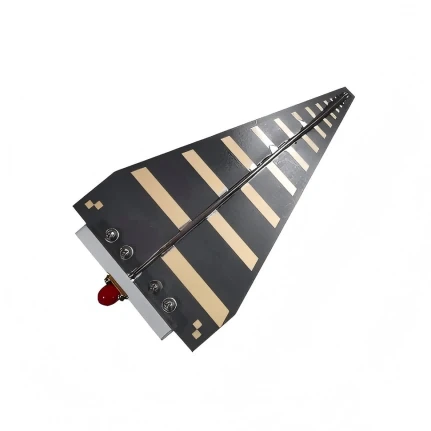
A log-periodic antenna is a broadband radiating device characterized by the following
features:
Structural features
It consists of a series of oscillators, feeders, and reflectors. Their lengths and spacings follow a fixed geometric scale factor (the periodic ratio) and the overall structure follows a periodic pattern.
Performance characteristics
Electrical parameters such as impedance and radiation pattern change periodically with the logarithm of the operating frequency. This ensures stable performance over a wide frequency range.
Core advantages
It offers extremely wide bandwidth, spanning shortwave through microwave. It can adapt to the reception and transmission of multi-band signals without switching components.
Horn Antenna
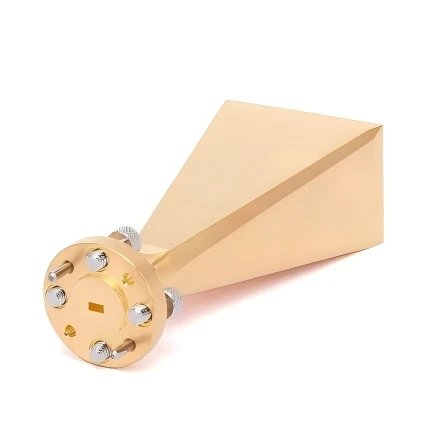
A horn antenna is a directional radiating device commonly used in the microwave band, and its core definition includes the following key elements:
Structural features
It is based on a rectangular or circular waveguide. The waveguide flares gradually into a horn aperture, and efficient energy radiation is achieved by expanding the waveguide cross-section.
Performance characteristics
It has the characteristics of high directivity, low VSWR, and low energy loss. The narrow beamwidth and energy is concentrated in a specific direction.
Core advantages
It has high energy conversion efficiency (close to the ideal value) and good polarization purity. It is often used as a standard antenna to calibrate the performance parameters of other antennas.
Comparison of Typical Application Scenarios
LogPeriodic Antennas suit wideband transmit/receive tasks
Such as TV and radio monitoring, multi-band communications (shortwave, VHF, UHF), EMC testing of wideband interference, and portable emergency-communication sets"Electromagnetic Compatibility (EMC) testing, used to simulate the radiation and reception of wideband interference signals.Outdoor portable devices, such as external antennas for emergency communication radios (some miniaturized models).
Horn Antenna Microwave communication field
Horn antennas excel in microwave links and radar, including satellite ground stations. They are also used as standard gain references for antenna calibration, in millimeter-wave systems (e.g., 60 GHz, 77 GHz) thanks to low loss and simple structure, and for short-range directional RF power transfer".

Flexi RF's Antenna Design, Production and Testing Capabilities
Flexi RF's antenna team performs detailed EM simulation and verifies each unit in our
in-house anechoic chamber; every product ships with complete test data, including S-parameters, radiation patterns, and gain, to document performance". Before leaving the factory, each product passes strict performance tests, and we provide complete test data including S-parameters, radiation patterns, and gain. Please feel free to purchase with confidence.