
Can horn antennas be used in RFID applications?
Leave a message

Hey there! As a supplier of Horn Antennas, I often get asked if these bad boys can be used in RFID applications. Well, let's dive right in and explore this topic together.
First off, let's quickly go over what RFID is. RFID stands for Radio - Frequency Identification. It's a technology that uses radio waves to identify and track tags attached to objects. These tags can store various types of information, and RFID systems are used in a wide range of industries, from retail for inventory management to logistics for tracking shipments.
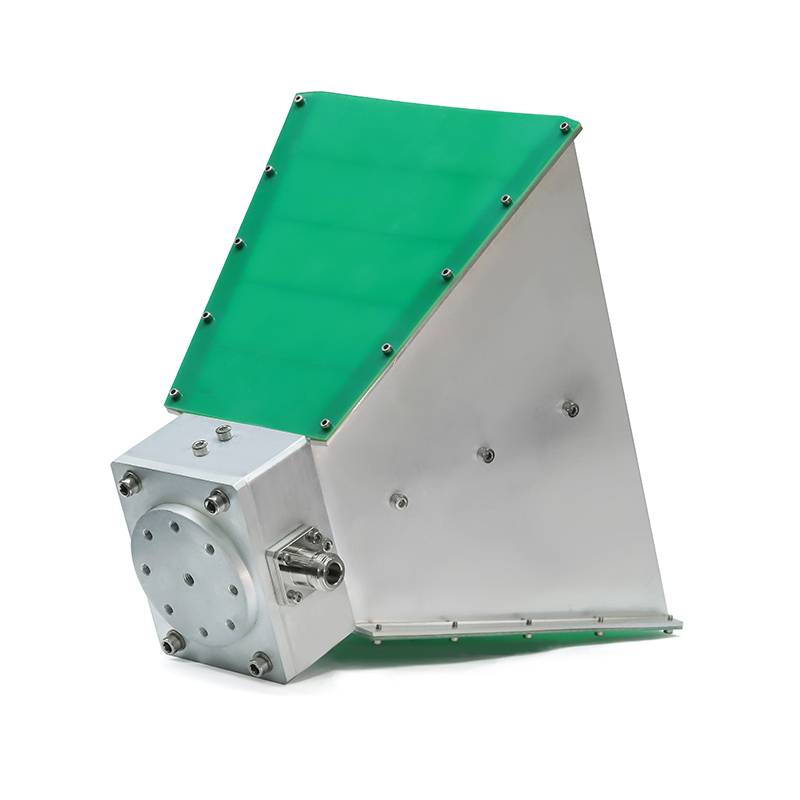

Now, let's talk about Horn Antennas. Horn Antennas are a type of antenna that have a flared structure, which looks a bit like a horn (hence the name). They're known for their high gain, wide bandwidth, and relatively simple design. You can check out more about Horn Antennas on our website.
So, can Horn Antennas be used in RFID applications? The answer is yes, but with some considerations.
One of the main advantages of using Horn Antennas in RFID is their high gain. High gain means that the antenna can transmit and receive signals more effectively over longer distances. In an RFID system, this can be a huge plus, especially in large warehouses or outdoor environments where you need to read tags from a distance. For example, if you're using RFID to track large shipping containers in a port, a Horn Antenna with high gain can help you read the tags on those containers from a significant distance, reducing the need for workers to get up close to each container.
Another benefit is the wide bandwidth of Horn Antennas. RFID systems operate at different frequencies, and having an antenna with a wide bandwidth allows it to work across a range of these frequencies. This flexibility is really useful, as different RFID applications may require different frequency bands. For instance, some RFID systems used in access control operate at low frequencies, while others used in supply chain management might operate at ultra - high frequencies. A Horn Antenna can potentially cover multiple frequency bands, making it a versatile choice.
However, there are also some challenges when using Horn Antennas in RFID applications. One of the main issues is the directivity of Horn Antennas. They tend to have a relatively narrow beamwidth, which means they focus the radio waves in a specific direction. In an RFID environment, where tags can be located in various positions and orientations, this narrow beamwidth can be a drawback. You might need to carefully position the Horn Antenna to ensure that it can effectively read the tags. For example, if you're using RFID tags on products on a conveyor belt, the narrow beamwidth of the Horn Antenna might cause some tags to be missed if they're not in the direct line of sight of the antenna.
Another consideration is the size of Horn Antennas. They can be relatively large compared to other types of antennas used in RFID, such as dipole antennas. In some applications where space is limited, like in small retail stores or on mobile RFID readers, the size of the Horn Antenna might be a problem.
Now, let's compare Horn Antennas with Log - periodic Antennas, which are also commonly used in RFID. Log - periodic Antennas have a wider beamwidth compared to Horn Antennas, which means they can cover a larger area without the need for precise positioning. This makes them a better choice in some RFID applications where tags are randomly distributed. However, Horn Antennas usually have a higher gain than Log - periodic Antennas, which can be an advantage when you need to read tags from a long distance.
In real - world scenarios, the decision to use a Horn Antenna in an RFID application depends on the specific requirements of the project. If you're dealing with a large - scale outdoor application where long - range communication is crucial, and you can afford to carefully position the antenna, a Horn Antenna might be a great choice. On the other hand, if you're working in a more confined space with randomly placed tags, a Log - periodic Antenna might be more suitable.
Let's take a look at a couple of case studies. In a large automotive manufacturing plant, they were using RFID to track parts as they moved through the assembly line. Initially, they were using dipole antennas, but they were having trouble reading the tags from a distance. They decided to switch to Horn Antennas, and with proper positioning, they were able to significantly improve the read range and accuracy of the RFID system. The high gain of the Horn Antennas allowed them to read the tags on the parts even when they were several meters away.
In a small - scale retail store, they were using RFID for inventory management. They initially considered using Horn Antennas but found that the size and the narrow beamwidth were not practical for their needs. Instead, they opted for Log - periodic Antennas, which provided a wider coverage area and were easier to install in the limited space of the store.
If you're considering using Horn Antennas in your RFID application, it's important to do some testing. You can start by setting up a small - scale test environment to see how the Horn Antenna performs with your specific RFID tags and system. This will help you determine if the benefits of using a Horn Antenna outweigh the challenges in your particular situation.
In conclusion, Horn Antennas can definitely be used in RFID applications, but it's not a one - size - fits - all solution. You need to carefully evaluate your requirements, including the range, coverage area, tag distribution, and available space. As a supplier of Horn Antennas, we're here to help you make the right choice. If you have any questions or want to discuss your RFID project in more detail, don't hesitate to reach out. We can provide you with more information, offer technical support, and even help you with custom solutions if needed. So, if you're thinking about incorporating Horn Antennas into your RFID system, let's have a chat and see how we can work together to make it a success.
References
- "RFID Handbook: Fundamentals and Applications in Contactless Smart Cards, Radio Frequency Identification and Near - Field Communication" by Klaus Finkenzeller
- "Antenna Theory: Analysis and Design" by Constantine A. Balanis


