

Can RF circulators be used in educational experiments?
Leave a message

In the realm of radio frequency (RF) technology, RF circulators stand out as crucial components with a wide range of applications. As a supplier of RF circulators, I often get asked about the potential use of these devices in educational experiments. In this blog post, I will explore the feasibility and benefits of incorporating RF circulators into educational settings.
Understanding RF Circulators
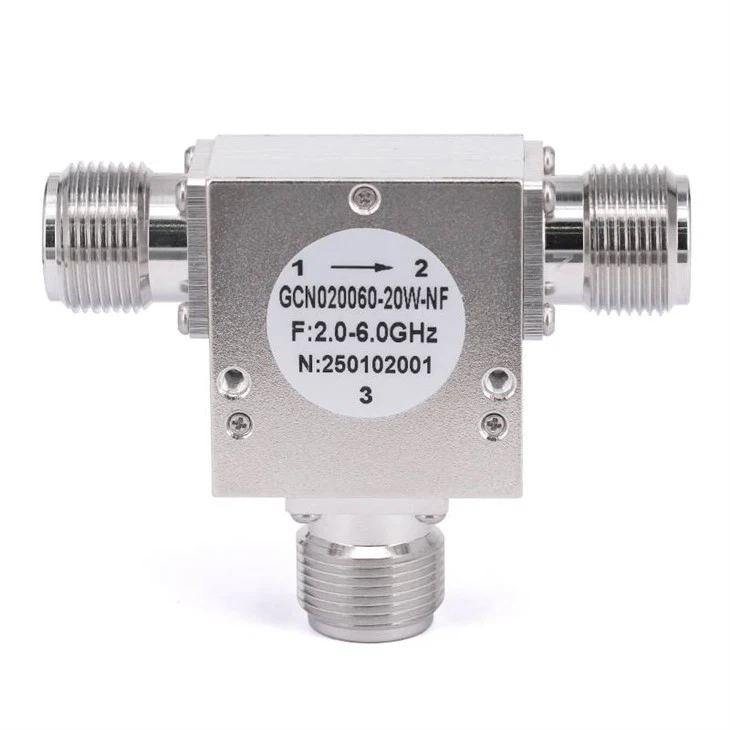
Before delving into their educational applications, it's essential to understand what RF circulators are. An RF circulator is a passive, non - reciprocal three - or four - port device that allows RF signals to flow in a specific direction, typically from port 1 to port 2, port 2 to port 3, and so on. This non - reciprocity is achieved through the use of ferrite materials and a magnetic field. The unique property of non - reciprocity makes RF circulators valuable in many RF systems, such as radar, communication, and test equipment.
Why Use RF Circulators in Educational Experiments?
1. Demonstrating Non - Reciprocity
One of the most significant concepts in RF engineering is non - reciprocity. RF circulators provide an excellent platform for students to observe and understand this phenomenon. By setting up a simple experiment with an RF signal generator, an RF circulator, and power meters at each port, students can measure the power flow between different ports. They will notice that the signal can only travel in the designated direction, which is a clear demonstration of non - reciprocity. This hands - on experience helps students grasp a complex theoretical concept in a practical way.
2. Teaching RF Signal Routing
In real - world RF systems, signal routing is a critical task. RF circulators can be used in educational experiments to teach students how to direct RF signals effectively. For example, in a communication system, a circulator can be used to separate the transmit and receive paths. Students can build a basic communication model using an RF circulator and learn how to manage the flow of signals between the transmitter, receiver, and antenna. This kind of experiment gives students insights into the design and operation of practical RF systems.
3. Exploring Electromagnetic Principles
RF circulators are based on electromagnetic principles, including the interaction between magnetic fields and RF signals. Educational experiments with RF circulators can be used to explore these principles. Students can study how the magnetic field in the ferrite material affects the propagation of RF signals. They can also experiment with different magnetic field strengths and observe the changes in the performance of the circulator. This exploration helps students deepen their understanding of electromagnetism, which is a fundamental topic in electrical engineering.
Practical Educational Experiments with RF Circulators
1. Basic Non - Reciprocity Experiment
To demonstrate non - reciprocity, students can set up the following experiment. First, connect an RF signal generator to port 1 of the circulator. Then, connect power meters to port 2 and port 3. Measure the power at port 2 and port 3 when the signal is applied to port 1. Next, move the signal generator to port 2 and measure the power at port 3 and port 1. Finally, connect the signal generator to port 3 and measure the power at port 1 and port 2. Students will find that the signal can only flow in the specified direction, which clearly shows the non - reciprocity of the circulator.
2. Signal Routing in a Communication System
For a more complex experiment, students can build a simple communication system using an RF circulator. Connect a transmitter to port 1 of the circulator, an antenna to port 2, and a receiver to port 3. When the transmitter sends a signal, it will pass through the circulator to the antenna. The received signal from the antenna will then be routed to the receiver through the circulator. This experiment simulates a real - world communication scenario and teaches students about signal routing in RF systems.
Challenges and Considerations
While using RF circulators in educational experiments has many benefits, there are also some challenges and considerations.
1. Cost
RF circulators can be relatively expensive, especially high - performance ones. Educational institutions may need to budget carefully to purchase the necessary equipment. However, as a supplier, we offer a range of RF circulators at different price points to meet the needs of various educational budgets. For example, our RF Coaxial Circulators are available in different specifications and cost levels, making them more accessible for educational use.
2. Safety
Working with RF signals requires proper safety precautions. Students need to be educated about the potential hazards of RF radiation and how to handle RF equipment safely. Teachers should ensure that all experiments are conducted in a well - ventilated area and that students wear appropriate protective gear, such as RF - shielding gloves and goggles.
3. Technical Expertise
Teachers and students need a certain level of technical expertise to work with RF circulators. They should have a basic understanding of RF theory, circuit design, and measurement techniques. Educational institutions may need to provide training or resources to help teachers and students acquire the necessary skills.

Conclusion
In conclusion, RF circulators can be effectively used in educational experiments. They offer a unique way to teach complex RF concepts such as non - reciprocity, signal routing, and electromagnetic principles. Despite the challenges of cost, safety, and technical expertise, the benefits of using RF circulators in education far outweigh the difficulties.
As a supplier of RF circulators, we are committed to supporting educational institutions in their efforts to incorporate these devices into their curricula. We offer high - quality RF circulators at competitive prices and can provide technical support and guidance for educational experiments. If you are interested in using RF circulators in your educational programs or have any questions about our products, please feel free to contact us for procurement and further discussions.
References
- Pozar, D. M. (2011). Microwave Engineering (4th ed.). Wiley.
- Collin, R. E. (2001). Foundations for Microwave Engineering (2nd ed.). McGraw - Hill.


