

How do different materials affect an RF adapter's performance?
Leave a message

Yo, what's up everyone! I'm an RF adapter supplier, and today I wanna chat about how different materials can mess with an RF adapter's performance. It's a pretty crucial topic, especially if you're in the market for high - quality RF adapters.
First off, let's understand what RF adapters are. They're like the bridge between different RF components. Whether you're working on a small - scale project or a large - scale industrial application, these adapters play a key role in ensuring that your RF systems work smoothly. Now, the materials used in making these adapters can have a huge impact on how well they perform.
Metals: The Backbone of RF Adapters
Metals are the most common materials used in RF adapters. Copper is one of the top choices. Why? Well, copper is an excellent conductor of electricity. It has low resistance, which means that it can carry RF signals with minimal loss. When you're dealing with high - frequency signals, signal loss can be a real pain in the butt. With copper, you're looking at better signal integrity and less attenuation.
For example, our WR12 Straight Waveguide Adapter uses high - quality copper in its construction. This helps in maintaining the strength of the RF signals as they pass through the adapter. The waveguide design, combined with the copper material, ensures that the adapter can handle high - power RF signals without significant degradation.
Another metal that's often used is brass. Brass is a combination of copper and zinc, and it offers a good balance between conductivity and mechanical strength. It's more corrosion - resistant than pure copper, which is a big plus if your RF adapters are going to be used in harsh environments. Brass adapters can withstand a bit of wear and tear, making them suitable for long - term use.
However, not all metals are created equal. Steel, for instance, is not the best choice for RF adapters. Steel has a relatively high resistance compared to copper and brass. This high resistance can lead to increased signal loss and heating, which can further degrade the performance of the adapter. So, when you're choosing an RF adapter, you gotta be careful about the metal used in its construction.
Dielectric Materials: The Insulators
Dielectric materials are just as important as metals in RF adapters. These materials are used as insulators to separate the conductive parts of the adapter. One of the most commonly used dielectric materials is Teflon (PTFE). Teflon has a low dielectric constant, which means that it can reduce the capacitance between the conductors. This is crucial because high capacitance can cause signal distortion and attenuation.
Our 1.85mm Adapter uses Teflon as its dielectric material. The low dielectric constant of Teflon allows the adapter to operate at high frequencies with minimal signal loss. It also has excellent chemical resistance, which means that it can withstand exposure to various chemicals without degrading.
Another dielectric material is ceramic. Ceramic has a high dielectric constant, which can be both an advantage and a disadvantage. On one hand, it can be used to increase the capacitance in certain applications. On the other hand, it can also cause more signal loss at high frequencies. So, ceramic is usually used in specific applications where its unique properties are needed.
Plastics: A Cost - Effective Option
Plastics are also used in RF adapters, especially for their outer casings. They're a cost - effective option and can provide good mechanical protection. Polycarbonate is a popular choice. It's strong, lightweight, and has good impact resistance. This means that the adapter can be protected from physical damage during handling and installation.
However, plastics can have some drawbacks when it comes to RF performance. They can have a higher dielectric loss compared to other materials. This can lead to some signal degradation, especially at high frequencies. But for low - frequency applications or where cost is a major concern, plastic - cased adapters can still be a viable option.
Impact of Material on Frequency Range
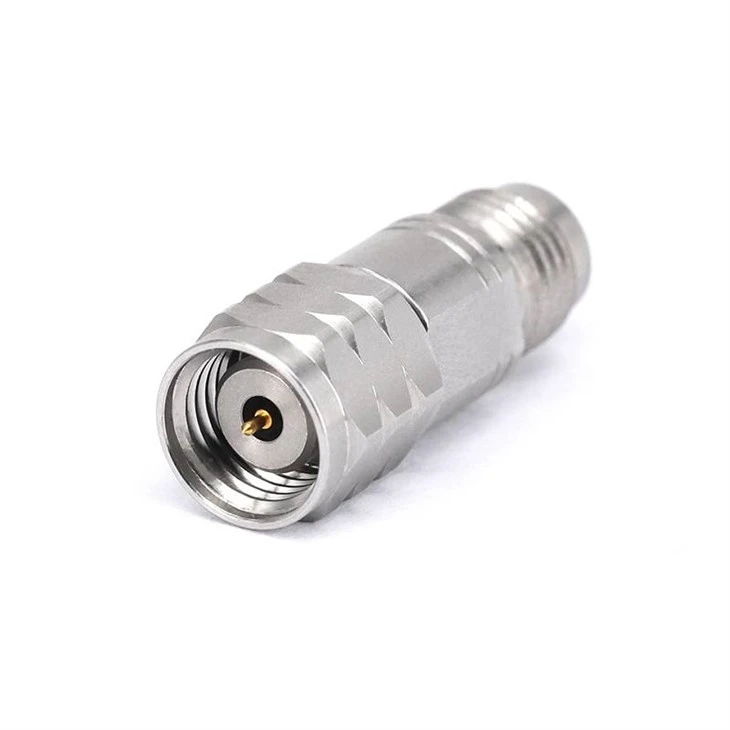
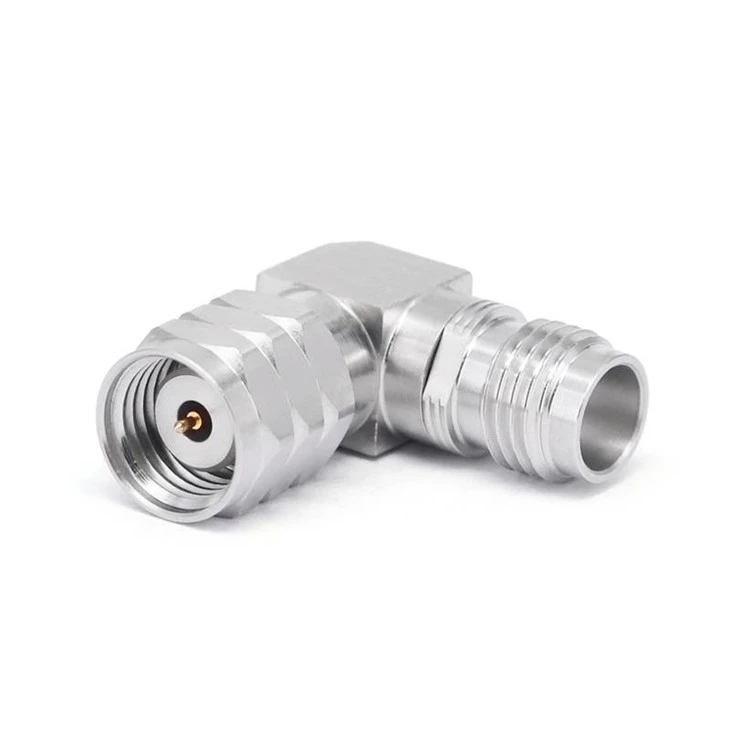
The materials used in an RF adapter can significantly affect its frequency range. As I mentioned earlier, copper and Teflon are great for high - frequency applications. Our 1.0mm Adapter is designed to operate at extremely high frequencies, and the choice of materials plays a crucial role in its performance. The low - loss copper conductors and the low - dielectric - constant Teflon insulator work together to ensure that the adapter can handle frequencies up to 110 GHz without significant signal loss.
On the other hand, if you're using materials with high resistance or high dielectric loss, the frequency range of the adapter will be limited. You might experience signal degradation or even complete signal loss at higher frequencies. So, if you need an adapter for a high - frequency application, you gotta make sure that the materials used are suitable for that frequency range.
Impact on Power Handling
Material selection also affects an RF adapter's power - handling capabilities. Metals with low resistance, like copper, can handle higher power levels without overheating. The heat generated in a conductor is proportional to the square of the current and the resistance. So, a low - resistance material like copper can dissipate heat more efficiently, allowing the adapter to handle higher power signals.
Dielectric materials also play a role in power handling. A high - quality dielectric material can withstand high - voltage gradients without breaking down. This is important because if the dielectric breaks down, it can cause a short - circuit, which can damage the adapter and the entire RF system.
Conclusion
So, as you can see, the materials used in an RF adapter have a huge impact on its performance. From signal integrity and frequency range to power handling and mechanical protection, every aspect of the adapter's performance is affected by the choice of materials.
If you're in the market for RF adapters, make sure you consider the materials used in their construction. We, as an RF adapter supplier, have a wide range of adapters made from high - quality materials to suit different applications. Whether you need a high - frequency adapter for a telecommunications project or a rugged adapter for an industrial environment, we've got you covered.
If you're interested in learning more about our RF adapters or have any questions about material selection for your specific application, don't hesitate to reach out. We're here to help you make the right choice and ensure that your RF systems perform at their best. Contact us for more information and let's start a procurement discussion!
References
- "RF and Microwave Circuit Design for Wireless Applications" by Chris Bowick
- "Microwave Engineering" by David M. Pozar


