
How do RF isolators contribute to the performance of RF base stations?
Leave a message

Hey there! As a supplier of RF isolators, I'm super stoked to chat about how these nifty devices play a huge role in the performance of RF base stations.
Let's start with the basics. RF base stations are the backbone of our wireless communication networks. They're responsible for sending and receiving radio frequency signals, making sure our phones, tablets, and other devices can connect to the internet and stay in touch with each other. But here's the thing: these base stations operate in a pretty complex environment. There are all sorts of signals flying around, and interference can be a real pain in the you-know-what. That's where RF isolators come in.
What are RF Isolators?
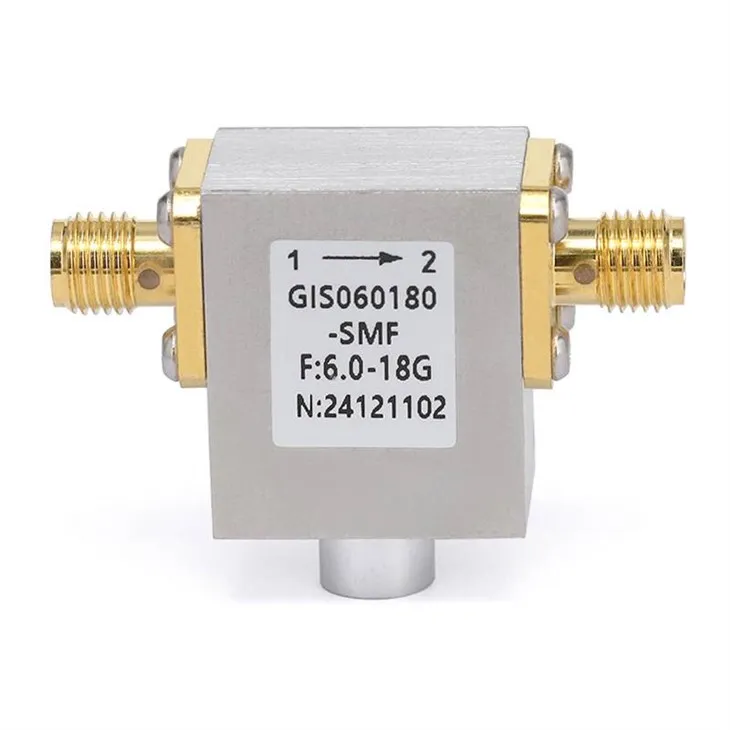
RF isolators are passive two - port devices. They allow RF signals to flow in one direction with very low loss, but they block or isolate signals in the reverse direction. Think of them as traffic cops for radio waves. They make sure the signals go where they're supposed to go and don't cause any chaos on the way back.
These isolators are typically made up of a ferrite material, which has some really cool magnetic properties. When an RF signal passes through the ferrite, it interacts with the magnetic field in a way that allows it to travel forward smoothly. But when a signal tries to go in the opposite direction, the ferrite causes it to be absorbed or reflected, preventing it from going back into the source.
Improving Signal Quality
One of the main ways RF isolators contribute to the performance of RF base stations is by improving signal quality. In a base station, there are multiple components like amplifiers, filters, and antennas. These components are all connected together, and sometimes, the signals can bounce back and forth between them. This can lead to a phenomenon called signal reflection, which can degrade the quality of the transmitted and received signals.
For example, when an amplifier sends a signal to an antenna, some of the signal might get reflected back from the antenna due to impedance mismatches. If this reflected signal goes back into the amplifier, it can cause distortion, reduce the amplifier's efficiency, and even damage the amplifier over time. An RF isolator placed between the amplifier and the antenna can prevent this reflected signal from reaching the amplifier. It acts as a barrier, ensuring that only the forward - going signal reaches the amplifier, and the reflected signal is absorbed or redirected.
This not only improves the overall signal quality but also helps in maintaining the integrity of the communication. Clearer signals mean fewer dropped calls, faster data transfer rates, and a better user experience for everyone using the wireless network.
Protecting Components
RF isolators also play a crucial role in protecting the sensitive components in RF base stations. As I mentioned earlier, reflected signals can cause problems for amplifiers. But amplifiers aren't the only components at risk. Other components like mixers, oscillators, and power dividers can also be affected by signal reflections.
By isolating these components from the reflected signals, RF isolators help to extend their lifespan. They prevent the excessive power from reflected signals from overheating or damaging the components. This is especially important in high - power base stations, where the signals can be quite strong, and the potential for damage is higher.

For instance, in a base station that operates in a busy urban area, there are a lot of obstacles and other signals that can cause reflections. Without RF isolators, the components in the base station would be constantly exposed to these reflected signals, leading to a higher probability of failure. With isolators in place, the components can operate more reliably, reducing maintenance costs and downtime for the base station.
Enhancing System Stability
Another benefit of using RF isolators in RF base stations is that they enhance system stability. In a base station, there are often multiple channels and frequencies in use. These different signals can interact with each other, causing interference and instability in the system.
RF isolators can help to reduce this interference by isolating the different channels and frequencies. They prevent the signals from one channel from leaking into another, ensuring that each channel operates independently. This is particularly important in modern base stations that support multiple wireless standards, such as 4G, 5G, and Wi - Fi. These standards operate on different frequencies, and without proper isolation, the signals can interfere with each other, leading to performance degradation.
For example, in a 5G base station, there are high - frequency millimeter - wave signals. These signals are very sensitive to interference. By using RF isolators, the base station can ensure that the millimeter - wave signals are kept separate from other signals, maintaining the stability of the 5G network.
Matching Impedance
Impedance matching is an important aspect of RF system design. In an RF base station, different components have different impedance values. When the impedance between two components is not matched, it can cause signal reflections, as I mentioned earlier.
RF isolators can help in impedance matching. They can be designed to have a specific impedance value that matches the impedance of the components they are connected to. This helps to minimize signal reflections and ensure that the signals are transferred efficiently between the components.
For example, if an amplifier has an output impedance of 50 ohms and an antenna has an input impedance of 50 ohms, an RF isolator with a 50 - ohm impedance can be placed between them. This ensures that the signals flow smoothly from the amplifier to the antenna, without any significant reflections.
Our RF Coaxial Isolators
At our company, we offer a wide range of RF Coaxial Isolators that are specifically designed for RF base stations. Our isolators are made with high - quality ferrite materials and advanced manufacturing techniques, ensuring excellent performance and reliability.
We understand the unique requirements of RF base stations, and our isolators are optimized to provide low insertion loss, high isolation, and wide bandwidth. Whether you're operating a small - scale base station in a rural area or a large - scale, high - power base station in a city center, our RF coaxial isolators can meet your needs.
Conclusion
In conclusion, RF isolators are essential components in RF base stations. They improve signal quality, protect components, enhance system stability, and help in impedance matching. Without RF isolators, the performance of RF base stations would be severely compromised, leading to a poor user experience for wireless network users.
If you're in the market for RF isolators for your RF base stations, we'd love to have a chat with you. We can provide you with detailed information about our products, help you choose the right isolators for your specific requirements, and offer competitive pricing. Contact us today to start the procurement process and take your RF base station performance to the next level!
References
- Pozar, D. M. (2011). Microwave Engineering. Wiley.
- Collin, R. E. (2001). Foundations for Microwave Engineering. Wiley.


