

How do RF loads compare to capacitors in RF applications?
Leave a message

In the dynamic realm of radio frequency (RF) applications, the choice between RF loads and capacitors is a critical decision that can significantly impact the performance and efficiency of electronic systems. As a trusted RF loads supplier, I have witnessed firsthand the diverse requirements and challenges faced by engineers and designers in this field. In this blog post, I will delve into the intricacies of RF loads and capacitors, comparing their characteristics, applications, and performance to help you make informed decisions for your RF projects.
Understanding RF Loads and Capacitors
Before we embark on the comparison, let's first establish a clear understanding of RF loads and capacitors.
RF Loads
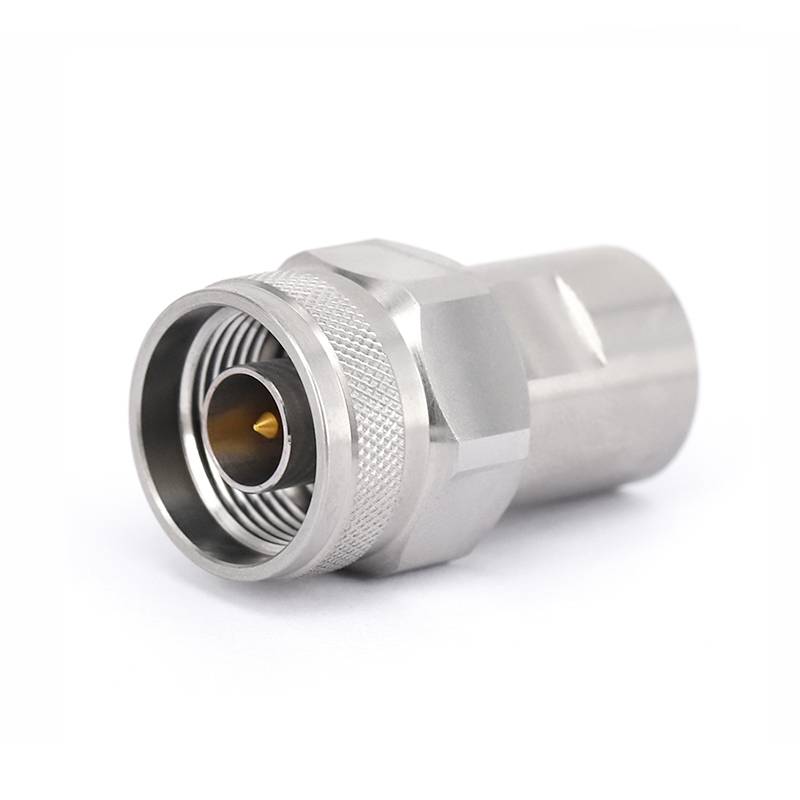
RF loads are passive components designed to absorb RF energy and provide a termination for RF circuits. They are typically used to simulate real-world conditions, test RF equipment, and ensure proper impedance matching. RF loads come in various types, including fixed loads, variable loads, and precision loads, each tailored to specific applications and frequency ranges. For example, GPO RF Loads are commonly used in high-frequency applications, while 1.0mm RF Loads are suitable for ultra-high-frequency applications. N RF Loads are widely used in general-purpose RF applications due to their versatility and reliability.
Capacitors
Capacitors, on the other hand, are passive components that store and release electrical energy in an electric field. They are used in a wide range of RF applications, including filtering, coupling, bypassing, and tuning. Capacitors come in various types, such as ceramic, mica, film, and electrolytic capacitors, each with its own unique characteristics and performance parameters. In RF applications, ceramic capacitors are often preferred due to their high capacitance density, low equivalent series resistance (ESR), and excellent high-frequency performance.
Comparison of RF Loads and Capacitors
Now that we have a basic understanding of RF loads and capacitors, let's compare them in terms of several key aspects.
Impedance Matching
One of the primary functions of RF loads is to provide a precise impedance match to the RF source or transmission line. This is crucial for minimizing signal reflections and ensuring maximum power transfer. RF loads are designed to have a specific impedance value, typically 50 or 75 ohms, which is matched to the characteristic impedance of the RF system. In contrast, capacitors are not primarily used for impedance matching. While they can affect the impedance of a circuit to some extent, their main function is to store and release electrical energy.
Power Handling
RF loads are designed to handle high levels of RF power without significant degradation in performance. They are typically rated for a specific power level, which can range from a few milliwatts to several kilowatts, depending on the application. Capacitors, on the other hand, have a limited power handling capability. They are generally used for low-power applications, such as filtering and coupling, where the power levels are relatively low.
Frequency Response
RF loads are designed to operate over a wide range of frequencies, from a few kilohertz to several gigahertz. They are optimized for flat frequency response, meaning that they provide a consistent impedance and power absorption across the entire frequency range. Capacitors, on the other hand, have a limited frequency response. Their capacitance value and performance can vary significantly with frequency, especially at high frequencies. This makes them less suitable for applications that require a wide frequency range.
Signal Attenuation
RF loads are used to absorb RF energy and provide signal attenuation. They are designed to dissipate the RF power as heat, thereby reducing the amplitude of the RF signal. Capacitors, on the other hand, do not provide significant signal attenuation. They are mainly used for filtering and coupling, where the goal is to pass certain frequencies while blocking others.
Applications
RF loads are commonly used in a variety of RF applications, including RF testing, calibration, and measurement. They are also used in RF power amplifiers, antennas, and transmission lines to provide a termination and ensure proper impedance matching. Capacitors, on the other hand, are used in a wide range of RF applications, including filtering, coupling, bypassing, and tuning. They are also used in RF oscillators, mixers, and amplifiers to control the frequency and phase of the RF signal.
Advantages and Disadvantages of RF Loads and Capacitors
Based on the comparison above, we can summarize the advantages and disadvantages of RF loads and capacitors as follows:
RF Loads
- Advantages:
- Precise impedance matching
- High power handling capability
- Wide frequency response
- Signal attenuation
- Suitable for RF testing and measurement
- Disadvantages:
- Limited to providing impedance matching and signal attenuation
- Higher cost compared to capacitors
- Generates heat, which may require additional cooling measures
Capacitors
- Advantages:
- Low cost
- Small size
- High capacitance density
- Suitable for filtering, coupling, bypassing, and tuning
- Disadvantages:
- Limited power handling capability
- Narrow frequency response
- Does not provide significant signal attenuation
Choosing the Right Component for Your RF Application
When choosing between RF loads and capacitors for your RF application, it is important to consider the specific requirements and constraints of your project. Here are some factors to consider:
Impedance Matching
If impedance matching is critical for your application, RF loads are the clear choice. They provide a precise impedance match to the RF source or transmission line, minimizing signal reflections and ensuring maximum power transfer.
Power Handling
If your application requires high power handling capability, RF loads are the better option. They are designed to handle high levels of RF power without significant degradation in performance.
Frequency Response
If your application requires a wide frequency response, RF loads are more suitable. They are optimized for flat frequency response, providing a consistent impedance and power absorption across the entire frequency range.

Signal Attenuation
If signal attenuation is required, RF loads are the obvious choice. They are designed to absorb RF energy and provide signal attenuation, reducing the amplitude of the RF signal.
Cost and Size
If cost and size are important factors, capacitors may be a better option. They are generally less expensive and smaller in size compared to RF loads.
Conclusion
In conclusion, RF loads and capacitors are both essential components in RF applications, each with its own unique characteristics and performance parameters. RF loads are primarily used for impedance matching, power handling, and signal attenuation, while capacitors are mainly used for filtering, coupling, bypassing, and tuning. When choosing between RF loads and capacitors, it is important to consider the specific requirements and constraints of your project, such as impedance matching, power handling, frequency response, signal attenuation, cost, and size.
As a leading RF loads supplier, we offer a wide range of high-quality RF loads to meet the diverse needs of our customers. Our RF loads are designed and manufactured to the highest standards, ensuring reliable performance and long-term durability. If you have any questions or need help choosing the right RF load for your application, please do not hesitate to contact us. We are here to assist you with your RF load requirements and help you achieve optimal performance in your RF projects.
References
- Pozar, D. M. (2011). Microwave Engineering (4th ed.). Wiley.
- Collin, R. E. (2001). Foundations for Microwave Engineering (2nd ed.). McGraw-Hill.
- Hayt, W. H., & Kemmerly, J. E. (2001). Engineering Circuit Analysis (6th ed.). McGraw-Hill.


