

How do RF loads work in microwave frequencies?
Leave a message

Hey there! I'm a supplier of RF loads, and today I'm gonna dive into how RF loads work at microwave frequencies. It's a pretty cool topic, and I hope by the end of this blog, you'll have a solid understanding of these nifty devices.
First off, let's talk about what RF loads are. In simple terms, an RF load is a device that absorbs radio - frequency (RF) power. At microwave frequencies, which typically range from 1 GHz to 300 GHz, these loads play a crucial role in various applications. Think of them as the "sinks" in an RF circuit. They're designed to dissipate the RF energy in a controlled way, preventing unwanted reflections and ensuring the proper functioning of the entire system.
So, how do they actually work? Well, it all boils down to the principle of impedance matching. In an RF system, you want to transfer power efficiently from the source to the load. When the impedance of the load matches the impedance of the source, maximum power transfer occurs. At microwave frequencies, this becomes even more critical because any impedance mismatch can lead to significant power reflections, which can cause all sorts of problems like signal distortion and reduced system performance.
RF loads are engineered to have a specific impedance, usually 50 ohms, which is a standard impedance in most RF systems. This impedance is carefully designed to match the characteristic impedance of the transmission lines used in the system. When an RF signal travels through a transmission line and reaches the load, if the load impedance matches the line impedance, the signal is absorbed by the load, and there are minimal reflections.

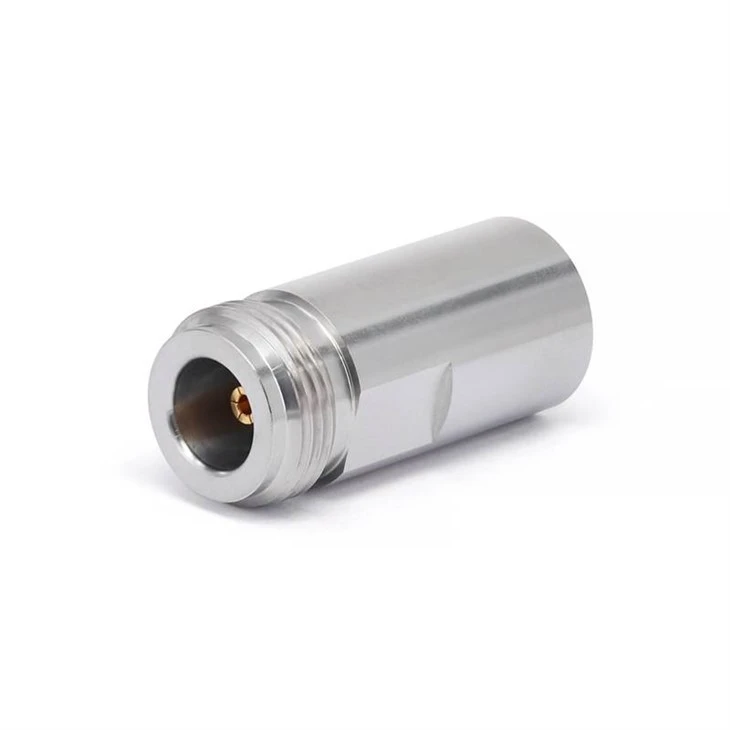
Let's take a closer look at the internal components of an RF load. Most RF loads consist of a resistive element and a housing. The resistive element is the key part that absorbs the RF power. It's made of materials that have a high resistance and can handle the heat generated by the absorbed power. For example, some resistive elements are made of carbon - based materials or thin - film resistors.
The housing of the RF load serves several purposes. It provides mechanical protection for the resistive element, and it also helps with heat dissipation. Since the absorbed RF power is converted into heat, the housing needs to be able to transfer this heat away from the resistive element to prevent overheating. Some RF loads have heat sinks or fins on the housing to increase the surface area for better heat transfer.
Now, let's talk about different types of RF loads available at microwave frequencies. One popular type is the N RF Loads. N connectors are widely used in RF systems because they're robust and can handle relatively high power levels. N RF loads are suitable for applications where you need to dissipate a significant amount of RF power, such as in high - power transmitters or test setups.
Another common type is the SMA RF Loads. SMA connectors are smaller and more compact compared to N connectors. They're often used in applications where space is limited, like in mobile devices or small - scale RF modules. SMA RF loads are great for low - to medium - power applications and are known for their excellent performance at microwave frequencies.
Then there are the 2.4mm RF Loads. These loads are designed for high - frequency applications, typically above 18 GHz. The 2.4mm connector provides a very low - loss connection, which is essential for accurate measurements and high - performance RF systems at these high frequencies.
In terms of applications, RF loads are used in a wide range of industries. In the telecommunications industry, they're used in base stations to terminate unused RF ports and prevent signal reflections. In the aerospace and defense sector, RF loads are used in radar systems and electronic warfare equipment to simulate different load conditions and test the performance of the systems. They're also used in RF test and measurement equipment, such as network analyzers and spectrum analyzers, to calibrate and verify the accuracy of the measurements.
One important consideration when using RF loads at microwave frequencies is their power handling capacity. You need to make sure that the load can handle the amount of RF power that will be applied to it. If the power exceeds the load's rating, it can cause the resistive element to overheat and fail, which can damage the load and potentially the entire RF system.
Another factor to consider is the frequency range of the RF load. Different loads are designed to work within specific frequency ranges. You need to choose a load that has a frequency response that matches the frequencies of your RF system. For example, if you're working with a system that operates at 10 GHz, you need to make sure the RF load you choose has a good performance at that frequency.
In conclusion, RF loads are essential components in RF systems operating at microwave frequencies. They work by absorbing RF power through impedance matching, and they come in different types and sizes to suit various applications. Whether you're in the telecommunications, aerospace, or test and measurement industry, having the right RF load can make a big difference in the performance of your RF system.
If you're in the market for RF loads, we've got a wide range of options to meet your needs. Whether you need N RF Loads, SMA RF Loads, or 2.4mm RF Loads, we can provide high - quality products. Don't hesitate to reach out to us for more information or to start a purchase negotiation. We're here to help you find the perfect RF load solution for your RF system.
References
- Pozar, D. M. (2011). Microwave Engineering. Wiley.
- Collin, R. E. (2001). Foundations for Microwave Engineering. Wiley.


