

What is the best antenna for Wi - Fi?
Leave a message

Yo, what's up! If you're here, chances are you're on the hunt for the best antenna for Wi - Fi, and you've come to the right place. As someone who works at an antennas supplier, I've got all the deets to help you make the right choice.
First off, let's get into why choosing the right Wi - Fi antenna is so important. A good antenna can significantly boost your Wi - Fi signal strength, increase the coverage area, and improve the overall quality of your wireless connection. Whether you're streaming high - def movies, gaming online, or just need a stable connection for work, a top - notch antenna can make a world of difference.
So, what kinds of antennas are out there? Well, there are several types, each with its own pros and cons.
Omnidirectional Antennas
These are the most common type of Wi - Fi antennas you'll come across. Omnidirectional antennas radiate the signal equally in all directions, kind of like a 360 - degree circle. They're great for general use in homes or small offices where you want a wide - spread signal. For example, if you have a living room with multiple devices that need to connect to the Wi - Fi from different angles, an omnidirectional antenna is a solid choice.
The advantage of omnidirectional antennas is their simplicity and ease of use. You don't have to worry about pointing the antenna in a specific direction to get the best signal. However, the downside is that because the signal is spread out in all directions, the signal strength in any one particular direction might not be as strong as a directional antenna.
Directional Antennas
Now, let's talk about directional antennas. Unlike omnidirectional antennas, these guys focus the signal in a specific direction. Think of it like a flashlight. Instead of shining light everywhere, it shines a concentrated beam in one direction.
Directional antennas are perfect for situations where you need to send a strong signal over a long distance or to a specific spot. For instance, if you have a large backyard where you want to use Wi - Fi - enabled devices, or if you're trying to bridge a Wi - Fi connection between two buildings, a directional antenna is the way to go.
There are a couple of popular types of directional antennas.
Yagi - Uda Antennas
Yagi - Uda antennas are a well - known type of directional antenna. They're made up of a series of parallel elements, which help direct the signal in one direction. Yagi - Uda antennas are pretty affordable and relatively easy to install. They're often used for outdoor Wi - Fi applications, like extending the signal to a detached garage or a shed.
Log - periodic Antennas
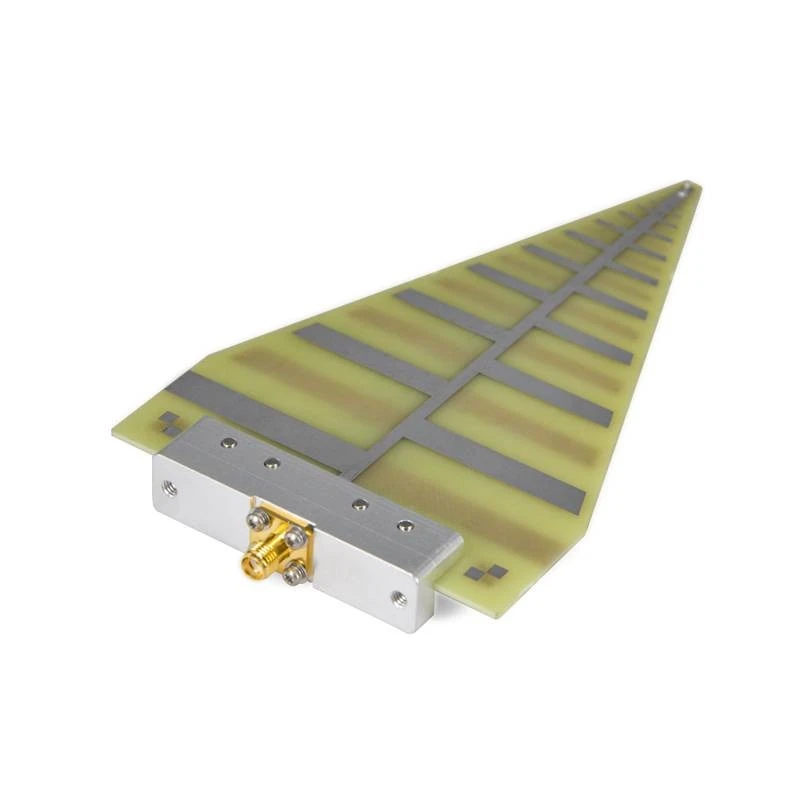
Log - periodic antennas are another type of directional antenna. They have a unique design where the elements change in size and spacing in a logarithmic pattern. This design allows them to work over a wide range of frequencies, making them very versatile. Log - periodic antennas are often used in professional settings, such as in wireless communication networks or in areas where there's a lot of interference.
Horn Antennas
Horn antennas are also directional, but they have a distinct horn - shaped design. They're known for their high gain and excellent performance at high frequencies. Horn antennas are commonly used in satellite communication, radar systems, and some specialized Wi - Fi applications where a very strong and concentrated signal is required.
Factors to Consider When Choosing a Wi - Fi Antenna
Now that you know about the different types of antennas, let's talk about the factors you need to consider when making your choice.

Frequency Range
Wi - Fi operates on different frequency bands, mainly 2.4 GHz and 5 GHz. The 2.4 GHz band has a longer range but slower speed, while the 5 GHz band offers faster speed but a shorter range. Make sure the antenna you choose is compatible with the frequency band of your Wi - Fi router. Some antennas are dual - band, which means they can work on both 2.4 GHz and 5 GHz, giving you more flexibility.
Gain
Gain is a measure of how much an antenna can amplify the signal. It's measured in decibels (dB). A higher gain antenna will send and receive signals more effectively over a longer distance. However, keep in mind that a very high - gain antenna might have a narrower beamwidth, so you need to make sure it's pointed in the right direction if it's a directional antenna.
Polarization
Polarization refers to the orientation of the electromagnetic waves that the antenna emits. There are two main types of polarization: vertical and horizontal. Most Wi - Fi routers and devices use vertical polarization, so it's usually a good idea to choose an antenna with vertical polarization for better compatibility.
Environment
The environment where you'll be using the antenna also plays a big role. If you're using it indoors, you might need an antenna that can penetrate walls and other obstacles. If it's for outdoor use, you'll need an antenna that's weather - resistant and can handle different environmental conditions.
Our Antenna Offerings
As an antennas supplier, we've got a wide range of Wi - Fi antennas to suit different needs and budgets. Whether you're looking for a simple omnidirectional antenna for your home or a high - performance directional antenna for a commercial application, we've got you covered.
Our team of experts is always on hand to help you choose the right antenna for your specific situation. We can answer all your questions, provide technical support, and even offer installation advice if needed.
Making the Right Decision
Choosing the best antenna for Wi - Fi can seem like a daunting task, but if you keep these factors in mind and understand the different types of antennas available, you'll be well on your way to making the right choice.
If you're still not sure which antenna is right for you, don't hesitate to reach out to us. We're here to help you get the most out of your Wi - Fi connection. Whether you're a homeowner, a small business owner, or a large corporation, we can find the perfect antenna solution for you.
So, if you're ready to take your Wi - Fi to the next level, contact us today. Let's start a conversation about your Wi - Fi needs, and together, we'll find the best antenna for you. We look forward to working with you and helping you achieve a stronger, more reliable Wi - Fi connection.
References
- "Wireless Communication Systems: From RF Sub - systems to 4G Enabling Technologies" by John L. Volakis, et al.
- "Antenna Theory: Analysis and Design" by Constantine A. Balanis.


