
How do SMA attenuators affect the measurement accuracy of test equipment?
Leave a message

In the realm of RF (Radio Frequency) and microwave testing, the accuracy of measurement is of paramount importance. Test equipment serves as the eyes and ears for engineers and technicians, providing crucial data for the design, development, and validation of RF systems. Among the various components that can influence the measurement accuracy of test equipment, SMA attenuators play a significant role. As a trusted SMA Attenuators supplier, I am well - versed in how these devices interact with test equipment and impact measurement results.
Understanding SMA Attenuators
SMA (SubMiniature version A) attenuators are passive RF components designed to reduce the power of an RF signal without significantly distorting its waveform. They are widely used in a variety of applications, such as signal level adjustment, impedance matching, and protection of sensitive test equipment from high - power signals. The attenuation value of an SMA attenuator is typically specified in decibels (dB), indicating the amount of power reduction.
The basic principle behind an SMA attenuator is the use of resistive elements to dissipate a portion of the input signal power. These resistive networks are carefully designed to provide a specific attenuation level while maintaining a consistent impedance across the operating frequency range. For example, a 10 dB SMA attenuator will reduce the power of an input signal by a factor of 10.
Impact on Signal - to - Noise Ratio (SNR)
One of the primary ways SMA attenuators affect the measurement accuracy of test equipment is through their influence on the signal - to - noise ratio (SNR). The SNR is a critical parameter in RF measurements, representing the ratio of the power of the desired signal to the power of the background noise.
When an SMA attenuator is inserted into the signal path, it reduces both the signal power and the noise power. However, the impact on the SNR depends on the source of the noise. If the noise is mainly generated within the test equipment itself, the attenuator will reduce the signal power more than the noise power at the input of the test equipment. This can lead to a decrease in the SNR, making it more difficult for the test equipment to accurately detect and measure the signal.
On the other hand, if the noise is coming from the external environment or the signal source, the attenuator can help improve the SNR. By reducing the power of the external noise along with the signal, the relative contribution of the test - equipment - generated noise becomes more significant. In some cases, this can result in a cleaner signal at the input of the test equipment, leading to more accurate measurements.
Frequency Response and Bandwidth
The frequency response of an SMA attenuator is another crucial factor that affects measurement accuracy. An ideal attenuator would provide a flat attenuation across all frequencies within its specified bandwidth. However, in reality, all attenuators have some degree of frequency - dependent attenuation.
This frequency - dependent behavior can cause errors in measurement, especially when testing wide - bandwidth signals. For example, if an SMA attenuator has a higher attenuation at higher frequencies, it will distort the frequency content of the signal. This distortion can lead to inaccurate measurements of parameters such as amplitude, phase, and modulation characteristics.
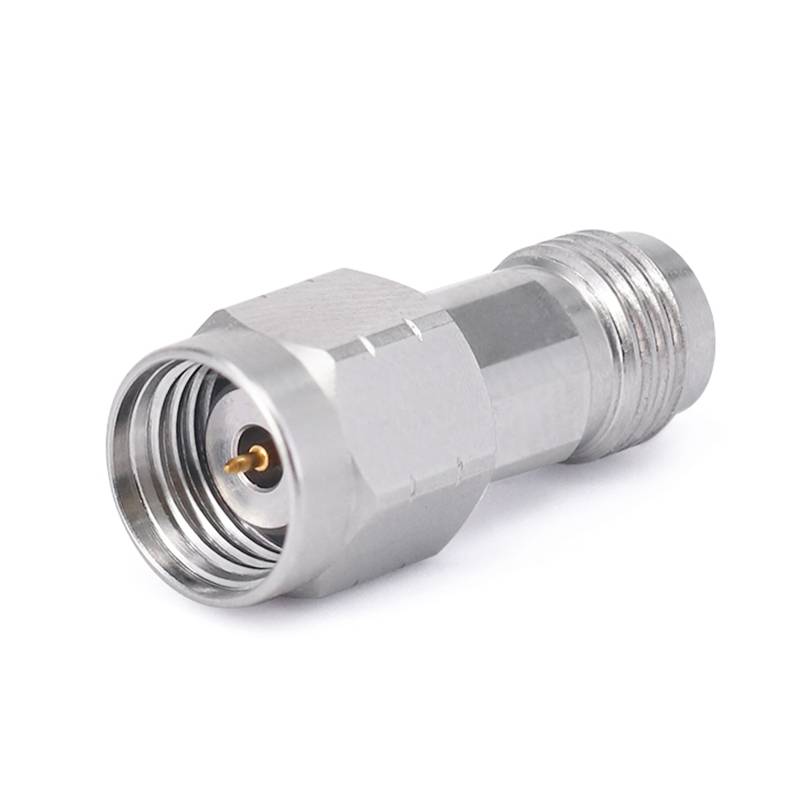

As a SMA Attenuators supplier, we ensure that our products are designed with a flat frequency response over a wide bandwidth. This helps to minimize the frequency - dependent errors and ensures that the test equipment can accurately measure signals across the entire operating frequency range.
Insertion Loss and Return Loss
Insertion loss and return loss are two important performance metrics for SMA attenuators. Insertion loss refers to the amount of power loss that occurs when the attenuator is inserted into the signal path. A well - designed SMA attenuator should have an insertion loss that closely matches its specified attenuation value. Any deviation from the specified insertion loss can lead to measurement errors.
Return loss, on the other hand, measures the amount of signal power that is reflected back from the attenuator due to impedance mismatches. High return loss indicates a good impedance match, which is essential for accurate RF measurements. If the return loss is low, a significant portion of the signal can be reflected back, causing standing waves in the signal path. These standing waves can interfere with the measurement process and lead to inaccurate results.
Our company, as a professional SMA Attenuators supplier, conducts rigorous testing on each attenuator to ensure that the insertion loss and return loss meet the strictest industry standards. This helps to guarantee the accuracy of the measurements made by the test equipment.
Thermal Effects
Thermal effects can also have a significant impact on the measurement accuracy of test equipment when using SMA attenuators. As the attenuator dissipates power, it generates heat. This heat can cause changes in the electrical properties of the resistive elements within the attenuator, such as resistance and impedance.
These changes can lead to variations in the attenuation level and frequency response of the attenuator over time. For long - term measurements or in high - power applications, the thermal effects can be particularly pronounced. To mitigate these issues, our SMA attenuators are designed with high - quality materials and thermal management techniques. This helps to maintain a stable performance even under high - power and high - temperature conditions.
Comparison with Other Types of Attenuators
In addition to SMA attenuators, there are other types of attenuators available in the market, such as 2.4mm Attenuators and 1.85mm Attenuators. Each type has its own advantages and disadvantages in terms of measurement accuracy.
2.4mm attenuators are typically used in high - frequency applications, offering a higher bandwidth and better performance at frequencies above 50 GHz. However, they are more expensive and less commonly used compared to SMA attenuators. 1.85mm attenuators, on the other hand, are designed for even higher frequencies, up to 67 GHz. They provide excellent electrical performance but are also more costly and require specialized connectors.
SMA attenuators, on the contrary, are more versatile and cost - effective. They are suitable for a wide range of applications from low to medium frequencies. While they may not offer the same level of performance as 2.4mm or 1.85mm attenuators at extremely high frequencies, they can provide accurate measurements in most common RF testing scenarios.
Conclusion
SMA attenuators have a profound impact on the measurement accuracy of test equipment. Their influence on the SNR, frequency response, insertion loss, return loss, and thermal performance can either enhance or degrade the measurement results. As a SMA Attenuators supplier, we are committed to providing high - quality attenuators that minimize these negative effects and ensure accurate and reliable measurements.
If you are in the market for SMA attenuators or have any questions about how they can improve the measurement accuracy of your test equipment, we invite you to contact us. Our team of experts is ready to assist you in selecting the right attenuators for your specific application and to discuss the details of your procurement needs.
References
- Pozar, D. M. (2011). Microwave Engineering. Wiley.
- Collin, R. E. (2001). Foundations for Microwave Engineering. Wiley - Interscience.


