
How does phase noise affect the performance of RF systems?
Leave a message

Phase noise is a critical parameter in the performance evaluation of RF (Radio Frequency) systems. As a leading supplier of RF amplifiers, we have witnessed firsthand how phase noise can significantly impact the overall functionality and efficiency of these systems. In this blog, we will delve into the concept of phase noise, its sources, and most importantly, how it affects the performance of RF systems.
Understanding Phase Noise
Phase noise is defined as the short - term fluctuations in the phase of a signal. In an ideal RF signal, the phase would remain constant over time. However, in real - world scenarios, various factors introduce random variations in the phase of the signal. These fluctuations are typically represented in the frequency domain as sidebands around the carrier frequency.
Mathematically, phase noise is often expressed in terms of the power spectral density (PSD) of the phase fluctuations, usually in dBc/Hz (decibels relative to the carrier per hertz). A lower phase noise value indicates a more stable signal, while a higher value implies greater phase instability.
Sources of Phase Noise
There are several sources of phase noise in RF systems. One of the primary sources is the oscillator. Oscillators are fundamental components in RF systems, used to generate the carrier frequency. However, they are prone to phase noise due to thermal noise in the active and passive components, as well as mechanical vibrations and temperature variations.
Another source of phase noise is the active components in the RF chain, such as amplifiers. Amplifiers can introduce phase noise through the non - linear behavior of their transistors. When an amplifier operates in a non - linear region, it can generate intermodulation products, which contribute to phase noise.
External factors can also contribute to phase noise. For example, electromagnetic interference (EMI) from nearby electronic devices or power supply noise can couple into the RF signal and cause phase fluctuations.
Impact on Signal Quality
One of the most significant ways phase noise affects RF systems is by degrading the signal quality. In communication systems, phase noise can cause adjacent channel interference. When the phase noise sidebands of a signal extend into the frequency band of an adjacent channel, it can interfere with the signals in that channel, leading to a decrease in the signal - to - noise ratio (SNR) and an increase in bit error rate (BER).
In radar systems, phase noise can reduce the range resolution. Radar systems rely on the accurate measurement of the phase difference between the transmitted and received signals to determine the distance of the target. Phase noise can introduce errors in these phase measurements, resulting in a less accurate determination of the target's range.
Impact on Spectral Purity
Phase noise also has a direct impact on the spectral purity of the RF signal. A high - phase - noise signal has broad sidebands, which means that the power of the signal is spread over a wider frequency range. This can be a problem in applications where a narrow - band signal is required, such as in frequency - division multiplexing (FDM) systems.
In FDM systems, multiple signals are transmitted simultaneously in different frequency bands. If the phase noise of a signal is too high, its sidebands can overlap with the frequency bands of other signals, causing interference and reducing the overall system capacity.
Impact on Receiver Sensitivity
Receiver sensitivity is a crucial parameter in RF systems, as it determines the minimum signal strength that the receiver can detect. Phase noise can degrade the receiver sensitivity by increasing the noise floor.
When the phase noise sidebands of the local oscillator in a receiver mix with the incoming signal, they can generate additional noise components. These noise components add to the thermal noise already present in the receiver, increasing the overall noise level and reducing the ability of the receiver to detect weak signals.
Our RF Amplifiers and Phase Noise
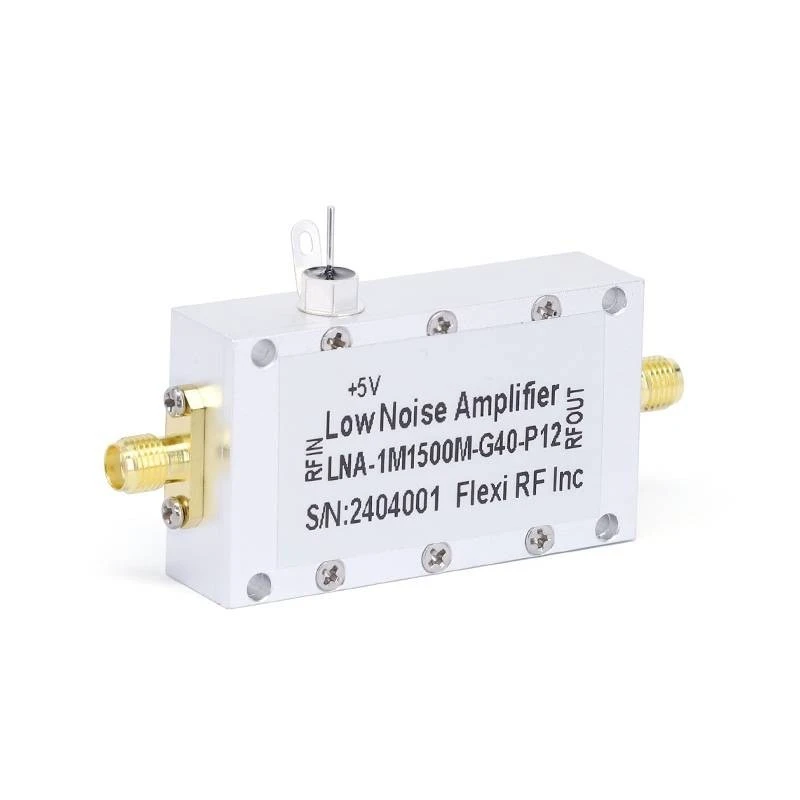
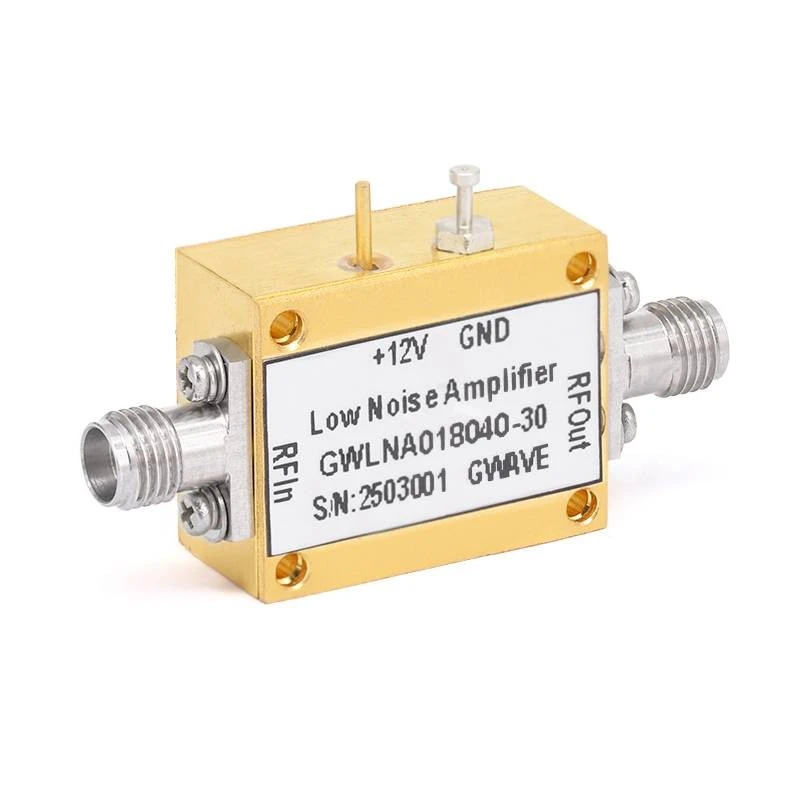
As a supplier of RF amplifiers, we understand the importance of minimizing phase noise in our products. Our 90GHz Low Noise Amplifiers, 50GHz Low Noise Amplifiers, and 18GHz Low Noise Amplifiers are designed with advanced technologies to reduce phase noise and improve the overall performance of RF systems.
We use high - quality components and state - of - the - art manufacturing processes to ensure that our amplifiers have low phase noise characteristics. Our engineers carefully design the amplifier circuits to minimize the non - linear effects that can contribute to phase noise. Additionally, we implement effective shielding and filtering techniques to reduce the impact of external interference on the amplifier's performance.
Mitigating Phase Noise in RF Systems
There are several strategies that can be employed to mitigate the effects of phase noise in RF systems. One approach is to use high - quality oscillators with low phase noise. For example, crystal oscillators are known for their excellent phase noise performance and are often used in applications where low phase noise is critical.
Another strategy is to use phase - locked loops (PLLs). PLLs can be used to generate a stable output frequency by locking onto a reference signal. They can also be used to reduce the phase noise of an oscillator by filtering out the high - frequency phase fluctuations.
In addition, proper circuit layout and grounding techniques can help to reduce phase noise. By minimizing the length of the signal traces and providing a good ground plane, the coupling of external interference can be reduced, thereby reducing the phase noise in the system.
Conclusion
Phase noise is a complex and significant factor that can have a profound impact on the performance of RF systems. It can degrade signal quality, reduce spectral purity, and lower receiver sensitivity. As a supplier of RF amplifiers, we are committed to providing products that minimize phase noise and improve the overall performance of RF systems.
If you are looking for high - performance RF amplifiers with low phase noise, we invite you to contact us for a detailed discussion about your specific requirements. Our team of experts is ready to assist you in selecting the right amplifier for your application and providing you with the best possible solutions.
References
- Pozar, D. M. (2011). Microwave Engineering. Wiley.
- Razavi, B. (2011). RF Microelectronics. Prentice Hall.
- Lee, T. H. (2004). The Design of CMOS Radio - Frequency Integrated Circuits. Cambridge University Press.


