

Can an antenna be used for RFID systems?
Leave a message

Can an antenna be used for RFID systems? You bet it can! As an antennas supplier, I've seen firsthand how crucial antennas are in RFID (Radio-Frequency Identification) systems. Let's dive into this topic and explore the ins and outs of using antennas for RFID.
First off, what exactly is RFID? It's a technology that uses radio waves to identify and track objects. An RFID system typically consists of three main components: an RFID tag, a reader, and an antenna. The tag is attached to the object being tracked, and it contains a unique identifier. The reader sends out radio signals, and the antenna helps transmit and receive these signals between the reader and the tag.
So, why are antennas so important in RFID systems? Well, they play a key role in determining the range, accuracy, and reliability of the system. A good antenna can significantly improve the performance of an RFID system, allowing for better read rates and more efficient tracking.
There are several types of antennas that can be used in RFID systems, each with its own advantages and disadvantages. One popular type is the Log-periodic Antennas. These antennas are known for their wide frequency range and high gain, which makes them suitable for long-range RFID applications. They can cover a large area and provide consistent performance across different frequencies, making them a versatile choice for many RFID systems.
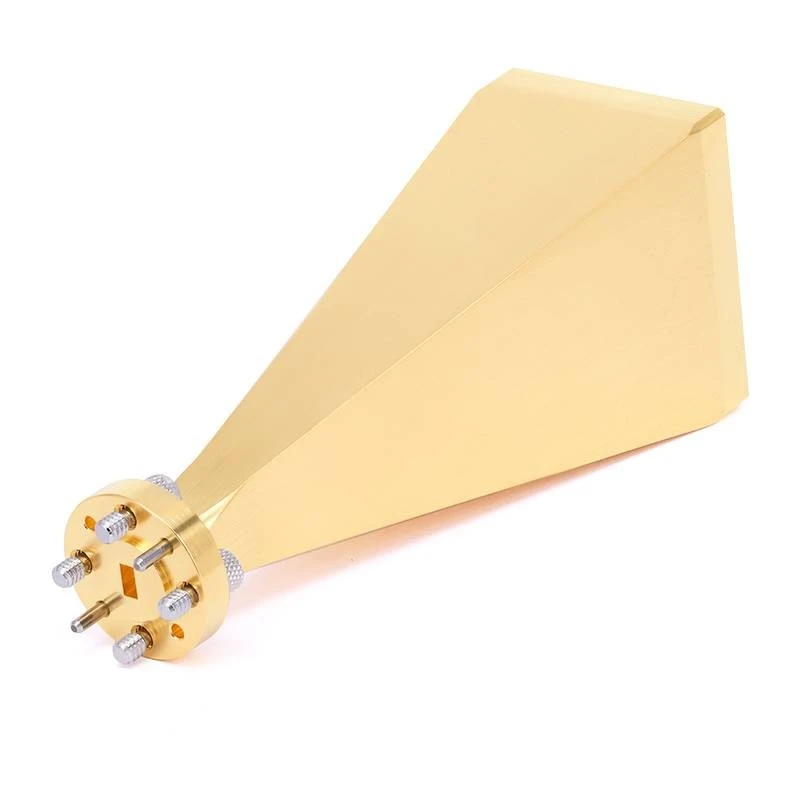
Another type of antenna commonly used in RFID is the Horn Antennas. Horn antennas are known for their high directivity and low side-lobe levels. This means they can focus the radio signals in a specific direction, which is useful for applications where you need to target a particular area or object. They're often used in environments where there's a lot of interference or where you need to read tags at a specific distance.
When choosing an antenna for an RFID system, there are several factors to consider. One of the most important factors is the frequency range. RFID systems operate at different frequencies, and the antenna you choose needs to be compatible with the frequency of the system. For example, if you're using a UHF (Ultra High Frequency) RFID system, you'll need an antenna that can operate in the UHF frequency range.
Another factor to consider is the gain of the antenna. Gain refers to the ability of the antenna to focus the radio signals in a particular direction. A higher gain antenna can provide a longer range, but it may also have a narrower beamwidth, which means it can only cover a smaller area. You'll need to balance the gain and beamwidth based on your specific application requirements.
The polarization of the antenna is also an important consideration. Polarization refers to the orientation of the electric field of the radio waves. There are two main types of polarization: linear and circular. Linear polarization is suitable for applications where the tags are oriented in a specific direction, while circular polarization is more versatile and can work well with tags that are randomly oriented.
In addition to these technical factors, you also need to consider the environment in which the RFID system will be used. For example, if the system will be used in a metal-rich environment, you'll need to choose an antenna that can work well in the presence of metal. Metal can cause interference and reflection, which can affect the performance of the RFID system.

As an antennas supplier, I've helped many customers choose the right antenna for their RFID systems. I understand that every application is unique, and I work closely with my customers to understand their specific requirements and recommend the best antenna solution. Whether you're looking for a long-range antenna for a large warehouse or a high-directivity antenna for a specific application, I can help you find the right antenna for your needs.
If you're in the market for an antenna for your RFID system, I encourage you to get in touch with me. I can provide you with more information about the different types of antennas available, and I can help you choose the right antenna based on your specific requirements. I also offer competitive pricing and excellent customer service, so you can be confident that you're getting the best value for your money.
In conclusion, antennas are an essential component of RFID systems. They play a crucial role in determining the range, accuracy, and reliability of the system. By choosing the right antenna, you can significantly improve the performance of your RFID system and ensure that it meets your specific application requirements. So, if you're looking for an antenna for your RFID system, don't hesitate to contact me. I'm here to help you find the right antenna solution for your needs.
References
- RFID Handbook: Fundamentals and Applications in Contactless Smart Cards, Radio Frequency Identification and Near-Field Communication by Klaus Finkenzeller
- Radio Frequency Identification (RFID) Technology: A Review by S. S. Iyengar and M. K. Prasad


