

How does the cost vary with different types of RF switches?
Leave a message

As an RF switches supplier, I've witnessed firsthand the dynamic relationship between the cost of RF switches and their diverse types. Understanding how the cost varies with different types of RF switches is crucial for both suppliers and customers, as it directly impacts purchasing decisions, project budgets, and overall system performance. In this blog post, I'll delve into the factors that influence the cost of RF switches and explore how different types of switches vary in price.
Factors Influencing the Cost of RF Switches
Before we dive into the cost variations among different types of RF switches, it's essential to understand the key factors that influence their pricing. These factors include:
-
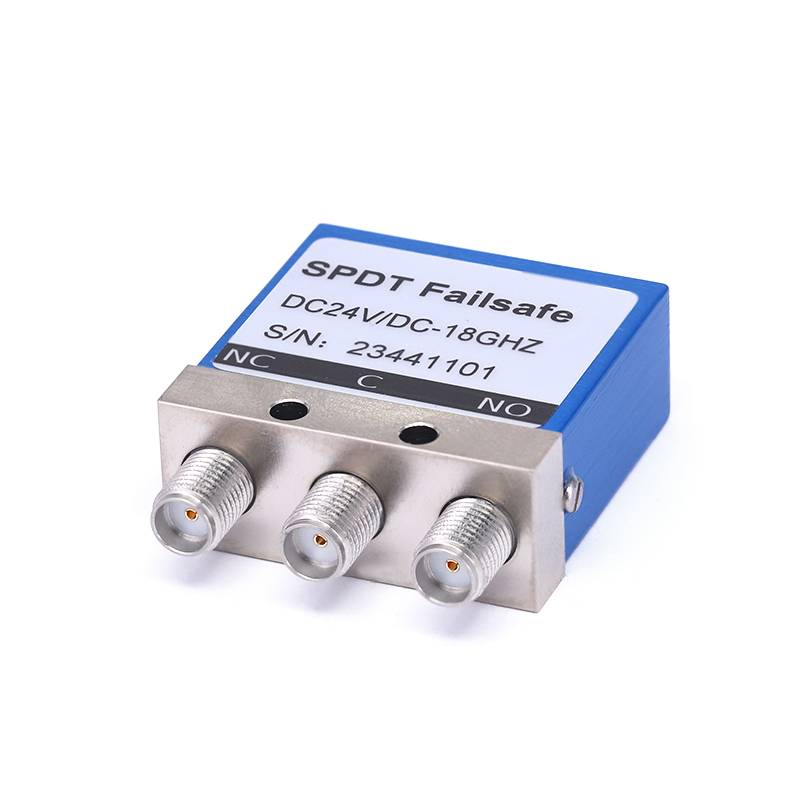
Technology and Design Complexity: The technology used in RF switches, such as mechanical, solid-state, or MEMS (Micro-Electro-Mechanical Systems), significantly impacts their cost. Mechanical switches, for example, are generally less expensive due to their simpler design and construction. On the other hand, solid-state and MEMS switches often incorporate advanced semiconductor technologies and intricate designs, making them more costly.

-
Performance Specifications: RF switches are designed to meet specific performance requirements, such as frequency range, insertion loss, isolation, power handling, and switching speed. Switches with higher performance specifications typically command a higher price due to the additional engineering and manufacturing processes required to achieve these levels of performance.
-
Manufacturing Volume: The volume of RF switches produced can also affect their cost. Higher production volumes often lead to economies of scale, resulting in lower per-unit costs. Conversely, low-volume production runs may incur higher costs due to setup fees, tooling costs, and reduced efficiency.
-
Materials and Components: The quality and cost of the materials and components used in RF switches can have a significant impact on their overall price. Switches made from high-quality materials, such as gold-plated contacts or low-loss dielectrics, may be more expensive than those made from lower-cost materials.
-
Packaging and Form Factor: The packaging and form factor of RF switches can also influence their cost. Switches that require specialized packaging, such as hermetic sealing or surface-mount technology (SMT), may be more expensive than those with standard packaging options.
Cost Variations Among Different Types of RF Switches
Now that we've explored the factors that influence the cost of RF switches, let's take a closer look at how different types of switches vary in price.
Mechanical RF Switches
Mechanical RF switches are among the oldest and most widely used types of RF switches. They operate by physically moving a contact to connect or disconnect a signal path. Mechanical switches are known for their high isolation, low insertion loss, and excellent power handling capabilities.
Due to their relatively simple design and construction, mechanical RF switches are generally the most cost-effective option for many applications. They are commonly used in test and measurement equipment, radar systems, and communication networks where high performance and reliability are required.
However, mechanical switches also have some limitations. They have a relatively slow switching speed compared to solid-state switches, and they may be prone to mechanical wear and tear over time. These factors can limit their suitability for applications that require high-speed switching or frequent cycling.
Solid-State RF Switches
Solid-state RF switches use semiconductor devices, such as PIN diodes or FETs (Field-Effect Transistors), to control the flow of RF signals. They offer several advantages over mechanical switches, including faster switching speeds, longer lifetimes, and higher reliability.
Solid-state RF switches are available in a wide range of configurations, including single-pole single-throw (SPST), single-pole multiple-throw (SPMT), and multiple-pole multiple-throw (MPMT). They are commonly used in wireless communication systems, satellite communication systems, and military applications where high-speed switching and compact size are essential.
The cost of solid-state RF switches can vary significantly depending on their performance specifications, technology, and manufacturing volume. Switches with higher frequency ranges, lower insertion loss, and higher isolation typically command a higher price. Additionally, switches that use advanced semiconductor technologies, such as GaAs (Gallium Arsenide) or SiGe (Silicon Germanium), may be more expensive than those made from standard silicon-based materials.
MEMS RF Switches
MEMS RF switches are a relatively new type of RF switch that combines the advantages of mechanical and solid-state switches. They use microfabrication techniques to create tiny mechanical structures that can be actuated electronically to control the flow of RF signals.
MEMS RF switches offer several benefits over traditional mechanical and solid-state switches, including low insertion loss, high isolation, fast switching speeds, and low power consumption. They are also highly miniaturizable, making them ideal for applications where size and weight are critical factors.
However, MEMS RF switches are still relatively expensive compared to mechanical and solid-state switches. This is due in part to the complex manufacturing processes required to fabricate the microelectromechanical structures. Additionally, MEMS switches are a relatively new technology, and the market for these switches is still developing, which can contribute to higher costs.
Conclusion
In conclusion, the cost of RF switches can vary significantly depending on their type, performance specifications, technology, and manufacturing volume. Mechanical RF switches are generally the most cost-effective option for many applications, offering high isolation, low insertion loss, and excellent power handling capabilities. Solid-state RF switches offer faster switching speeds, longer lifetimes, and higher reliability, but they may be more expensive than mechanical switches. MEMS RF switches offer the best of both worlds, combining the advantages of mechanical and solid-state switches, but they are currently the most expensive option.
When selecting an RF switch for your application, it's important to consider your specific requirements, budget, and performance goals. By understanding the factors that influence the cost of RF switches and the cost variations among different types of switches, you can make an informed decision that meets your needs and provides the best value for your investment.
If you're interested in learning more about RF switches or exploring our product offerings, please visit our website at RF Switches Types. Our team of experts is available to assist you with your RF switch selection and provide you with a customized solution that meets your specific requirements. Contact us today to discuss your RF switch needs and start the procurement process.
References
- Pozar, D. M. (2011). Microwave Engineering (4th ed.). Wiley.
- Collin, R. E. (2001). Foundations for Microwave Engineering (2nd ed.). Wiley.
- Vendelin, G. D., Pavio, A. M., & Rohde, U. L. (1990). Microwave Circuit Design Using Linear and Nonlinear Techniques. Wiley.


