

How does the operating frequency affect RF switch selection?
Leave a message

In the realm of radio frequency (RF) technology, RF switches play a pivotal role in routing RF signals between different paths. The selection of an RF switch is a critical decision that can significantly impact the performance of an RF system. One of the most important factors influencing this selection is the operating frequency. As an RF switches supplier, I have witnessed firsthand how the operating frequency can shape the choice of RF switches. In this blog, I will delve into the ways in which the operating frequency affects RF switch selection.
Understanding Operating Frequency and RF Switches
Before we explore the relationship between operating frequency and RF switch selection, it is essential to understand what operating frequency and RF switches are. The operating frequency refers to the frequency at which an RF system operates. It can range from a few kilohertz (kHz) to several gigahertz (GHz), depending on the application. For example, AM radio operates in the kHz range, while 5G wireless communication systems operate in the GHz range.
RF switches, on the other hand, are devices that can connect or disconnect RF signals from different paths. They are used in a wide range of applications, including wireless communication systems, radar systems, and test and measurement equipment. RF switches can be classified into different types based on their operating principles, such as electromechanical switches, solid - state switches (including PIN diode switches and FET switches), and MEMS (Micro - Electro - Mechanical Systems) switches. You can learn more about different RF Switches Types.
Insertion Loss and Operating Frequency
Insertion loss is one of the key performance metrics of an RF switch. It refers to the amount of signal power that is lost when the RF signal passes through the switch. The operating frequency has a significant impact on insertion loss.
In general, as the operating frequency increases, the insertion loss of an RF switch also tends to increase. This is because at higher frequencies, there are more losses due to factors such as conductor losses, dielectric losses, and radiation losses. For example, in a PIN diode switch, the resistance of the PIN diode increases with frequency, leading to higher insertion loss.
When selecting an RF switch, it is crucial to consider the acceptable level of insertion loss at the operating frequency. For applications where low insertion loss is critical, such as in high - sensitivity receiver systems, a switch with low insertion loss at the desired operating frequency should be chosen. Some high - performance RF switches are designed to minimize insertion loss over a wide frequency range, but they may come at a higher cost.
Isolation and Operating Frequency
Isolation is another important performance parameter of an RF switch. It measures the degree of separation between the input and output ports of the switch when the switch is in the off - state. A high isolation value indicates that there is minimal leakage of the RF signal from the input port to the output port when the switch is off.
The operating frequency affects isolation in a similar way to insertion loss. As the operating frequency increases, the isolation of an RF switch typically decreases. This is because at higher frequencies, electromagnetic coupling between the ports becomes stronger, leading to more signal leakage.
In applications where high isolation is required, such as in multi - channel communication systems where crosstalk between channels must be minimized, an RF switch with good isolation performance at the operating frequency should be selected. Some advanced RF switches use techniques such as shielding and proper layout design to improve isolation at high frequencies.
Switching Speed and Operating Frequency
Switching speed refers to the time it takes for an RF switch to change its state from on to off or vice versa. The operating frequency can influence the required switching speed.
In high - frequency applications, such as in high - speed data communication systems or radar systems, fast switching speeds are often required. This is because the system may need to switch between different RF paths rapidly to transmit or receive data. For example, in a phased - array radar system, the RF switches need to switch quickly to steer the radar beam.
However, achieving high switching speeds can be challenging at high frequencies. As the operating frequency increases, the parasitic capacitances and inductances in the switch circuit become more significant, which can slow down the switching process. When selecting an RF switch for high - frequency applications, it is important to choose a switch with a switching speed that can meet the requirements of the system.
Power Handling Capacity and Operating Frequency
Power handling capacity is the maximum amount of RF power that an RF switch can handle without being damaged. The operating frequency can have an impact on the power handling capacity of an RF switch.
At higher frequencies, the power handling capacity of an RF switch may be reduced. This is because at high frequencies, the heating effects in the switch are more pronounced. For example, in an electromechanical switch, the contacts may experience more arcing and wear at high frequencies and high power levels, which can limit the power handling capacity.
In applications where high - power RF signals are involved, such as in high - power transmitters, it is necessary to select an RF switch with sufficient power handling capacity at the operating frequency. Some RF switches are specifically designed to handle high - power signals at high frequencies, but they may have larger physical sizes and higher costs.
Switching Lifetime and Operating Frequency
The switching lifetime of an RF switch refers to the number of times the switch can be switched between the on and off states before it fails. The operating frequency can affect the switching lifetime.
In high - frequency applications where the switch is required to switch frequently, the mechanical and electrical stresses on the switch components are increased. For electromechanical switches, the repeated opening and closing of the contacts can cause wear and tear, reducing the switching lifetime. In solid - state switches, the high - frequency operation can also lead to degradation of the semiconductor materials over time.
When selecting an RF switch for high - frequency, high - switching - rate applications, it is important to choose a switch with a long switching lifetime. Some RF switches are designed to withstand a large number of switching cycles, which can be beneficial for applications with high - frequency and high - duty - cycle requirements.
Cost Considerations and Operating Frequency
Cost is always an important factor in the selection of RF switches. The operating frequency can influence the cost of an RF switch in several ways.
High - frequency RF switches often require more advanced materials and manufacturing processes to achieve good performance at high frequencies. For example, switches designed for millimeter - wave frequencies may use special semiconductor materials and precision manufacturing techniques, which can increase the cost.
In addition, high - performance RF switches with low insertion loss, high isolation, fast switching speed, and high power handling capacity at high frequencies are generally more expensive. When selecting an RF switch, a balance needs to be struck between the required performance at the operating frequency and the cost.
Conclusion
In conclusion, the operating frequency has a profound impact on RF switch selection. It affects key performance parameters such as insertion loss, isolation, switching speed, power handling capacity, and switching lifetime. As an RF switches supplier, I understand the importance of considering the operating frequency when helping customers choose the right RF switch for their applications.
When selecting an RF switch, it is essential to carefully evaluate the requirements of the application, including the operating frequency range, the acceptable levels of insertion loss and isolation, the required switching speed, and the power handling capacity. By taking these factors into account, the most suitable RF switch can be chosen to ensure the optimal performance of the RF system.

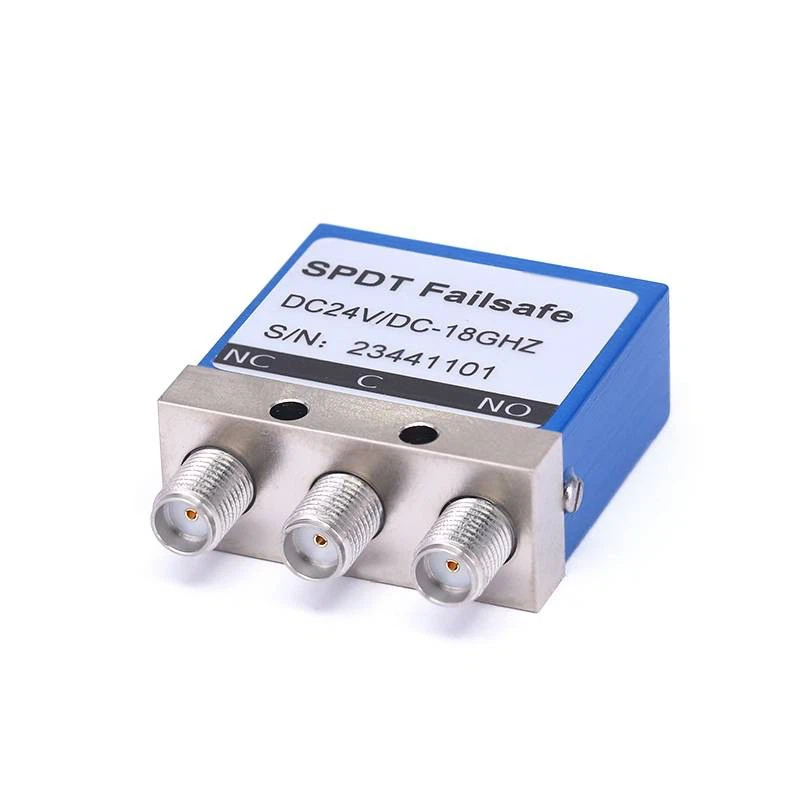
If you are in need of RF switches for your project, I encourage you to reach out to us for a detailed discussion. We have a wide range of RF switches that can meet different operating frequency requirements. Our team of experts can assist you in selecting the most appropriate switch based on your specific needs. Let's start a conversation about your RF switch requirements and find the best solution together.
References
- Pozar, D. M. (2011). Microwave Engineering (4th ed.). Wiley.
- Vendelin, G. D., Pavio, A. M., & Rohde, U. L. (1990). Microwave Circuit Design Using Linear and Nonlinear Techniques. Wiley.
- Gupta, K. C., Garg, R., Bahl, I. J., & Bhartia, P. (1996). Microstrip Lines and Slotlines (2nd ed.). Artech House.


