
How to choose the right RF circulator for a specific application?
Leave a message

When it comes to radio frequency (RF) systems, selecting the right RF circulator is crucial for ensuring optimal performance and efficiency. As a reputable supplier of RF circulators, I understand the complexities involved in this decision-making process. In this blog post, I will guide you through the key factors to consider when choosing an RF circulator for a specific application.
Understanding RF Circulators
Before delving into the selection process, it's essential to have a basic understanding of what an RF circulator is and how it works. An RF circulator is a passive, non-reciprocal three- or four-port device that allows RF signals to flow in a specific direction, typically in a circular pattern. This means that a signal entering one port will exit through the next port in a predefined sequence.
The non-reciprocal nature of RF circulators is what makes them so valuable in RF systems. They can be used to isolate different parts of a system, protect sensitive components from reflected signals, and improve overall system performance. For example, in a transmitter-receiver system, an RF circulator can be used to separate the transmitted and received signals, preventing interference and improving signal quality.
Key Factors to Consider
Now that we have a basic understanding of RF circulators, let's explore the key factors to consider when choosing the right one for your specific application.
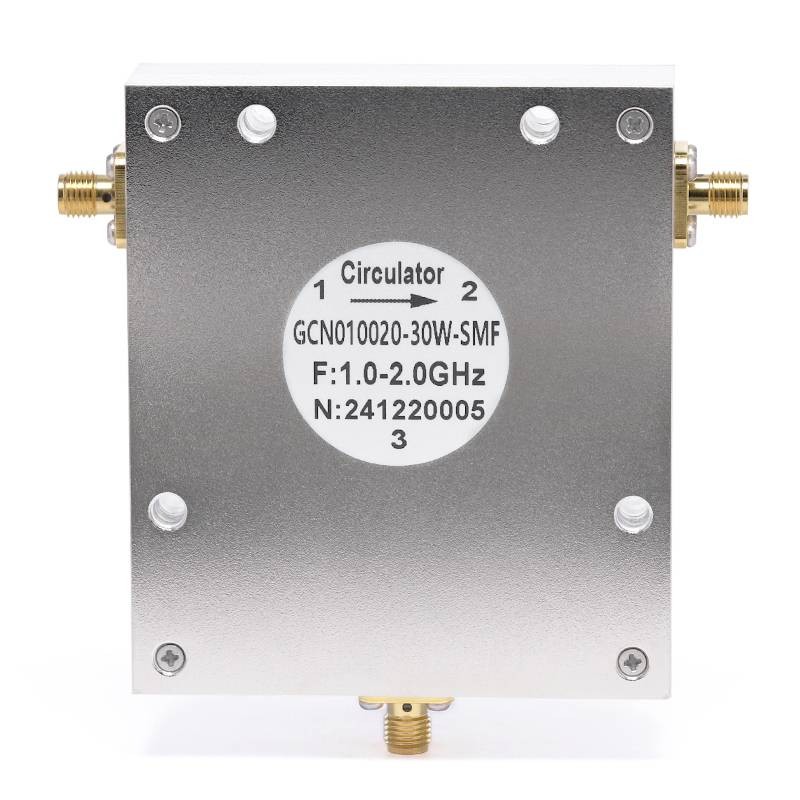
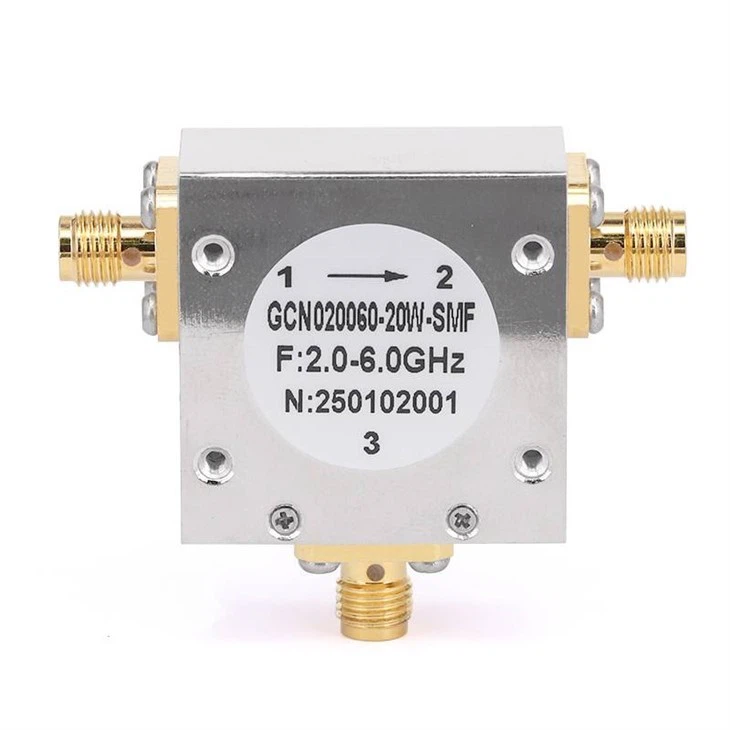
Frequency Range
The first and most important factor to consider is the frequency range of the RF circulator. Different applications require different frequency ranges, and it's crucial to choose a circulator that can operate within the desired frequency band. For example, if you're working on a microwave communication system, you'll need a circulator that can operate at microwave frequencies.
As a supplier, we offer a wide range of RF circulators with different frequency ranges to meet the needs of various applications. For instance, our 26.5GHz RF Coaxial Circulators are designed for high-frequency applications, while our 40GHz RF Coaxial Circulators are suitable for even higher frequency requirements. We also have 6GHz RF Coaxial Circulators for lower frequency applications.
Power Handling
Another important factor to consider is the power handling capability of the RF circulator. The power handling capacity of a circulator refers to the maximum amount of power it can handle without experiencing significant degradation in performance. It's crucial to choose a circulator that can handle the power levels of your specific application to ensure reliable operation.
When selecting a circulator based on power handling, it's important to consider both the average power and the peak power requirements of your system. For high-power applications, such as radar systems or high-power transmitters, you'll need a circulator with a high power handling capacity. Our RF circulators are available in a variety of power ratings to accommodate different power requirements.
Insertion Loss
Insertion loss is another critical parameter to consider when choosing an RF circulator. Insertion loss refers to the amount of power that is lost as the RF signal passes through the circulator. A lower insertion loss indicates better performance, as less power is wasted in the circulator.
In general, insertion loss is measured in decibels (dB), and a lower dB value indicates less loss. When selecting a circulator, it's important to choose one with a low insertion loss to minimize power loss and improve overall system efficiency. Our RF circulators are designed to have low insertion loss, ensuring optimal performance in your application.
Isolation
Isolation is another important parameter that measures the ability of the circulator to isolate the input and output ports. A high isolation value indicates that the circulator can effectively prevent signals from leaking between ports, reducing interference and improving signal quality.
Isolation is also measured in decibels (dB), and a higher dB value indicates better isolation. When choosing a circulator, it's important to select one with a high isolation value to ensure reliable operation and minimize interference in your system. Our RF circulators are designed to have high isolation, providing excellent performance in a variety of applications.
VSWR (Voltage Standing Wave Ratio)
VSWR is a measure of how well the RF circulator matches the impedance of the connected components. A low VSWR value indicates a good impedance match, which means that less power is reflected back from the circulator, resulting in better performance and efficiency.
VSWR is typically expressed as a ratio, such as 1.2:1 or 1.5:1. A lower ratio indicates a better impedance match. When selecting a circulator, it's important to choose one with a low VSWR value to ensure optimal performance and minimize power loss in your system. Our RF circulators are designed to have low VSWR, providing a good impedance match and excellent performance.
Size and Form Factor
The size and form factor of the RF circulator are also important considerations, especially in applications where space is limited. Different applications may require different sizes and form factors of circulators, and it's crucial to choose one that can fit into your system.
As a supplier, we offer a variety of RF circulators with different sizes and form factors to meet the needs of various applications. Whether you need a compact circulator for a portable device or a larger circulator for a high-power system, we have the right solution for you.
Application-Specific Considerations
In addition to the general factors mentioned above, there are also some application-specific considerations that you need to take into account when choosing an RF circulator.
Communication Systems
In communication systems, such as cellular networks or satellite communication systems, RF circulators are used to separate the transmitted and received signals. When choosing a circulator for a communication system, it's important to consider factors such as frequency range, insertion loss, isolation, and VSWR to ensure reliable operation and high-quality communication.
Radar Systems
Radar systems require RF circulators that can handle high power levels and operate at high frequencies. When selecting a circulator for a radar system, it's important to choose one with a high power handling capacity, low insertion loss, high isolation, and low VSWR to ensure accurate detection and reliable operation.
Test and Measurement Equipment
In test and measurement equipment, RF circulators are used to route signals between different components and test ports. When choosing a circulator for test and measurement equipment, it's important to consider factors such as frequency range, insertion loss, isolation, and VSWR to ensure accurate measurements and reliable operation.
Conclusion
Choosing the right RF circulator for a specific application is a critical decision that can have a significant impact on the performance and efficiency of your system. By considering factors such as frequency range, power handling, insertion loss, isolation, VSWR, size, and form factor, as well as application-specific requirements, you can select the best circulator for your needs.
As a supplier of RF circulators, we are committed to providing high-quality products that meet the needs of our customers. Our RF circulators are designed to have excellent performance in terms of frequency range, power handling, insertion loss, isolation, VSWR, and size. If you're looking for the right RF circulator for your application, we invite you to contact us to discuss your requirements and explore our product offerings. We look forward to working with you to find the perfect solution for your RF system.
References
- Pozar, D. M. (2011). Microwave Engineering (4th ed.). Wiley.
- Collin, R. E. (2001). Foundations for Microwave Engineering (2nd ed.). Wiley.
- Matthaei, G. L., Young, L., & Jones, E. M. T. (1964). Microwave Filters, Impedance-Matching Networks, and Coupling Structures. McGraw-Hill.


