
What are the different types of SMA attenuators?
Leave a message

As a seasoned supplier of SMA attenuators, I've witnessed firsthand the diverse needs and applications of these crucial RF components. SMA attenuators play a pivotal role in controlling signal strength across various industries, from telecommunications to aerospace. In this blog, I'll delve into the different types of SMA attenuators, their unique features, and the applications they serve.
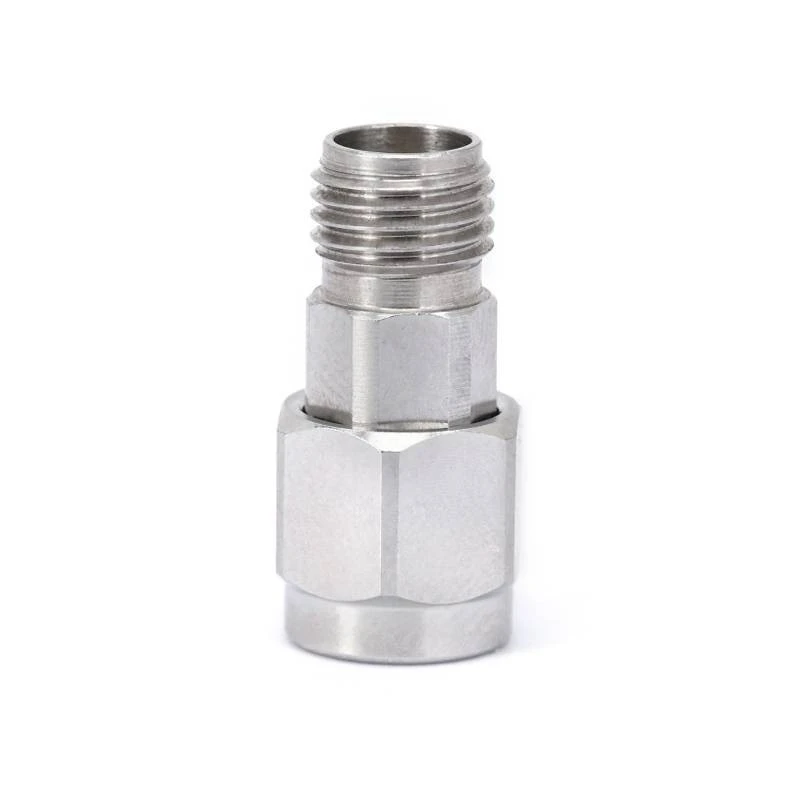
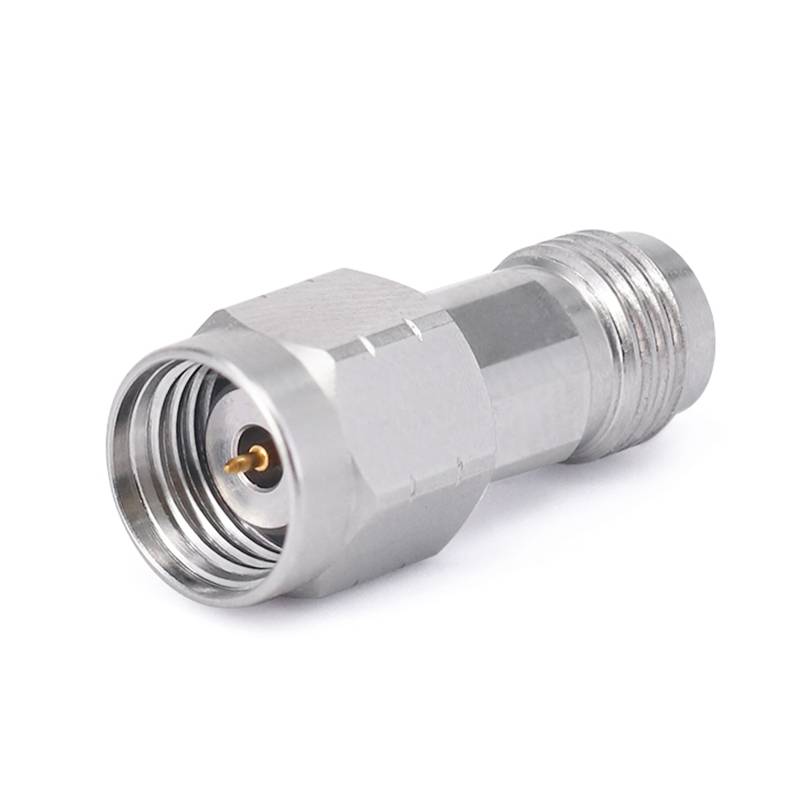
Fixed Attenuators
Fixed attenuators are the most common type of SMA attenuators. As the name suggests, they provide a constant level of attenuation, which is pre - determined at the time of manufacturing. These attenuators are available in a wide range of attenuation values, typically from 1 dB to 60 dB.
The simplicity of fixed attenuators makes them highly reliable and cost - effective. They are often used in applications where a stable and unchanging signal reduction is required. For example, in a test and measurement setup, fixed attenuators can be used to protect sensitive equipment from high - power signals. By inserting a fixed attenuator between the signal source and the measurement device, the signal level can be brought within the acceptable range of the device.
Another common application is in RF communication systems. Fixed attenuators can be used to balance signal levels between different components of the system, ensuring optimal performance. For instance, in a multi - antenna system, attenuators can be used to equalize the signal strength received by each antenna, reducing interference and improving overall system efficiency.
Variable Attenuators
Variable attenuators offer the flexibility of adjusting the attenuation level according to the specific requirements of the application. Unlike fixed attenuators, the attenuation of variable attenuators can be changed either manually or electronically.
Manual variable attenuators typically use a mechanical mechanism, such as a screw or a knob, to adjust the attenuation. These attenuators are relatively simple to operate and are suitable for applications where the attenuation needs to be adjusted infrequently. For example, in a laboratory setting, a manual variable attenuator can be used to fine - tune the signal level during the calibration of RF equipment.
On the other hand, electronic variable attenuators use electronic circuits to control the attenuation. They offer faster and more precise adjustment compared to manual attenuators. Electronic variable attenuators are often used in applications where the signal level needs to be adjusted in real - time, such as in automatic gain control (AGC) circuits. In an AGC circuit, the attenuator continuously adjusts the signal level to maintain a constant output power, regardless of the input signal strength.
Step Attenuators
Step attenuators are a type of variable attenuator that provides attenuation in discrete steps. They are designed to offer a series of pre - defined attenuation values, which can be selected using a switch or a digital control.
Step attenuators are commonly used in applications where a high degree of accuracy and repeatability is required. For example, in a RF power amplifier test setup, a step attenuator can be used to precisely control the input power to the amplifier, allowing for accurate measurement of the amplifier's performance at different power levels.
The advantage of step attenuators is their ability to provide a known and repeatable attenuation value. This makes them ideal for applications where the signal level needs to be adjusted in a controlled and predictable manner. Additionally, step attenuators are often more stable than continuously variable attenuators, as they are less susceptible to drift and noise.
DC - Blocking Attenuators
DC - blocking attenuators are designed to block the DC component of a signal while providing attenuation to the RF signal. They are commonly used in applications where the presence of a DC bias can cause problems, such as in RF mixers and amplifiers.
In a RF mixer, for example, a DC - blocking attenuator can be used to prevent the DC bias from the input signal from affecting the operation of the mixer. By blocking the DC component, the attenuator ensures that only the RF signal is processed by the mixer, improving the overall performance and linearity of the device.
DC - blocking attenuators typically use a capacitor in series with the attenuation element to block the DC signal. The value of the capacitor is chosen based on the frequency range of the RF signal, ensuring that the capacitor has a low impedance at the operating frequency.
High - Power Attenuators
High - power attenuators are designed to handle high - power RF signals without significant degradation in performance. They are commonly used in applications such as RF transmitters, radar systems, and high - power test equipment.
High - power attenuators need to be able to dissipate the heat generated by the attenuation process. To achieve this, they are often designed with large heat sinks or cooling fins. Additionally, the attenuation elements in high - power attenuators are typically made of materials that can withstand high temperatures, such as ceramic or metal.
For example, in a radar system, a high - power attenuator can be used to reduce the power of the transmitted signal before it is fed into the antenna. This helps to protect the antenna and other components of the system from damage due to excessive power.
Low - Frequency Attenuators
Low - frequency attenuators are designed to operate at frequencies below the typical RF range, usually in the audio or low - frequency RF range. They are commonly used in applications such as audio amplifiers, telecommunications systems, and low - frequency test equipment.
Low - frequency attenuators need to have a flat frequency response over the operating frequency range. This ensures that the attenuation is consistent across the entire frequency band, without introducing any significant distortion to the signal.
For example, in an audio amplifier, a low - frequency attenuator can be used to control the volume of the audio signal. By adjusting the attenuation, the amplifier can provide a variable output level, allowing the user to control the loudness of the audio.
Comparison with Other Connector Types
While SMA attenuators are widely used, there are also other connector types available in the market, such as 2.92mm, 2.4mm, and 1.85mm attenuators. 2.92mm Attenuators are suitable for applications up to 40 GHz, offering a good balance between performance and cost. 2.4mm Attenuators can operate up to 50 GHz, providing higher performance but at a relatively higher cost. 1.85mm Attenuators are designed for applications up to 65 GHz, offering the highest performance among these connector types but also the highest cost.
SMA attenuators, on the other hand, are more commonly used in applications up to 18 GHz. They are known for their compact size, ease of use, and relatively low cost. In applications where the frequency requirements are not extremely high, SMA attenuators are often the preferred choice.
Conclusion
In conclusion, there are various types of SMA attenuators available, each with its own unique features and applications. Whether you need a fixed attenuator for a simple signal reduction, a variable attenuator for flexible adjustment, or a high - power attenuator for demanding applications, there is an SMA attenuator that can meet your needs.
As a supplier of SMA attenuators, we understand the importance of providing high - quality products that meet the specific requirements of our customers. We offer a wide range of SMA attenuators, including fixed, variable, step, DC - blocking, high - power, and low - frequency attenuators. Our products are designed and manufactured to the highest standards, ensuring reliable performance and long - term durability.
If you are in the market for SMA attenuators or have any questions about our products, we encourage you to contact us for a detailed discussion. Our team of experts is ready to assist you in selecting the right attenuators for your application and providing you with the best possible solutions.
References
- Pozar, D. M. (2011). Microwave Engineering. Wiley.
- Collin, R. E. (2001). Foundations for Microwave Engineering. Wiley.


