
How to improve the signal integrity of VNA test cables?
Leave a message

As a supplier of VNA Test Cables, I've witnessed firsthand the critical role these cables play in the accuracy and reliability of vector network analyzer (VNA) measurements. Signal integrity is paramount in ensuring that the data collected from VNA tests is accurate and meaningful. In this blog post, I'll share some insights and strategies on how to improve the signal integrity of VNA test cables.
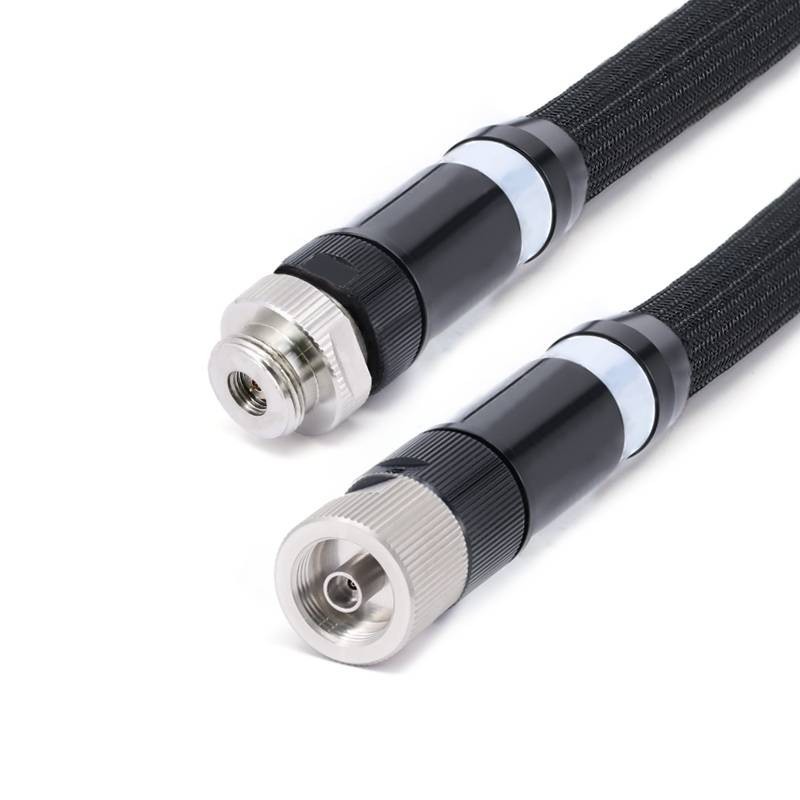

Understanding Signal Integrity in VNA Test Cables
Before diving into the strategies for improving signal integrity, it's essential to understand what signal integrity means in the context of VNA test cables. Signal integrity refers to the ability of a cable to transmit a signal with minimal distortion, attenuation, and interference. In VNA testing, any degradation in signal integrity can lead to inaccurate measurements, which can have significant implications for product development, quality control, and research.
Several factors can affect the signal integrity of VNA test cables, including cable construction, connector quality, cable length, and environmental conditions. By addressing these factors, you can minimize signal degradation and ensure that your VNA test cables perform at their best.
Cable Construction
The construction of a VNA test cable plays a crucial role in determining its signal integrity. High-quality cables are typically constructed with a low-loss dielectric material, such as PTFE (polytetrafluoroethylene), which helps to minimize signal attenuation. The conductor material also plays a significant role in signal integrity. Copper is a common choice for conductors due to its excellent electrical conductivity.
In addition to the dielectric and conductor materials, the cable's shielding is also essential for maintaining signal integrity. A well-designed shield can help to protect the signal from external electromagnetic interference (EMI) and radio frequency interference (RFI). Braided shields and foil shields are two common types of shielding used in VNA test cables. Braided shields provide good flexibility and mechanical protection, while foil shields offer better high-frequency performance.
When selecting VNA test cables, it's important to choose cables that are specifically designed for high-frequency applications. These cables are typically constructed with high-quality materials and have a low loss rating, which helps to ensure that the signal is transmitted with minimal distortion.
Connector Quality
The connectors used on VNA test cables are another critical factor in determining signal integrity. Poorly designed or low-quality connectors can introduce signal reflections, attenuation, and other forms of distortion. When selecting connectors for VNA test cables, it's important to choose connectors that are compatible with your VNA and have a low insertion loss and return loss.
There are several types of connectors commonly used in VNA testing, including SMA, 3.5mm, 2.92mm, and 2.4mm connectors. Each type of connector has its own unique characteristics and is suitable for different frequency ranges and applications. For example, SMA connectors are commonly used for lower-frequency applications, while 2.4mm connectors are designed for high-frequency applications up to 50 GHz.
In addition to choosing the right type of connector, it's also important to ensure that the connectors are properly installed and maintained. Loose or damaged connectors can introduce signal degradation, so it's important to check the connectors regularly and replace them if necessary.
Cable Length
The length of a VNA test cable can also have a significant impact on signal integrity. As the length of the cable increases, the signal attenuation and delay also increase. This can lead to inaccurate measurements, especially at high frequencies.
When selecting VNA test cables, it's important to choose cables that are the appropriate length for your application. In general, it's best to use the shortest cable possible to minimize signal attenuation and delay. However, in some cases, it may be necessary to use longer cables to reach the test equipment or to accommodate the layout of the test setup.
If you need to use longer cables, it's important to choose cables that have a low loss rating and are specifically designed for high-frequency applications. You may also want to consider using signal amplifiers or equalizers to compensate for the signal attenuation and delay.
Environmental Conditions
The environmental conditions in which VNA test cables are used can also affect signal integrity. Temperature, humidity, and vibration can all have a significant impact on the performance of the cables.
High temperatures can cause the dielectric material in the cable to expand, which can lead to changes in the cable's electrical properties. This can result in signal attenuation and distortion. Similarly, high humidity can cause the cable's insulation to break down, which can also lead to signal degradation.
Vibration can also cause the connectors on the cable to loosen or become damaged, which can introduce signal reflections and attenuation. To minimize the impact of environmental conditions on signal integrity, it's important to choose cables that are designed to withstand the specific environmental conditions in which they will be used.
For example, if you're using VNA test cables in a high-temperature environment, you may want to choose cables that are constructed with a high-temperature dielectric material, such as PTFE. If you're using the cables in a humid environment, you may want to choose cables that are waterproof or have a moisture-resistant coating.
Testing and Calibration
Regular testing and calibration of VNA test cables are essential for maintaining signal integrity. Over time, the performance of the cables can degrade due to factors such as wear and tear, environmental conditions, and connector damage. By testing and calibrating the cables regularly, you can identify any issues with the cables and take corrective action before they affect the accuracy of the measurements.
There are several types of tests that can be performed on VNA test cables, including insertion loss, return loss, and phase stability tests. These tests can help to identify any signal degradation or distortion in the cables. In addition to testing the cables, it's also important to calibrate the VNA test equipment regularly to ensure that the measurements are accurate.
Conclusion
Improving the signal integrity of VNA test cables is essential for ensuring the accuracy and reliability of VNA measurements. By addressing factors such as cable construction, connector quality, cable length, environmental conditions, and testing and calibration, you can minimize signal degradation and ensure that your VNA test cables perform at their best.
As a supplier of VNA Test Cables, we are committed to providing high-quality cables that are designed to meet the specific needs of our customers. Our cables are constructed with high-quality materials and are tested and calibrated to ensure that they meet the highest standards of performance and reliability.
If you're looking for VNA test cables that offer excellent signal integrity and performance, please contact us to discuss your requirements. We'll be happy to help you choose the right cables for your application and provide you with the support and guidance you need to ensure that your VNA testing is accurate and reliable.
References
- "Signal Integrity in High-Speed Digital Design," by Eric Bogatin.
- "RF and Microwave Engineering," by David M. Pozar.
- "Vector Network Analysis and Scattering Parameters," by Robert E. Collin.


