

How to modify a horn antenna for a different frequency?
Leave a message

As a reputable supplier of Horn Antennas, I've witnessed firsthand the diverse needs of our clients when it comes to antenna performance. One common challenge is modifying a horn antenna to operate at a different frequency. In this blog post, I'll share some insights and practical steps on how to achieve this effectively.
Understanding the Basics of Horn Antennas
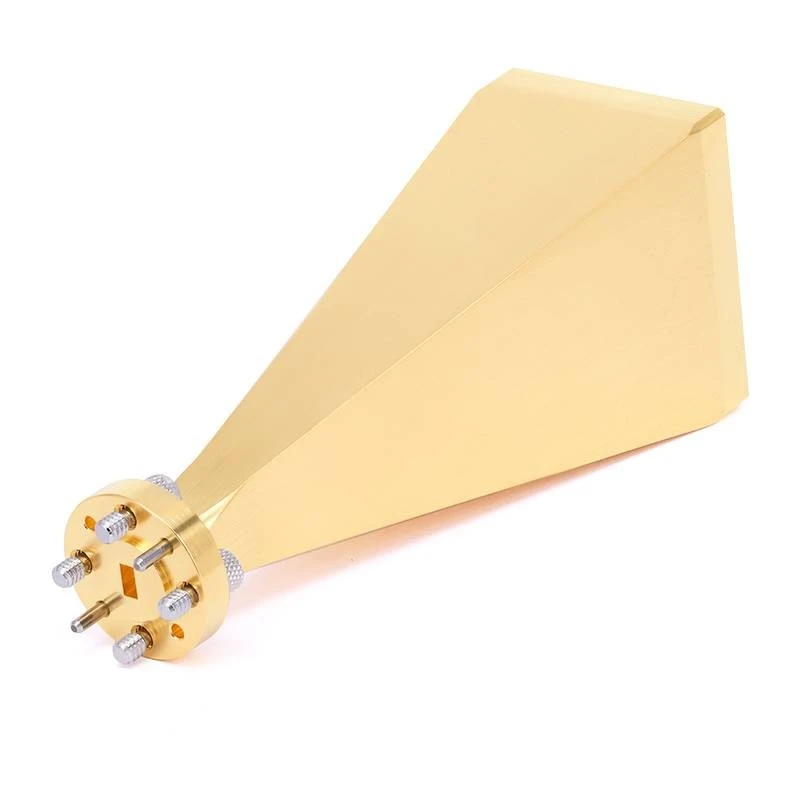
Before delving into the modification process, it's essential to have a solid understanding of how horn antennas work. A horn antenna is a type of aperture antenna that consists of a flared metal waveguide. It is widely used in various applications, including radar systems, satellite communication, and radio astronomy, due to its high gain, wide bandwidth, and low side-lobe levels.
The frequency of operation of a horn antenna is primarily determined by its physical dimensions, such as the length, width, and height of the horn. These dimensions affect the phase and amplitude distribution of the electromagnetic waves inside the horn, which in turn determines the antenna's radiation pattern and frequency response.
Reasons for Modifying a Horn Antenna
There are several reasons why you might need to modify a horn antenna for a different frequency. One common reason is to adapt the antenna to a new communication system or application that operates at a different frequency band. For example, if you have a horn antenna designed for a specific radar system and you want to use it for a different radar application that operates at a higher frequency, you'll need to modify the antenna accordingly.
Another reason for modification is to improve the antenna's performance at a particular frequency. By adjusting the physical dimensions of the horn, you can optimize the antenna's gain, bandwidth, and radiation pattern, resulting in better signal reception and transmission.
Steps to Modify a Horn Antenna for a Different Frequency
Step 1: Determine the Target Frequency
The first step in modifying a horn antenna is to determine the target frequency at which you want the antenna to operate. This will depend on your specific application and the requirements of your communication system. Once you have determined the target frequency, you can calculate the necessary physical dimensions of the horn using the following formulas:
-
Cutoff Frequency: The cutoff frequency of a horn antenna is the lowest frequency at which the antenna can operate. It is determined by the dimensions of the waveguide and the mode of operation. For a rectangular horn antenna operating in the dominant TE₁₀ mode, the cutoff frequency can be calculated using the formula:
[f_c=\frac{c}{2a}]
where (f_c) is the cutoff frequency, (c) is the speed of light in free space ((3\times10^8\ m/s)), and (a) is the width of the waveguide. -
Optimal Length: The optimal length of a horn antenna is determined by the desired gain and bandwidth. A longer horn generally provides higher gain but narrower bandwidth, while a shorter horn provides lower gain but wider bandwidth. The optimal length can be calculated using the following empirical formula:
[L=\frac{2D^2}{\lambda}]
where (L) is the length of the horn, (D) is the aperture diameter of the horn, and (\lambda) is the wavelength of the target frequency.
Step 2: Calculate the New Dimensions
Once you have determined the target frequency, you can calculate the new dimensions of the horn using the formulas mentioned above. You'll need to adjust the length, width, and height of the horn to match the requirements of the target frequency. Keep in mind that these calculations are based on idealized conditions, and you may need to make some adjustments based on the actual performance of the antenna.
Step 3: Modify the Physical Structure
After calculating the new dimensions, you can start modifying the physical structure of the horn antenna. This may involve cutting, welding, or machining the horn to change its length, width, or height. It's important to use precise measurement tools and techniques to ensure that the modifications are accurate and consistent.
When modifying the horn, pay close attention to the smoothness of the inner surface of the waveguide. Any irregularities or roughness can cause reflections and losses, which can degrade the antenna's performance. You may need to polish the inner surface of the waveguide to minimize these effects.
Step 4: Test and Optimize
Once you have modified the horn antenna, it's important to test its performance at the target frequency. You can use a network analyzer or a spectrum analyzer to measure the antenna's gain, bandwidth, and radiation pattern. Compare the measured results with the expected values and make any necessary adjustments to optimize the antenna's performance.
During the testing process, you may need to fine-tune the physical dimensions of the horn to achieve the desired performance. This may involve making small adjustments to the length, width, or height of the horn and retesting the antenna until you obtain the optimal results.
Considerations and Challenges
Modifying a horn antenna for a different frequency is not without its challenges. One of the main challenges is ensuring that the modified antenna meets the required performance specifications. Any small errors in the modification process can have a significant impact on the antenna's gain, bandwidth, and radiation pattern, resulting in poor signal reception and transmission.
Another challenge is the cost and time involved in the modification process. Modifying a horn antenna can be a complex and time-consuming task, especially if you need to make significant changes to the physical structure of the antenna. It's important to carefully consider the cost and benefits of modification before proceeding.
Conclusion
Modifying a horn antenna for a different frequency is a challenging but rewarding task. By following the steps outlined in this blog post and considering the challenges and considerations involved, you can successfully modify a horn antenna to meet your specific requirements.
At Horn Antennas, we have extensive experience in designing and modifying horn antennas for a wide range of applications. If you're looking for a reliable and high-quality horn antenna or need assistance with antenna modification, please don't hesitate to contact us. We're here to help you find the best solution for your communication needs.

If you're also interested in other types of antennas, such as Log-periodic Antennas, we offer a wide selection of antennas to meet your diverse requirements. Feel free to explore our website or contact us for more information.
References
- Balanis, C. A. (2016). Antenna Theory: Analysis and Design (4th ed.). Wiley.
- Pozar, D. M. (2011). Microwave Engineering (4th ed.). Wiley.


