
What are the applications of distributed - element RF isolators?
Leave a message

Distributed - element RF isolators are essential components in modern radio frequency (RF) systems, playing a crucial role in signal management and protection. As an RF isolators supplier, we have witnessed firsthand the diverse and ever - expanding applications of these devices across various industries. In this blog post, we will delve into the different applications of distributed - element RF isolators, highlighting their significance and benefits.
1. Telecommunication Systems
Telecommunication is one of the most significant sectors that rely heavily on RF isolators. In wireless communication networks such as cellular networks, distributed - element RF isolators are used at the output of power amplifiers (PAs). The main purpose is to protect the PA from reflections. When a signal is transmitted from the PA to the antenna, any impedance mismatch along the transmission path can cause a portion of the signal to reflect back towards the PA. These reflections can cause instability, increased power consumption, and even damage to the PA.
RF isolators allow the forward signal to pass through with minimal loss while absorbing and dissipating the reflected signal. For example, in a 5G base station, where high - power and high - frequency signals are common, 26.5GHz RF Coaxial Isolators are often employed. These isolators ensure the efficient and stable operation of the power amplifiers, improving the overall performance of the base station and enhancing the quality of the wireless communication.
In addition to base stations, RF isolators are also used in mobile devices. In smartphones, they help to optimize the performance of the RF front - end module. By isolating the different RF components, such as the transmitter and the receiver, the isolators prevent interference and improve the signal - to - noise ratio, leading to better call quality and faster data transfer speeds.
2. Radar Systems
Radar systems are another area where distributed - element RF isolators are widely used. Radar works by emitting electromagnetic waves and analyzing the reflections from objects to detect their presence, position, and speed. In radar transmitters, RF isolators are placed between the high - power transmitter and the antenna. This is to protect the transmitter from the high - power signals that may be reflected back from the antenna due to impedance mismatches or the presence of strong targets close to the radar.
For instance, in military radar systems that operate at high frequencies, 18GHz RF Coaxial Isolators are commonly used. These isolators help to maintain the stability of the radar transmitter, ensuring accurate detection and tracking of targets. In civilian applications such as air traffic control radars and weather radars, RF isolators also play a vital role in ensuring the reliable operation of the system.
3. Satellite Communication
Satellite communication systems are highly sensitive and require precise signal control. Distributed - element RF isolators are used in both the satellite payload and the ground - based communication stations. In the satellite payload, isolators are used to protect the RF components from reflections and interference. The space environment is harsh, and any malfunction in the RF system can lead to a significant loss of communication capabilities.
On the ground - based stations, RF isolators help to optimize the signal transmission and reception between the station and the satellite. For example, in a satellite TV broadcasting system, 6GHz RF Coaxial Isolators can be used to ensure the high - quality transmission of the TV signals from the ground station to the satellite and then to the end - users' receivers.
4. Test and Measurement Equipment
In the field of test and measurement, RF isolators are essential for accurate and reliable measurements. When testing RF components or systems, it is crucial to isolate the test equipment from the device under test (DUT) to prevent reflections and interference. RF isolators can be used to create a one - way signal path, ensuring that the test signals are not affected by the reflections from the DUT.
For example, in a network analyzer, an RF isolator can be used to improve the accuracy of the measurement of the scattering parameters (S - parameters) of an RF device. By isolating the source from the load, the isolator reduces the measurement errors caused by the reflections, providing more accurate and repeatable test results.
5. Medical Equipment
Medical equipment that uses RF technology also benefits from the use of distributed - element RF isolators. In some medical imaging devices such as magnetic resonance imaging (MRI) systems, RF isolators are used to protect the RF transmitters and receivers from reflections. These isolators help to ensure the stability and accuracy of the RF signals used in the imaging process, leading to high - quality medical images.
In addition, in some RF - based medical treatment devices, such as radiofrequency ablation (RFA) systems, RF isolators are used to control the power flow and protect the power supply and other components from damage caused by reflections. This ensures the safe and effective operation of the medical treatment devices.
6. Industrial and Scientific Research
In industrial and scientific research, RF isolators are used in various RF - related experiments and applications. For example, in particle accelerators, RF isolators are used to control the RF power distribution and protect the RF sources from reflections. These isolators help to ensure the stable operation of the accelerator, which is crucial for conducting high - energy physics experiments.
In industrial RF heating applications, such as plastic welding and food processing, RF isolators are used to protect the RF generators from the reflections caused by the load. This improves the efficiency and reliability of the RF heating process.
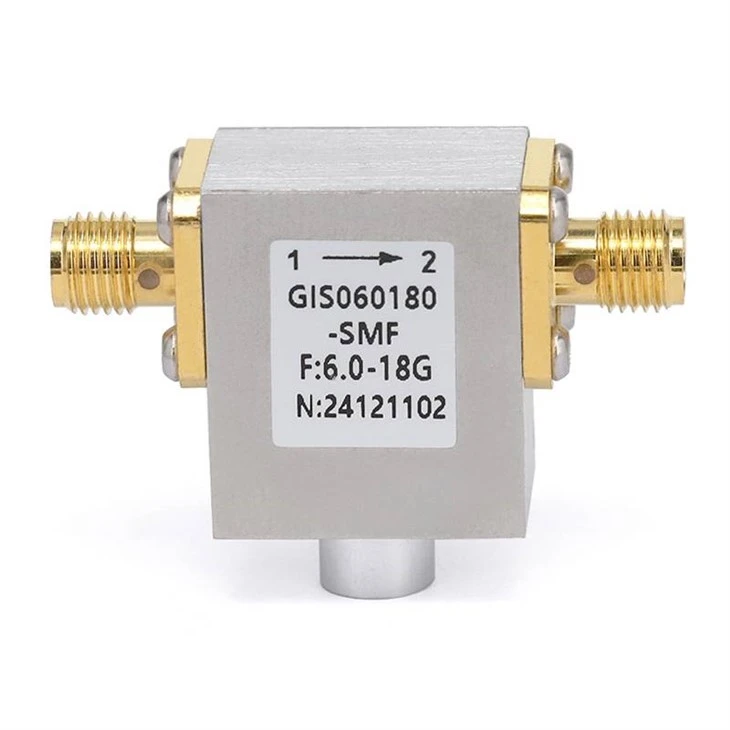
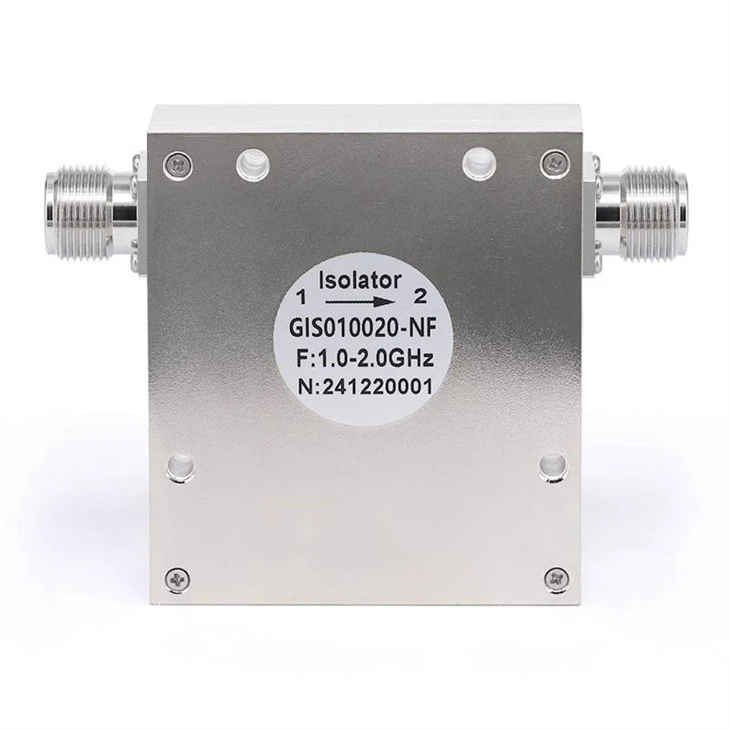
As an RF isolators supplier, we understand the importance of these devices in different applications. Our company offers a wide range of high - quality RF isolators, including 26.5GHz RF Coaxial Isolators, 6GHz RF Coaxial Isolators, and 18GHz RF Coaxial Isolators. Our products are designed to meet the strict requirements of various industries, providing excellent isolation performance, low insertion loss, and high power - handling capabilities.
If you are in need of RF isolators for your specific application, we invite you to contact us for procurement and further discussions. Our team of experts is ready to provide you with professional advice and solutions to meet your RF needs.
References
- Pozar, D. M. (2011). Microwave Engineering (4th ed.). Wiley.
- Collin, R. E. (1992). Foundations for Microwave Engineering (2nd ed.). McGraw - Hill.


