
How does the height of an antenna affect its performance?
Leave a message

Antennas are crucial components in modern communication systems, playing a vital role in transmitting and receiving electromagnetic waves. As an antennas supplier, I've witnessed firsthand the diverse requirements of our clients and the importance of understanding how various factors affect antenna performance. One such factor that significantly impacts antenna operation is its height. In this blog post, I'll delve into the relationship between antenna height and performance, exploring the scientific principles behind it and its practical implications.
The Basics of Antenna Radiation Patterns
Before we discuss the impact of antenna height, it's essential to understand the concept of radiation patterns. An antenna's radiation pattern describes how it radiates or receives electromagnetic energy in space. It is typically represented as a three - dimensional graph showing the relative field strength at different angles from the antenna.
There are two main types of radiation patterns: omnidirectional and directional. Omnidirectional antennas radiate energy uniformly in all directions in the horizontal plane, making them suitable for applications where signals need to be transmitted or received in a wide area. Directional antennas, on the other hand, focus their energy in a specific direction, providing higher gain and longer range in that direction.
How Antenna Height Affects Radiation Patterns
The height of an antenna can have a profound effect on its radiation pattern. When an antenna is placed close to the ground, the ground acts as a reflecting surface. The reflected waves can interfere with the direct waves radiating from the antenna, causing constructive or destructive interference.
- Constructive Interference: At certain heights, the reflected waves and the direct waves combine in such a way that they reinforce each other, resulting in increased signal strength in specific directions. This can lead to an improvement in the antenna's gain and range. For example, in a VHF (Very High Frequency) or UHF (Ultra High Frequency) communication system, raising the antenna to a height where constructive interference occurs can significantly enhance the signal quality over a large area.
- Destructive Interference: Conversely, at other heights, the reflected and direct waves may cancel each other out, leading to a decrease in signal strength. This can create dead zones where the signal is weak or non - existent. To avoid destructive interference, it's crucial to carefully select the antenna height based on the frequency of operation and the surrounding environment.
Impact on Line - of - Sight Communication
In line - of - sight (LOS) communication, where the transmitting and receiving antennas can "see" each other without any obstructions, antenna height plays a critical role. The higher the antenna, the farther the line of sight extends.
The formula for calculating the line - of - sight distance (d) between two antennas of heights (h_1) and (h_2) (in meters) is given by:
[d = 3.57(\sqrt{h_1}+\sqrt{h_2})]
where (d) is in kilometers. This formula shows that increasing the height of either antenna can significantly increase the communication range. For example, in a point - to - point microwave link, raising the antennas to higher towers can extend the communication distance between two remote locations.
Effect on Ground Wave Propagation
Ground wave propagation is the mode of propagation where the electromagnetic waves travel along the surface of the Earth. The height of the antenna affects the efficiency of ground wave propagation.
- Low - Frequency Antennas: For low - frequency antennas (below 2 MHz), the ground wave is the dominant mode of propagation. A lower antenna height can be more effective for ground wave propagation because it allows the waves to couple better with the ground. The electric field of the wave interacts with the conductive surface of the Earth, and a lower antenna height ensures a stronger coupling.
- High - Frequency Antennas: At higher frequencies, the ground wave attenuates more rapidly, and the importance of ground wave propagation decreases. However, the antenna height still affects the overall performance, especially in terms of the interaction with the ionosphere and the formation of sky waves.
Impact on Multipath Fading
Multipath fading is a phenomenon where the received signal is a combination of multiple copies of the transmitted signal, each arriving at the receiver via a different path. These paths can include direct paths, reflected paths from buildings, mountains, or other objects, and diffracted paths around obstacles.
Antenna height can help mitigate multipath fading. A higher antenna is more likely to receive the direct signal with less interference from the reflected and diffracted signals. This is because the higher the antenna, the fewer obstacles there are in the direct path between the transmitter and the receiver. Additionally, a higher antenna can have a better view of the surrounding area, allowing it to receive signals from different directions more effectively.

Practical Considerations for Antenna Height Selection
When selecting the height of an antenna, several practical considerations need to be taken into account:
- Regulatory Requirements: In many regions, there are regulations regarding the maximum height of antennas. These regulations are in place to ensure safety, prevent interference with aviation and other communication systems, and protect the aesthetic value of the area.
- Cost: Increasing the antenna height often requires taller towers or masts, which can be expensive to install and maintain. The cost of the tower, the foundation, and the installation labor needs to be considered when deciding on the antenna height.
- Environmental Factors: The local environment, such as the presence of tall buildings, mountains, or trees, can affect the optimal antenna height. For example, in a city with many high - rise buildings, a higher antenna may be required to overcome the blockage caused by the buildings.
Our Antenna Solutions
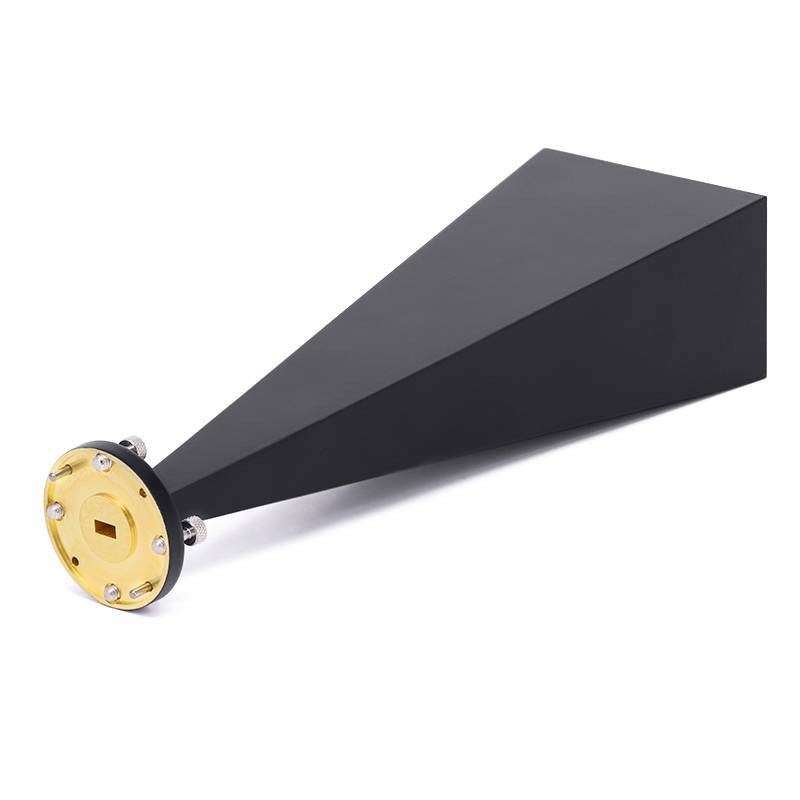
As an antennas supplier, we offer a wide range of antennas, including Log - periodic Antennas and Horn Antennas, suitable for various applications and height requirements. Our team of experts can help you select the right antenna and determine the optimal height based on your specific needs.
Whether you need a high - gain antenna for long - range communication or a low - profile antenna for ground wave propagation, we have the solutions to meet your requirements. We understand the importance of antenna height in achieving optimal performance, and we can provide you with the technical support and advice you need to make the right decision.
Conclusion
The height of an antenna is a critical factor that affects its performance in many ways. It influences the radiation pattern, the line - of - sight communication range, the efficiency of ground wave propagation, and the mitigation of multipath fading. By carefully considering the scientific principles and practical considerations related to antenna height, you can select the right antenna and installation height for your specific application.
If you're interested in learning more about our antenna products or need assistance in selecting the optimal antenna height for your project, please don't hesitate to contact us. Our team of experts is ready to help you find the best solutions for your communication needs.
References
- Balanis, C. A. (2016). Antenna Theory: Analysis and Design (4th ed.). Wiley.
- Kraus, J. D., & Marhefka, R. J. (2002). Antennas for All Applications (3rd ed.). McGraw - Hill.
- Jordan, E. C., & Balmain, K. G. (1968). Electromagnetic Waves and Radiating Systems (2nd ed.). Prentice - Hall.


