

What are the differences between coaxial and waveguide RF loads?
Leave a message

Hey there! As a supplier of RF loads, I've gotten a ton of questions about the differences between coaxial and waveguide RF loads. So, I thought I'd take a moment to break it all down for you in a way that's easy to understand.
First off, let's talk about what RF loads are. In simple terms, RF loads are components used in radio - frequency (RF) systems to absorb RF power. They're designed to mimic the impedance of the system they're connected to, so they can dissipate the power without causing reflections.
Coaxial RF Loads
Coaxial RF loads are pretty common and have been around for a long time. They use coaxial cables as the transmission medium. Coaxial cables consist of a central conductor, an insulating layer, a metallic shield, and an outer jacket.
One of the big advantages of coaxial RF loads is their flexibility. They can be easily bent and routed around other components in a system. This makes them great for applications where space is limited or where you need to make quick changes to the layout. For example, in a test bench setup, you can easily move and re - position coaxial RF loads as needed.
Another plus is their wide frequency range. Coaxial RF loads can operate over a broad spectrum of frequencies, from a few megahertz up to several gigahertz. This versatility makes them suitable for a variety of applications, including telecommunications, radar systems, and wireless networks.
When it comes to types, there are different connector options available for coaxial RF loads. Some popular ones include 2.92mm, 2.4mm, and SMA connectors. The 2.92mm RF Loads are known for their high - frequency performance, capable of handling frequencies up to 40 GHz. The 2.4mm RF Loads can go even higher, with a frequency range that can reach up to 50 GHz. And the SMA RF Loads are more commonly used in lower - frequency applications, typically up to 18 GHz.
However, coaxial RF loads also have some limitations. They have a relatively lower power - handling capacity compared to waveguide RF loads. This means that if you need to dissipate a large amount of RF power, coaxial RF loads might not be the best choice. Also, as the frequency increases, the losses in coaxial cables can become more significant, which can affect the overall performance of the load.
Waveguide RF Loads
Waveguide RF loads, on the other hand, use waveguides as the transmission medium. Waveguides are hollow metal tubes that guide electromagnetic waves. They're typically made of materials like brass, copper, or aluminum.
One of the main advantages of waveguide RF loads is their high power - handling capacity. Waveguides can handle much larger amounts of RF power compared to coaxial cables. This makes them ideal for high - power applications, such as in high - power radar systems and particle accelerators.
Waveguide RF loads also have lower losses at high frequencies. Since the electromagnetic waves are confined within the hollow waveguide, there's less radiation loss and less interaction with the surrounding environment. This results in better performance at high frequencies compared to coaxial RF loads.
But waveguide RF loads aren't without their drawbacks. They're less flexible than coaxial RF loads. Waveguides are rigid structures, and it's difficult to bend or route them around other components. This can make the installation and integration of waveguide RF loads more challenging, especially in tight spaces.
Another limitation is their narrow frequency range. Waveguides are designed to operate within a specific frequency band, and outside of this band, their performance can degrade significantly. This means that you need to carefully select the appropriate waveguide size and type for your specific frequency requirements.
Comparison Table
Let's summarize the differences between coaxial and waveguide RF loads in a table:
| Feature | Coaxial RF Loads | Waveguide RF Loads |
|---|---|---|
| Flexibility | High | Low |
| Frequency Range | Wide | Narrow |
| Power - Handling Capacity | Low | High |
| Losses at High Frequencies | High | Low |
| Installation Difficulty | Low | High |
Applications
The choice between coaxial and waveguide RF loads depends largely on the specific application. For applications where flexibility and a wide frequency range are important, such as in laboratory testing and small - scale wireless systems, coaxial RF loads are often the preferred choice.
On the other hand, for high - power and high - frequency applications, like in large - scale radar systems and satellite communication, waveguide RF loads are more suitable.
Which One Should You Choose?
When you're deciding which type of RF load to use, you need to consider your specific requirements. Think about the amount of power you need to dissipate, the frequency range of your system, the available space, and your budget.
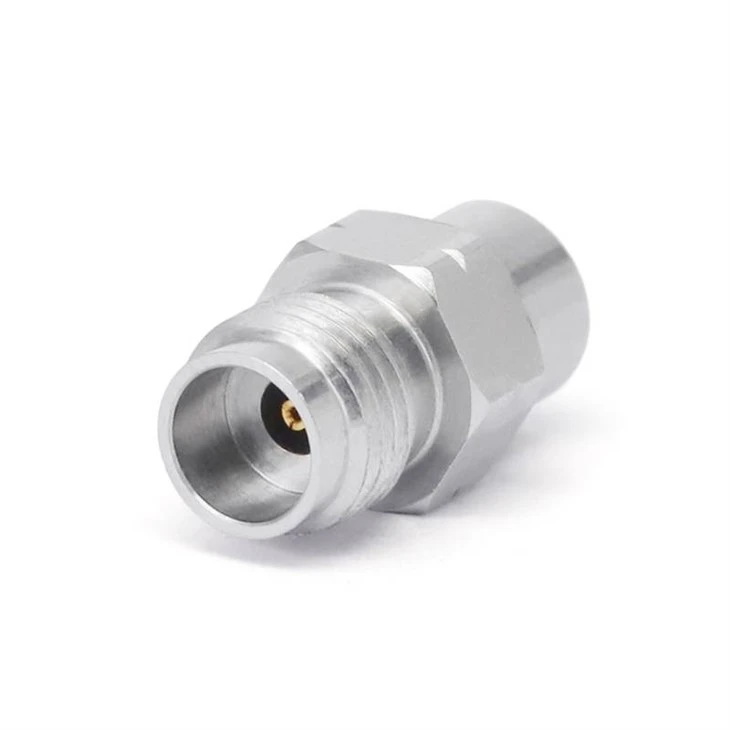

If you're working on a project with limited power requirements and a need for flexibility, coaxial RF loads are a great option. You can choose from a variety of connector types and frequency ranges to meet your needs. Check out our 2.92mm RF Loads, 2.4mm RF Loads, and SMA RF Loads for different frequency options.
If you're dealing with high - power and high - frequency applications, waveguide RF loads might be the way to go. But be prepared for the challenges of installation and the need to carefully select the right waveguide size.
Contact Us for Your RF Load Needs
We understand that choosing the right RF load can be a tricky decision. That's why our team of experts is here to help. Whether you're still unsure about which type of RF load is best for your project or you have specific technical questions, we're just a message away. We can provide you with detailed product information, technical support, and even custom solutions if needed. So, don't hesitate to reach out to us for all your RF load procurement needs. Let's work together to find the perfect RF load solution for your application.
References
- "Microwave Engineering" by David M. Pozar
- "RF and Microwave Circuit Design for Wireless Applications" by Chris Bowick


