

What are the differences between monolithic and hybrid RF circulators?
Leave a message

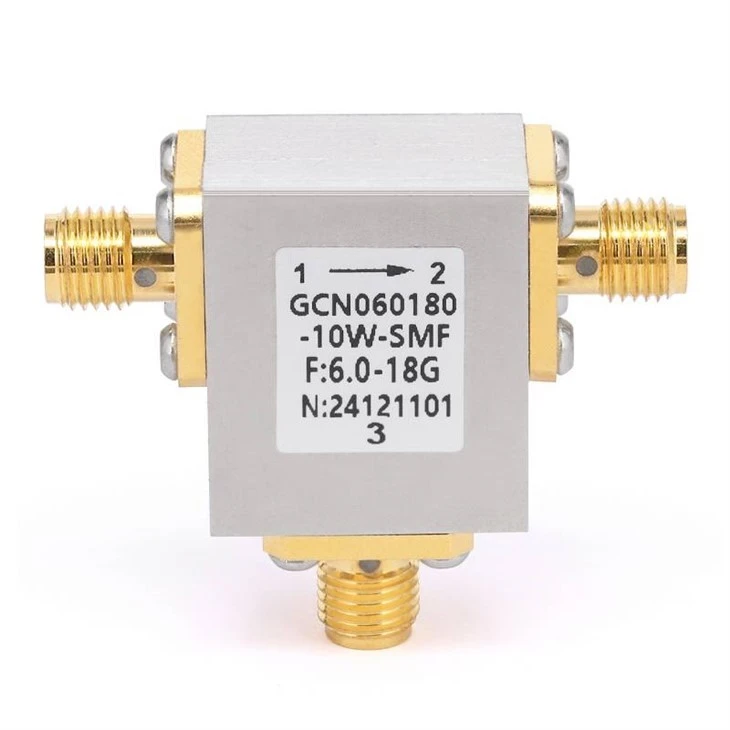
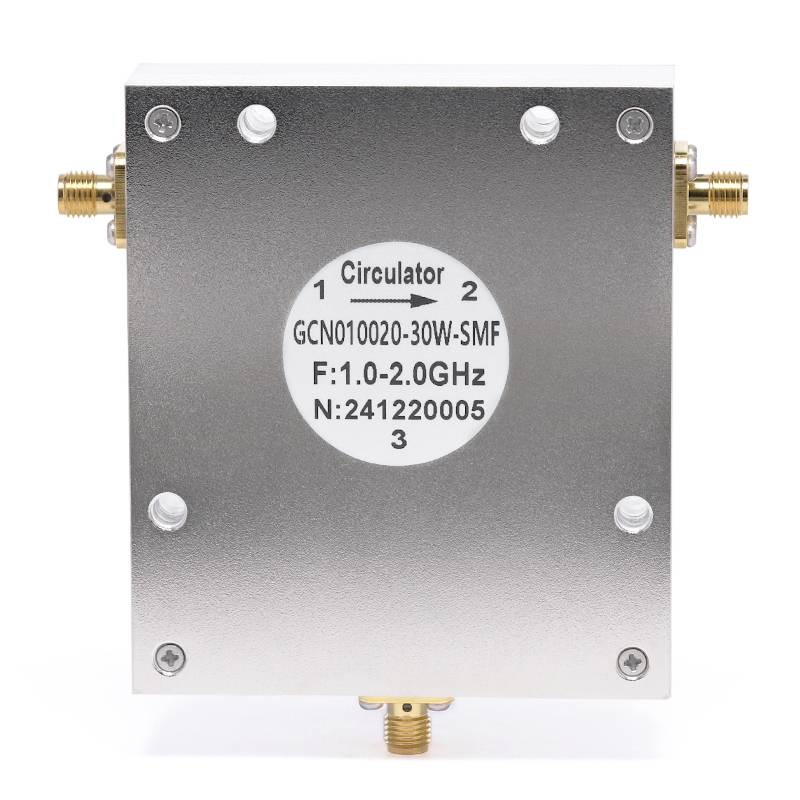
In the realm of radio frequency (RF) technology, circulators play a crucial role in managing the flow of RF signals. They are passive non - reciprocal devices that allow signals to travel in a specific direction around ports. Two common types of RF circulators are monolithic and hybrid circulators. As an RF circulators supplier, I have witnessed firsthand the unique characteristics and applications of these two types, and in this blog, I'll delve into their differences.
1. Structural Design
Monolithic RF Circulators
Monolithic RF circulators are built as a single, integrated unit. The core components, such as the ferrite material, microstrip or stripline circuits, and magnetic structures, are fabricated on a single substrate. This one - piece construction offers several advantages. Firstly, it provides a high level of mechanical stability. Since all the components are part of a single structure, there is less risk of misalignment or mechanical failure due to external vibrations or shocks.
Secondly, the compact design of monolithic circulators makes them ideal for applications where space is at a premium. For example, in small - form - factor communication devices like handheld radios or miniature radar systems, the monolithic circulator can be easily integrated into the limited available space.
Hybrid RF Circulators
Hybrid RF circulators, on the other hand, are constructed by combining multiple discrete components. These components can include separate ferrite elements, connectors, and printed circuit boards. The modular nature of hybrid circulators allows for greater flexibility in design. Engineers can choose different types of ferrite materials, connectors, and circuit configurations based on the specific requirements of the application.
However, this modularity also comes with some drawbacks. The multiple components need to be carefully assembled, which increases the risk of misalignment. A small misalignment during the assembly process can significantly degrade the performance of the circulator, such as increasing insertion loss or reducing isolation.
2. Performance Characteristics
Insertion Loss
Insertion loss is a critical performance parameter for RF circulators, as it represents the amount of signal power that is lost as the signal passes through the circulator. Monolithic circulators generally have lower insertion loss compared to hybrid circulators. The integrated design of monolithic circulators reduces the number of interfaces and discontinuities in the signal path, resulting in less signal attenuation.
In applications where signal strength is crucial, such as in high - power RF transmitters, the lower insertion loss of monolithic circulators can help to maintain the integrity of the transmitted signal. For instance, in a satellite communication system, a monolithic circulator can ensure that the high - power RF signal from the transmitter reaches the antenna with minimal loss.
Hybrid circulators, due to their discrete component construction, may have higher insertion loss. The interfaces between different components can cause reflections and signal scattering, leading to additional power loss. However, with careful design and high - quality component selection, the insertion loss of hybrid circulators can be minimized to an acceptable level for many applications.
Isolation
Isolation is another important performance metric, which measures the ability of the circulator to prevent signals from leaking between non - adjacent ports. Monolithic circulators typically offer good isolation performance. The integrated structure helps to contain the magnetic fields and reduce the coupling between ports.
In a communication system, high isolation is essential to prevent interference between different signal paths. For example, in a transceiver system, the circulator needs to isolate the transmitter from the receiver to avoid self - interference. Monolithic circulators can effectively achieve this isolation, ensuring the proper operation of the transceiver.
Hybrid circulators can also provide high isolation, but it requires more careful design and tuning. The discrete components need to be arranged and optimized to minimize the coupling between ports. In some cases, additional shielding or filtering components may be required to improve the isolation performance of hybrid circulators.
Frequency Response
Monolithic circulators often have a more limited frequency response compared to hybrid circulators. The integrated design of monolithic circulators is optimized for a specific frequency range during the manufacturing process. Once fabricated, it can be challenging to modify the frequency response of a monolithic circulator.
Hybrid circulators, with their modular design, offer greater flexibility in frequency response. Engineers can select different ferrite materials and circuit configurations to achieve a wider frequency range. For example, if an application requires a circulator to operate over a broad frequency band, a hybrid circulator can be designed to meet this requirement. We offer a variety of circulators with different frequency ranges, such as 26.5GHz RF Coaxial Circulators, 40GHz RF Coaxial Circulators, and 18GHz RF Coaxial Circulators.
3. Cost and Manufacturing Considerations
Cost
Monolithic circulators are generally more expensive to manufacture than hybrid circulators. The fabrication process of monolithic circulators involves advanced semiconductor manufacturing techniques, such as photolithography and thin - film deposition. These processes require specialized equipment and clean - room environments, which increase the production cost.
Hybrid circulators, being made up of discrete components, can be more cost - effective. The components can be sourced from different suppliers, and the assembly process is relatively straightforward. This makes hybrid circulators a more attractive option for cost - sensitive applications.
Manufacturing Complexity
The manufacturing of monolithic circulators is a complex and highly specialized process. It requires precise control of the fabrication parameters to ensure the consistent performance of the circulators. Any deviation in the manufacturing process can lead to significant variations in the performance of the monolithic circulators.
Hybrid circulators, although they require careful assembly, have a relatively lower manufacturing complexity. The discrete components can be easily tested and replaced if necessary during the assembly process. This allows for more flexibility in the manufacturing process and can reduce the production time.
4. Applications
Monolithic RF Circulators
Monolithic RF circulators are commonly used in applications where high performance, compact size, and reliability are required. In military and aerospace applications, such as radar systems and communication satellites, monolithic circulators are preferred due to their excellent performance and high reliability. The compact size of monolithic circulators also makes them suitable for use in portable communication devices and miniaturized RF systems.
Hybrid RF Circulators
Hybrid RF circulators find wide applications in commercial communication systems, such as cellular base stations and Wi - Fi routers. The cost - effectiveness and flexibility in design make them a popular choice for these applications. Additionally, in research and development projects where the frequency requirements may change, hybrid circulators can be easily modified to meet the new requirements.
Conclusion
In summary, monolithic and hybrid RF circulators have distinct differences in terms of structural design, performance characteristics, cost, and applications. Monolithic circulators offer high performance, compact size, and high reliability but come with a higher cost and limited frequency flexibility. Hybrid circulators, on the other hand, provide greater design flexibility, cost - effectiveness, and wider frequency response at the expense of potentially lower performance and higher assembly complexity.
As an RF circulators supplier, we understand the diverse needs of our customers. Whether you require a high - performance monolithic circulator for a critical application or a cost - effective hybrid circulator for a commercial project, we can offer you the right solution. If you are interested in our RF circulators or have any specific requirements for your project, please feel free to contact us for a detailed discussion and procurement negotiation.
References
- Pozar, D. M. (2011). Microwave Engineering (4th ed.). Wiley.
- Collin, R. E. (2001). Foundations for Microwave Engineering (2nd ed.). Wiley.
- Bahl, I. J., & Bhartia, P. (1988). Microwave Solid State Circuit Design. Wiley.


