

Can an RF adapter be used for antenna systems?
Leave a message

In the realm of wireless communication and electronic systems, RF (Radio Frequency) adapters play a crucial role. As an RF adapter supplier, I am often asked whether an RF adapter can be used for antenna systems. This question is not only relevant to professionals in the field but also to enthusiasts who are looking to optimize their antenna setups. In this blog post, I will delve into the technical aspects of RF adapters and their compatibility with antenna systems, providing you with a comprehensive understanding of their applications.
Understanding RF Adapters
RF adapters are devices that connect different types of RF connectors. They are designed to provide a seamless transition between connectors with different interfaces, allowing for the interconnection of various RF components. RF adapters come in a wide range of types, including coaxial adapters, waveguide adapters, and PCB (Printed Circuit Board) adapters. Each type of adapter is tailored to specific applications and requirements.
The primary function of an RF adapter is to ensure proper impedance matching between connected components. Impedance matching is essential in RF systems because it minimizes signal reflections and maximizes power transfer. When the impedance of the source, transmission line, and load are all matched, the RF signal can travel efficiently through the system without significant loss or distortion.
Antenna Systems and Their Requirements
Antenna systems are used to transmit and receive RF signals in wireless communication systems. They consist of one or more antennas, along with associated components such as feed lines, amplifiers, and filters. The performance of an antenna system depends on several factors, including the antenna design, frequency range, radiation pattern, and gain.
One of the key requirements of an antenna system is proper impedance matching. The antenna must be matched to the impedance of the feed line and the rest of the RF system to ensure efficient signal transfer. If the impedance is not matched, a significant portion of the RF signal will be reflected back to the source, resulting in reduced power transfer and degraded system performance.
Another important consideration in antenna systems is the frequency range. Antennas are designed to operate within specific frequency bands, and the RF adapter used in the system must be compatible with this frequency range. Using an adapter that is not designed for the operating frequency can lead to increased signal loss, interference, and reduced system efficiency.
Compatibility of RF Adapters with Antenna Systems
The answer to the question “Can an RF adapter be used for antenna systems?” is yes, but with certain considerations. RF adapters can be used to connect antennas to other RF components in a system, such as transmitters, receivers, and amplifiers. However, it is important to choose the right adapter for the specific application.
When selecting an RF adapter for an antenna system, the following factors should be considered:
- Connector Types: The adapter must have the appropriate connector types to match the antenna and the other components in the system. For example, if the antenna has a SMA connector and the feed line has a BNC connector, an SMA-to-BNC adapter will be required.
- Impedance Matching: As mentioned earlier, impedance matching is crucial for efficient signal transfer. The adapter should have the same impedance as the antenna and the rest of the system, typically 50 or 75 ohms.
- Frequency Range: The adapter must be designed to operate within the frequency range of the antenna system. Using an adapter with a limited frequency range can result in poor performance at higher or lower frequencies.
- Insertion Loss: Insertion loss is the amount of signal loss that occurs when an adapter is inserted into a system. A low insertion loss is desirable to minimize signal degradation.
- VSWR (Voltage Standing Wave Ratio): VSWR is a measure of how well the impedance of the adapter matches the impedance of the system. A low VSWR indicates good impedance matching and efficient signal transfer.
Examples of RF Adapters for Antenna Systems
There are many types of RF adapters that can be used in antenna systems. Here are some examples:

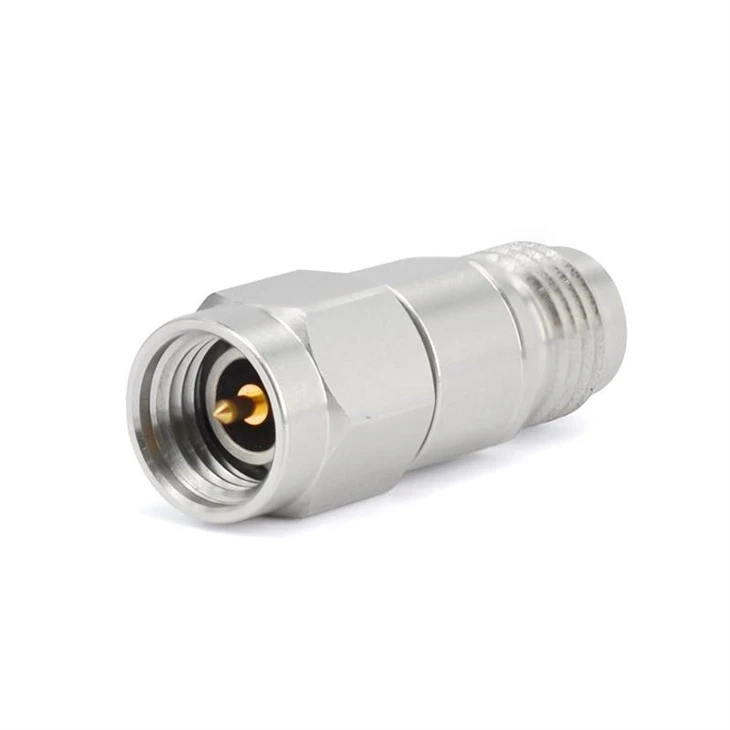
- GPPO Mini SMP Adapter: This adapter is designed to connect GPPO and Mini SMP connectors. It is suitable for high-frequency applications and provides excellent impedance matching and low insertion loss.
- GPO SMP Adapter: The GPO SMP adapter is used to connect GPO and SMP connectors. It is commonly used in military and aerospace applications where high performance and reliability are required.
- 2.4mm Adapter: The 2.4mm adapter is designed for high-frequency applications up to 50 GHz. It provides excellent electrical performance and is commonly used in test and measurement equipment.
Benefits of Using RF Adapters in Antenna Systems
Using RF adapters in antenna systems offers several benefits:
- Flexibility: RF adapters allow for the interconnection of different types of antennas and RF components, providing greater flexibility in system design.
- Cost-Effectiveness: Instead of replacing entire RF components, using an adapter can often solve the compatibility issue at a lower cost.
- Ease of Installation: RF adapters are easy to install and can be used to quickly modify or upgrade an antenna system.
Conclusion
In conclusion, RF adapters can be effectively used in antenna systems, provided that the right adapter is chosen for the specific application. By considering factors such as connector types, impedance matching, frequency range, insertion loss, and VSWR, you can ensure that the adapter will work seamlessly with the antenna and the rest of the RF system.
As an RF adapter supplier, I am committed to providing high-quality adapters that meet the diverse needs of our customers. If you are looking for RF adapters for your antenna system, or if you have any questions about RF adapter compatibility, please feel free to contact me for more information and to discuss your specific requirements. We are here to help you find the best solutions for your RF applications.
References
- Pozar, D. M. (2011). Microwave Engineering (4th ed.). Wiley.
- Balanis, C. A. (2016). Antenna Theory: Analysis and Design (4th ed.). Wiley.
- Collin, R. E. (2001). Foundations for Microwave Engineering (2nd ed.). Wiley.


