

What are the effects of load impedance on power dividers?
Leave a message

Hey there! As a supplier of power dividers, I've seen firsthand how load impedance can have a big impact on these devices. In this blog post, I'm gonna break down what load impedance is, how it affects power dividers, and why it matters to you.
Let's start with the basics. Load impedance is essentially the opposition that a load presents to the flow of alternating current (AC). It's measured in ohms and is a combination of resistance, inductance, and capacitance. When it comes to power dividers, the load impedance plays a crucial role in determining how the device performs.
One of the most significant effects of load impedance on power dividers is its influence on power distribution. Power dividers are designed to split an input signal into multiple output signals with a specific power ratio. However, if the load impedance at each output port doesn't match the characteristic impedance of the power divider, it can lead to uneven power distribution.
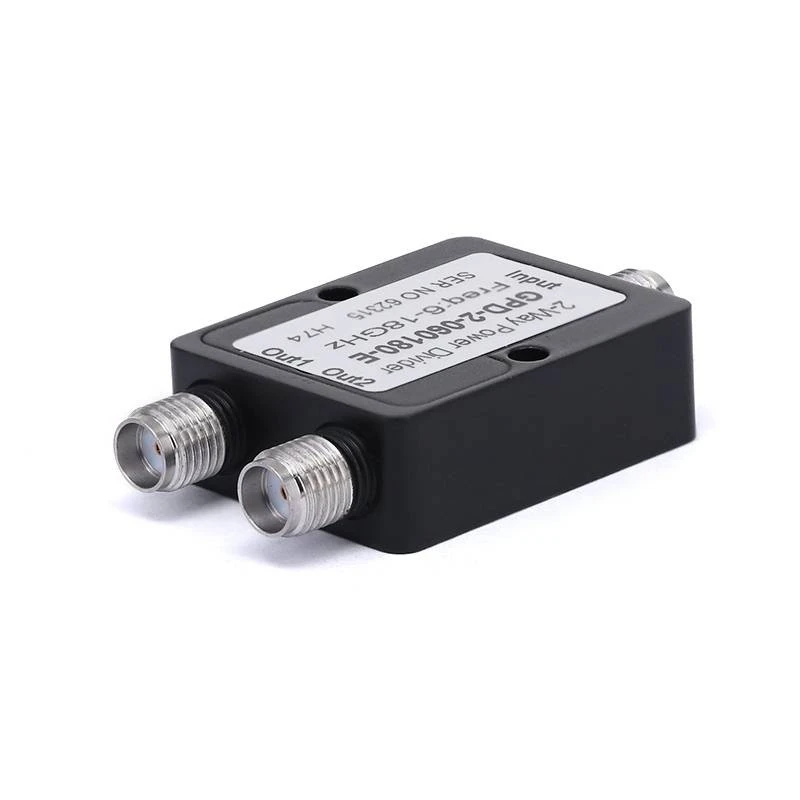
For example, let's say you have a 2-Way Power Dividers with a characteristic impedance of 50 ohms. If one of the output ports is connected to a load with an impedance of 25 ohms, while the other is connected to a 50-ohm load, the power will not be split evenly. The port with the 25-ohm load will draw more power than the 50-ohm load, resulting in an imbalance. This can be a real problem in applications where equal power distribution is essential, such as in communication systems or test setups.
Another effect of load impedance on power dividers is its impact on return loss. Return loss is a measure of how much of the incident power is reflected back from the load. A high return loss indicates that most of the power is being absorbed by the load, while a low return loss means that a significant amount of power is being reflected.
When the load impedance doesn't match the characteristic impedance of the power divider, the return loss will be low. This reflected power can cause interference and reduce the overall efficiency of the system. It can also lead to standing waves, which are patterns of constructive and destructive interference that can further degrade the performance of the power divider.
In addition to power distribution and return loss, load impedance can also affect the isolation between the output ports of a power divider. Isolation is the measure of how well the power divider separates the signals at its output ports. A high isolation value means that there is minimal crosstalk between the ports, while a low isolation value indicates that the signals can interfere with each other.
Mismatched load impedance can reduce the isolation between the output ports, allowing signals to leak from one port to another. This can be a major issue in applications where multiple signals need to be kept separate, such as in multi-channel communication systems.
So, why does all this matter to you? Well, if you're in the market for power dividers, understanding the effects of load impedance can help you make the right choice for your application. You need to ensure that the load impedance at each output port matches the characteristic impedance of the power divider to achieve optimal performance.
At our company, we offer a wide range of power dividers, including 2-Way Power Dividers, 3-Way Power Dividers, and 4-Way Power Dividers. Our experts can help you select the right power divider for your specific needs and ensure that it's properly matched to your load impedance.
If you're not sure what load impedance you need or how to match it, don't worry. We're here to help. Our team has extensive experience in the field of power dividers and can provide you with all the technical support you need. Whether you're a small business looking for a simple power divider or a large corporation with complex requirements, we've got you covered.
In conclusion, load impedance has a significant impact on the performance of power dividers. It affects power distribution, return loss, and isolation, all of which are crucial factors in determining the effectiveness of these devices. By understanding the effects of load impedance and working with a reliable supplier, you can ensure that your power dividers perform at their best.

If you're interested in learning more about our power dividers or have any questions about load impedance, feel free to reach out to us. We'd love to have a chat and discuss how we can help you with your power divider needs. Let's work together to find the perfect solution for your application!
References:
- Microwave Engineering, David M. Pozar
- RF and Microwave Circuit Design for Wireless Communications, Chris Bowick


