
What are the key parameters of RF isolators?
Leave a message

Hey there! As a supplier of RF isolators, I've been getting a lot of questions lately about the key parameters of these nifty devices. So, I thought I'd take a few minutes to break it down for you.
Let's start with the basics. An RF isolator is a two-port device that allows RF signals to pass through in one direction while blocking them in the reverse direction. It's like a one-way street for radio frequency signals. These isolators are crucial in many RF systems, as they help prevent signal reflections and protect sensitive equipment from damage.
Now, let's dive into the key parameters you need to consider when choosing an RF isolator.
Frequency Range
The frequency range is one of the most important parameters of an RF isolator. It determines the range of frequencies that the isolator can handle effectively. Different applications require different frequency ranges. For example, in a mobile communication system, you might need an isolator that can work in the 800 MHz - 2.5 GHz range. On the other hand, for satellite communication, you could be looking at much higher frequencies, like 20 GHz or more.
We offer a wide range of RF isolators with different frequency ranges. For instance, our 26.5GHz RF Coaxial Isolators are designed to handle high-frequency signals with precision. If you're working on a project that requires a lower frequency range, our 6GHz RF Coaxial Isolators might be a better fit. And for mid-range frequencies, our 18GHz RF Coaxial Isolators could be the solution you're looking for.
Insertion Loss
Insertion loss is another critical parameter. It's the amount of signal power that is lost when the RF signal passes through the isolator. In an ideal world, we'd want zero insertion loss, but in reality, there's always some loss. A lower insertion loss means that more of the signal power is transferred through the isolator, which is generally better for your system's performance.
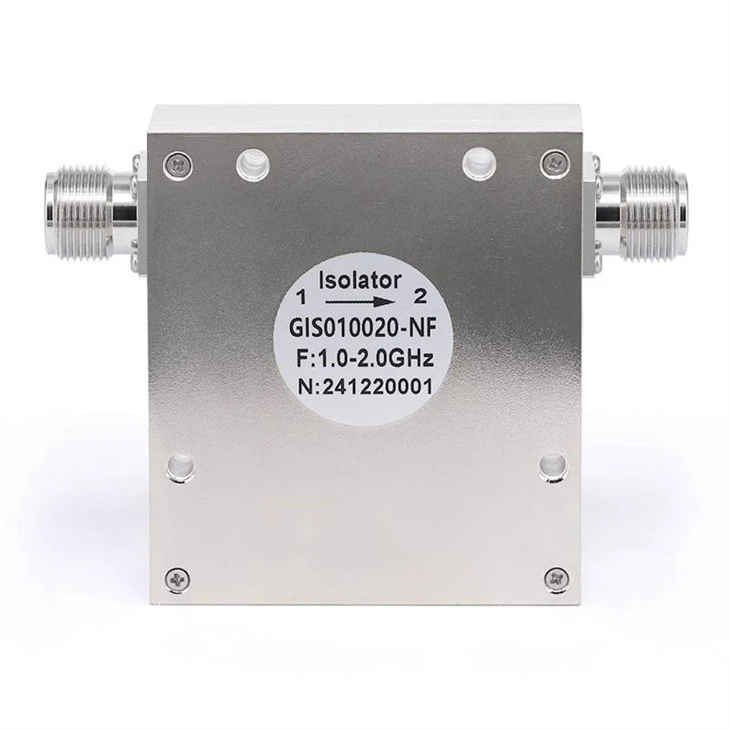
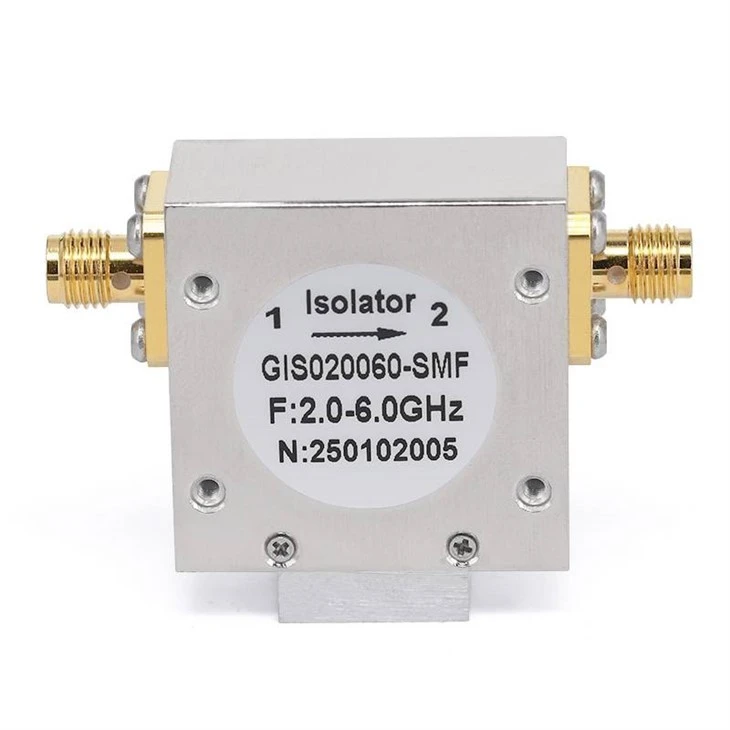
Typically, insertion loss is measured in decibels (dB). For most applications, an insertion loss of less than 0.5 dB is considered good. However, in some high-performance systems, you might need an isolator with even lower insertion loss, like 0.2 dB or less. When choosing an isolator, make sure to check the insertion loss specification and compare it with your system requirements.
Isolation
Isolation is the measure of how well the isolator blocks the signal in the reverse direction. It's also measured in dB. A higher isolation value means that the isolator is better at preventing signal reflections and interference.
For example, if an isolator has an isolation of 20 dB, it means that the signal power in the reverse direction is reduced by a factor of 100 compared to the forward direction. In many RF systems, an isolation of 20 - 30 dB is sufficient. But in applications where there's a high risk of signal interference, you might need an isolator with even higher isolation, like 40 dB or more.
Power Handling
Power handling refers to the maximum amount of RF power that the isolator can handle without getting damaged. This is an important parameter, especially in high-power RF systems. If you exceed the power handling capacity of the isolator, it can lead to overheating, performance degradation, or even permanent damage.
The power handling capacity of an isolator depends on several factors, including its design, materials, and cooling mechanism. When selecting an isolator, make sure to choose one with a power handling capacity that is higher than the maximum power level in your system.
VSWR (Voltage Standing Wave Ratio)
VSWR is a measure of how well the isolator is matched to the impedance of the RF system. A low VSWR indicates a good impedance match, which means that more of the signal power is transferred through the isolator and less is reflected back.
A VSWR of 1:1 is ideal, but in practice, it's difficult to achieve. Most RF isolators have a VSWR of around 1.2:1 to 1.5:1. A higher VSWR can lead to increased insertion loss and signal reflections, which can degrade the performance of your RF system.
Temperature Range
The temperature range is the range of temperatures in which the isolator can operate effectively. Different applications have different temperature requirements. For example, in outdoor applications, the isolator might need to operate in a wide temperature range, from -40°C to +85°C.
When choosing an isolator, make sure to check the temperature range specification and ensure that it meets the requirements of your application. Some isolators are designed to operate in extreme temperatures, while others are more suitable for indoor or controlled environments.
Phase Shift
Phase shift is the change in the phase of the RF signal as it passes through the isolator. In some applications, like phased array antennas, the phase shift of the isolator needs to be carefully controlled. A stable and predictable phase shift is important for maintaining the proper operation of the RF system.
Most RF isolators have a relatively small phase shift, but it's still something to consider, especially in applications where phase accuracy is critical.
Package Size and Mounting
The package size and mounting options of the isolator are also important considerations. Depending on your application, you might need a small, compact isolator that can be easily integrated into a printed circuit board (PCB). Or, you might need a larger isolator with a specific mounting mechanism for a rack-mounted RF system.
We offer a variety of package sizes and mounting options to meet the diverse needs of our customers. Whether you need a surface-mount isolator for a PCB or a flange-mounted isolator for a rack system, we've got you covered.
Cost
Last but not least, cost is always a factor. The cost of an RF isolator depends on several factors, including its performance parameters, frequency range, power handling capacity, and brand. While it's important to get the best performance for your money, you also need to balance the cost with your budget.
When comparing different isolators, make sure to consider the overall value. A slightly more expensive isolator with better performance parameters might save you money in the long run by reducing the need for additional components or system upgrades.
So, there you have it - the key parameters of RF isolators. When choosing an RF isolator for your application, make sure to carefully consider these parameters and choose the one that best meets your requirements.
If you're still not sure which RF isolator is right for you, or if you have any other questions, don't hesitate to reach out. We're here to help you find the perfect solution for your RF system. Whether you're a small startup or a large corporation, we've got the expertise and the products to meet your needs. Contact us today to start the procurement process and let's work together to take your RF system to the next level!
References
- Pozar, D. M. (2011). Microwave Engineering (4th ed.). Wiley.
- Collin, R. E. (2001). Foundations for Microwave Engineering (2nd ed.). Wiley.


