
What are the new technologies in RF isolator design?
Leave a message

Hey there! I'm a supplier of RF isolators, and I'm super stoked to chat with you about the new technologies in RF isolator design. These advancements are not only shaping the future of RF technology but also offering some pretty cool benefits for various applications.
Let's start by understanding what an RF isolator is. In simple terms, it's a two - port device that allows RF signals to pass through in one direction while blocking them in the reverse direction. It's like a one - way street for radio frequency signals, protecting sensitive equipment from unwanted reflections.
New Materials in RF Isolator Design
One of the most significant areas of advancement in RF isolator design is the use of new materials. Traditional isolators often used ferrite materials. But now, we're seeing the emergence of novel magnetic materials. These new materials offer better magnetic properties, such as higher saturation magnetization and lower losses.
For instance, some research has been focused on using nanocomposite magnetic materials. These materials consist of nanoscale magnetic particles dispersed in a non - magnetic matrix. The small size of the particles allows for better control of the magnetic properties at the nanoscale level. This results in isolators with improved performance over a wider frequency range. They can handle higher power levels without significant degradation, which is a huge plus for high - power RF applications like radar systems and wireless base stations.
Another exciting development is the use of metamaterials. Metamaterials are artificial materials engineered to have properties not found in natural materials. In the context of RF isolators, metamaterials can be designed to manipulate electromagnetic waves in unique ways. They can be used to create isolators with extremely compact sizes and enhanced isolation performance. This is particularly useful in applications where space is limited, such as in portable communication devices.
Miniaturization and Integration
In today's world, where everything is getting smaller and more integrated, RF isolators are no exception. Miniaturization is a key trend in RF isolator design. Thanks to advancements in microfabrication techniques, we can now produce isolators that are much smaller than their traditional counterparts.
Microfabrication allows for the precise patterning and structuring of materials at the micro - and nanoscale. This enables the creation of complex geometries within the isolator, which can improve its performance while reducing its size. For example, we can use thin - film deposition techniques to create layers of magnetic and non - magnetic materials with precise thicknesses. These thin - film isolators can be integrated directly onto printed circuit boards (PCBs), eliminating the need for bulky discrete components.
Integration is also closely related to miniaturization. RF isolators are now being integrated with other RF components, such as amplifiers, filters, and mixers. This integrated approach not only saves space but also improves the overall performance of the RF system. By integrating the isolator with other components, we can reduce the signal losses and interference that occur at the interfaces between different components. This results in a more efficient and reliable RF system.
Advanced Packaging Technologies
Packaging is an important aspect of RF isolator design. It not only protects the isolator from environmental factors but also affects its electrical performance. New packaging technologies are being developed to address these challenges.
One such technology is chip - scale packaging (CSP). CSP is a type of packaging where the isolator chip is directly mounted on the PCB without the need for a traditional package. This reduces the size of the isolator and improves its electrical performance by minimizing the parasitic effects associated with the package. CSP also allows for better heat dissipation, which is crucial for high - power isolators.

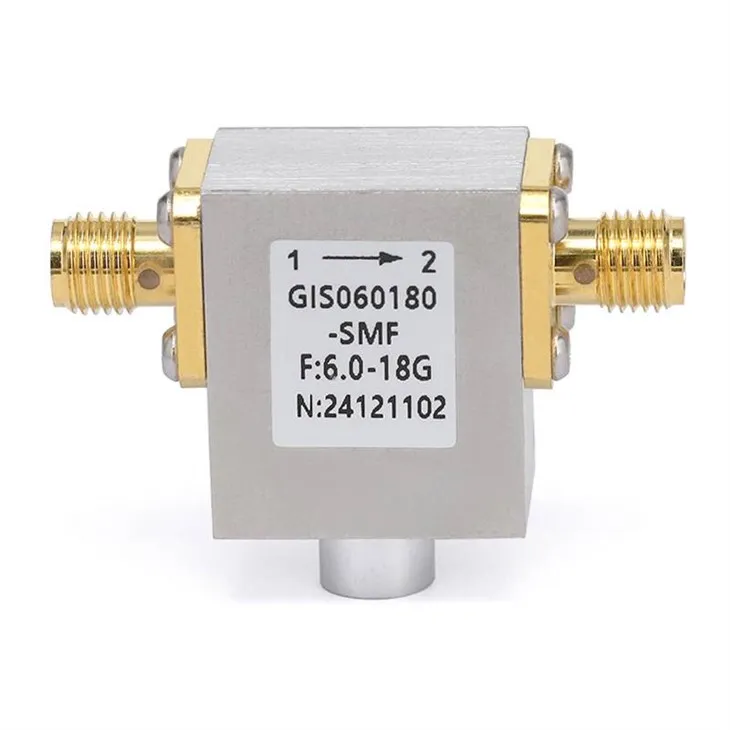
Another emerging packaging technology is system - in - package (SiP). SiP involves integrating multiple RF components, including the isolator, into a single package. This approach provides a high level of integration and miniaturization, while also simplifying the assembly process. SiP packages can be designed to meet the specific requirements of different applications, such as high - frequency operation or high - power handling.
Enhanced Performance and Customization
With the new technologies in RF isolator design, we're seeing significant improvements in performance. Isolators now offer better isolation, lower insertion loss, and higher power handling capabilities. These improvements are crucial for the efficient operation of RF systems.
For example, in wireless communication systems, better isolation helps to reduce interference between different channels, resulting in clearer and more reliable communication. Lower insertion loss means that less power is lost as the signal passes through the isolator, which improves the overall efficiency of the system. Higher power handling capabilities allow isolators to be used in high - power applications without overheating or failing.
In addition to improved performance, new technologies also enable greater customization. We can now design isolators to meet the specific requirements of different applications. Whether it's a high - frequency application in the millimeter - wave band or a low - frequency application in the radio band, we can tailor the design of the isolator to provide the best performance. This customization is made possible by the flexibility offered by new materials, fabrication techniques, and packaging technologies.
Applications of New RF Isolators
The new RF isolators with these advanced technologies are finding applications in a wide range of industries.
In the telecommunications industry, they are used in wireless base stations, mobile phones, and satellite communication systems. The improved performance and miniaturization of isolators are essential for the development of 5G and future 6G communication networks. These networks require high - frequency operation, high - power handling, and low interference, all of which can be achieved with the new RF isolators.
In the aerospace and defense industry, RF isolators are used in radar systems, electronic warfare equipment, and avionics. The high - power handling capabilities and reliability of the new isolators are crucial for the operation of these critical systems in harsh environments.
In the medical industry, RF isolators are used in medical imaging equipment, such as MRI machines. The precise control of RF signals provided by the isolators is important for obtaining high - quality images.
RF Coaxial Isolators
If you're interested in a specific type of RF isolator, check out our RF Coaxial Lsolators. These isolators are designed for coaxial cable applications and offer excellent performance in terms of isolation and power handling. They are widely used in a variety of RF systems, from test and measurement equipment to communication networks.
Let's Talk Business!
If you're in the market for RF isolators, I'd love to have a chat with you. Whether you need a standard isolator or a customized solution, we've got the expertise and the technology to meet your needs. Our team of engineers is always ready to work with you to design the perfect RF isolator for your application. So, don't hesitate to reach out and start a conversation about your RF isolator requirements.
References
- Smith, J. (2020). Advances in RF Isolator Technology. IEEE Transactions on Microwave Theory and Techniques.
- Jones, A. (2021). Miniaturization of RF Components. Journal of Microwave Engineering.
- Brown, B. (2022). New Materials for RF Applications. Materials Science and Engineering Journal.


