
What are the transient response characteristics of RF attenuators?
Leave a message

Hey there! As a supplier of RF attenuators, I've been getting a lot of questions lately about the transient response characteristics of these nifty devices. So, I thought I'd take a deep dive into this topic and share some insights with you all.
Let's start with the basics. RF attenuators are used to reduce the power of an RF signal without significantly distorting its waveform. They're crucial components in many RF systems, like communication networks, test and measurement setups, and radar systems. But what about their transient response? Well, the transient response of an RF attenuator refers to how it behaves when there's a sudden change in the input signal, such as a step change or a pulse.
One of the key factors that affect the transient response of an RF attenuator is its frequency response. You see, most RF attenuators are designed to work over a specific frequency range. Outside of this range, their performance can degrade, which can impact the transient response. For example, if an attenuator is designed for a frequency range of 1 - 10 GHz and you feed it a signal with a high - frequency component outside this range, it might not handle the sudden change in the signal as well.
Another important aspect is the attenuation value. Different attenuation levels can have different effects on the transient response. Higher attenuation values can sometimes introduce more delay and distortion in the transient response. This is because the attenuator has to work harder to reduce the signal power, and this extra processing can cause some unwanted side - effects.
The type of RF attenuator also plays a big role. There are different types, like fixed attenuators, variable attenuators, and step - attenuators. Fixed attenuators have a constant attenuation value, and their transient response is relatively predictable. Variable attenuators, on the other hand, allow you to adjust the attenuation level. This flexibility can be great, but it can also make the transient response more complex, especially if the attenuation is being changed rapidly.
Let's talk about some specific transient response characteristics. One of the main ones is the rise time. The rise time is the time it takes for the output signal to go from a low level (usually 10% of its final value) to a high level (usually 90% of its final value) when there's a step input. A good RF attenuator should have a short rise time, which means it can quickly respond to changes in the input signal.
The fall time is the opposite of the rise time. It's the time it takes for the output signal to go from a high level to a low level. Similar to the rise time, a short fall time is desirable, as it indicates that the attenuator can quickly return to its original state after the input signal changes.
Over - shoot and under - shoot are also important transient response characteristics. Over - shoot occurs when the output signal briefly exceeds its final value during the rise time, and under - shoot happens when it briefly goes below the final value during the fall time. These can cause problems in RF systems, as they can introduce unwanted noise and interference.
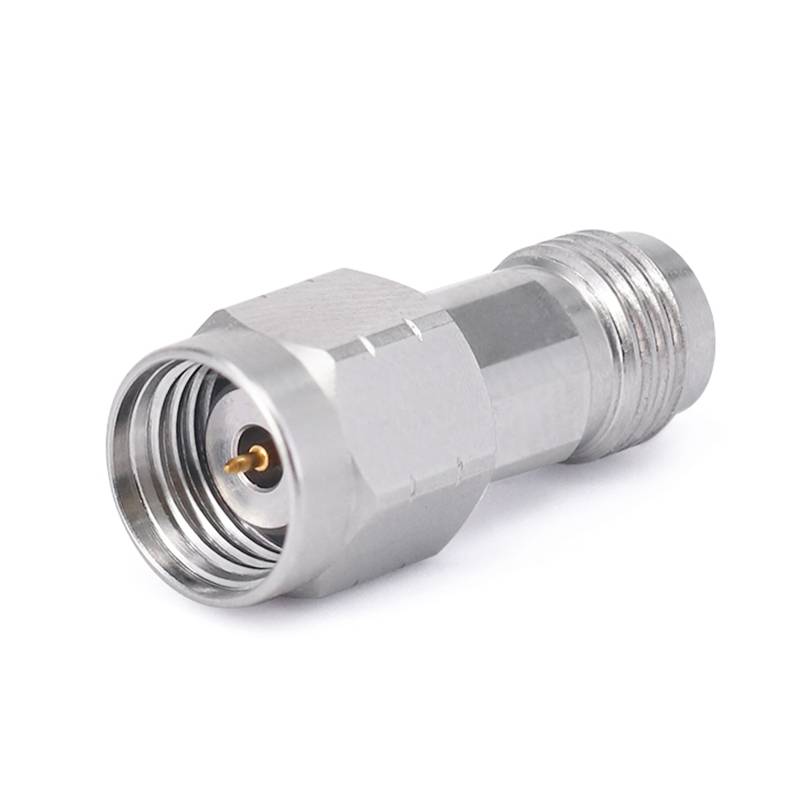
Now, let's take a look at some of our products and how their transient response characteristics might vary. We offer a wide range of RF attenuators, including 2.92mm Attenuators, 1.85mm Attenuators, and SMA Attenuators.
The 2.92mm attenuators are known for their excellent high - frequency performance. They typically have a very fast rise and fall time, which means they can handle high - speed transient signals with ease. Their low over - shoot and under - shoot characteristics make them ideal for applications where signal integrity is crucial, such as in high - speed communication systems.
The 1.85mm attenuators are even more optimized for ultra - high - frequency applications. They can operate at frequencies up to 65 GHz or even higher in some cases. Their transient response is top - notch, with extremely short rise and fall times and minimal over - shoot and under - shoot. These attenuators are often used in advanced test and measurement equipment, where accurate and fast signal processing is required.
SMA attenuators are more commonly used in lower - frequency applications, typically up to 18 GHz. They offer a good balance between performance and cost. Their transient response is still quite good, with reasonable rise and fall times and acceptable levels of over - shoot and under - shoot. They're a popular choice for a wide range of applications, from consumer electronics to industrial RF systems.
When choosing an RF attenuator for your application, it's important to consider the transient response characteristics. You need to make sure that the attenuator can handle the type of transient signals you'll be dealing with. For example, if you're working on a high - speed data communication system, you'll want an attenuator with a very fast rise and fall time and low over - shoot and under - shoot.
If you're still not sure which RF attenuator is right for you, or if you have any questions about the transient response characteristics, don't hesitate to reach out. We have a team of experts who can help you select the best product for your specific needs. Whether you're a small startup or a large corporation, we're here to provide you with the highest - quality RF attenuators and excellent customer service.
So, if you're in the market for RF attenuators and want to learn more about how our products can meet your requirements, just get in touch. We're ready to have a chat and discuss your project in detail.

References:
- "RF Attenuators: Theory and Applications" by RF Electronics Handbook
- "Transient Analysis of RF Circuits" by IEEE Transactions on Microwave Theory and Techniques


