

What is the compression point of an RF amplifier?
Leave a message

Hey there! As a supplier of RF amplifiers, I often get asked about technical terms and concepts related to our products. One question that pops up quite a bit is, "What is the compression point of an RF amplifier?" Well, let's dive right into it and break it down in a way that's easy to understand.
First off, let's talk about what an RF amplifier does. RF, or radio frequency, amplifiers are used to increase the power of radio frequency signals. These signals can be anything from the ones used in your mobile phone to those in satellite communication systems. They're a crucial part of many modern technologies, and getting the right performance out of them is super important.
Now, the compression point of an RF amplifier is a key parameter that tells us a lot about how the amplifier behaves under different input power levels. In simple terms, it's the point at which the amplifier starts to deviate from its linear operation.
Let's start with linear operation. An ideal RF amplifier would take an input signal, multiply it by a fixed gain, and produce an output signal that's a scaled - up version of the input. For example, if you have an amplifier with a gain of 20 dB, and you put in a 1 - milliwatt signal, you'd expect to get out a 100 - milliwatt signal (because 20 dB gain means a power ratio of 100:1). This is linear operation, and it's what we want in many applications because it preserves the shape and characteristics of the input signal.
But in the real world, amplifiers aren't perfect. As you increase the input power, there comes a point where the amplifier can't keep up with the linear relationship between input and output. This is the compression point.
There are two main types of compression points that we usually talk about: the 1 - dB compression point (P1dB) and the third - order intercept point (IP3).
The 1 - dB compression point is the input power level at which the output power of the amplifier is 1 dB less than what it would be if the amplifier were operating linearly. In other words, it's the point where the amplifier starts to "compress" the output signal. When you reach the P1dB, the gain of the amplifier starts to decrease, and the output signal starts to distort. This is a big deal because distortion can cause problems like interference in communication systems.
The third - order intercept point is a bit more complex. It's a theoretical point that helps us understand how an amplifier will handle intermodulation distortion. Intermodulation distortion occurs when two or more input signals mix together in the amplifier and produce new frequencies that weren't in the original signals. These new frequencies can interfere with other parts of the spectrum. The IP3 is the point where the linear extrapolation of the third - order intermodulation products intersects with the linear extrapolation of the fundamental output power. A higher IP3 means better performance in terms of intermodulation distortion.
So, why are these compression points so important? Well, if you're designing a communication system, you need to know how much input power you can safely feed into the amplifier without causing too much distortion. If you go beyond the compression point, you'll end up with a degraded signal that can lead to dropped calls, poor data transfer rates, or other problems.

For example, in a cellular base station, the RF amplifiers need to handle a large number of signals from different users. If the amplifiers operate close to or beyond their compression points, it can cause interference between the signals, leading to a bad user experience.
As an RF amplifier supplier, we understand the importance of these compression points. That's why we test and specify the P1dB and IP3 for all our amplifiers. We want our customers to know exactly how our products will perform under different conditions.
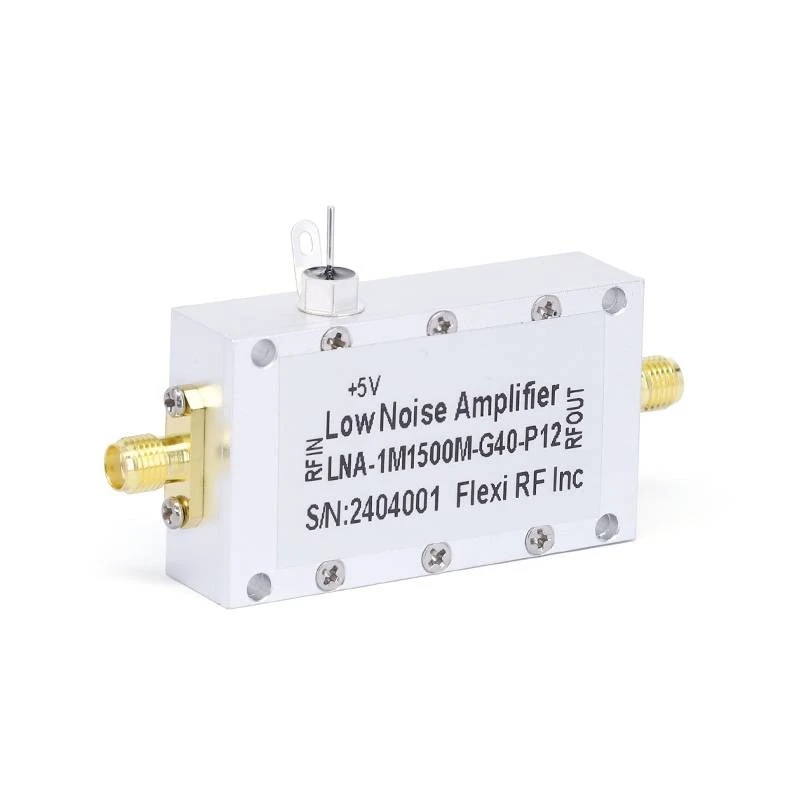
If you're in the market for RF amplifiers, you might be interested in our Low Noise Amplifiers. These amplifiers are designed to provide high gain with low noise, which is crucial in many applications where signal quality is key. They also have well - defined compression points, so you can be confident in their performance.
When you're choosing an RF amplifier, it's important to consider your specific requirements. Think about the input power levels you'll be dealing with, the amount of distortion you can tolerate, and the frequency range you need to cover. Our team of experts is always here to help you make the right choice.
We've spent years developing and refining our RF amplifiers to ensure they meet the highest standards of performance. Whether you're working on a small - scale project or a large - scale communication system, we have the right amplifier for you.
If you're interested in learning more about our products or have any questions about compression points or other technical aspects of RF amplifiers, don't hesitate to reach out. We're happy to have a chat and discuss how we can meet your needs. We can provide you with detailed specifications, performance data, and even samples if needed.
In conclusion, the compression point of an RF amplifier is a critical parameter that tells us a lot about how the amplifier will perform under different input power levels. Understanding the 1 - dB compression point and the third - order intercept point is essential for anyone working with RF amplifiers. As a supplier, we're committed to providing high - quality amplifiers with well - defined compression points to ensure optimal performance in your applications. So, if you're in the market for RF amplifiers, give us a shout, and let's start a conversation about how we can work together.
References
- Pozar, D. M. (2011). Microwave Engineering. Wiley.
- Collin, R. E. (2001). Foundations for Microwave Engineering. Wiley.


