
When is a Class C RF amplifier typically used?
Leave a message

In the realm of radio frequency (RF) technology, Class C RF amplifiers stand out as a specialized tool with unique characteristics and applications. As a leading supplier of RF amplifiers, I've witnessed firsthand the diverse scenarios where Class C amplifiers prove to be the optimal choice. This blog post aims to explore the typical use cases of Class C RF amplifiers, shedding light on their capabilities and why they are indispensable in certain RF systems.
Understanding Class C RF Amplifiers
Before delving into their applications, it's essential to understand what sets Class C RF amplifiers apart from other amplifier classes. Unlike Class A, B, or AB amplifiers, which are designed to operate over a large portion of the input signal cycle, Class C amplifiers conduct for less than half of the input signal cycle. This means they are highly efficient but introduce significant distortion to the output signal.
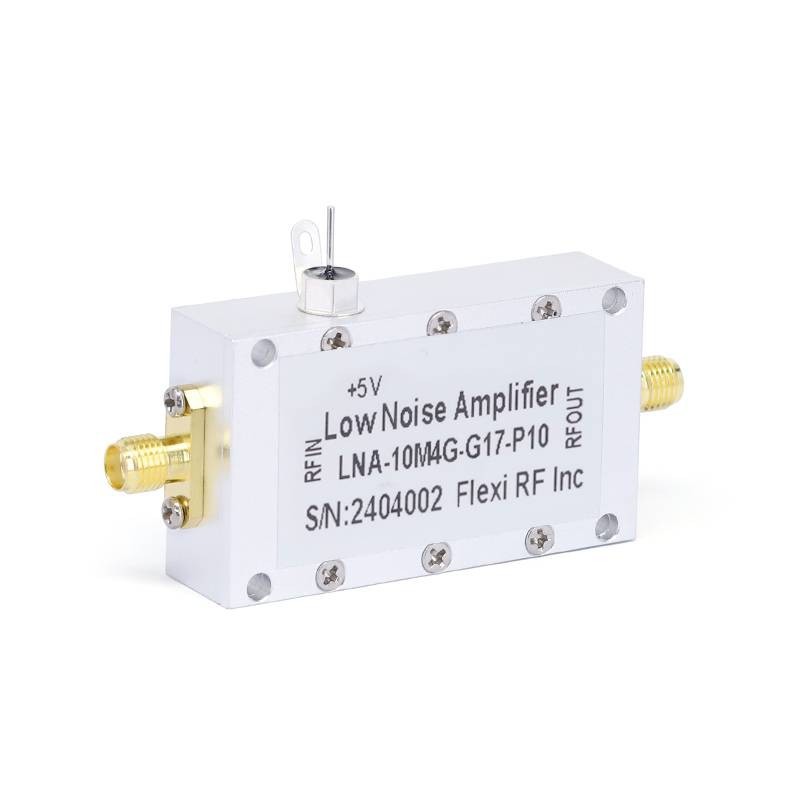

The efficiency of Class C amplifiers stems from their ability to minimize power dissipation in the active device (usually a transistor). By operating in a non - linear mode, they can convert a large portion of the DC power supplied to the amplifier into RF power. However, this non - linearity also means that the output signal is not a faithful reproduction of the input signal, which limits their use in applications where signal fidelity is crucial.
Typical Use Cases of Class C RF Amplifiers
Radio Transmitters
One of the most common applications of Class C RF amplifiers is in radio transmitters, particularly those operating in the high - frequency (HF), very high - frequency (VHF), and ultra - high - frequency (UHF) bands. In these transmitters, the primary goal is to generate a high - power RF signal with maximum efficiency.
In AM (Amplitude Modulation) and FM (Frequency Modulation) radio broadcasting, Class C amplifiers are used in the final power stage. The input signal is typically a modulated carrier wave, and the Class C amplifier boosts its power to the required level for transmission. Since the amplifier is highly efficient, it reduces the power consumption of the transmitter, which is a significant advantage, especially for large - scale broadcasting stations.
For example, in a commercial FM radio station, the Class C amplifier can take a low - power modulated signal from the exciter stage and amplify it to several kilowatts of power. This high - power signal is then fed to the antenna for transmission over a wide area.
Radar Systems
Radar systems rely on high - power RF pulses to detect and track objects. Class C RF amplifiers are well - suited for this application due to their ability to generate high - power pulses efficiently.
In a radar transmitter, a short RF pulse is generated and transmitted into the air. The reflected pulse from a target is then received and analyzed to determine the target's distance, speed, and other characteristics. Class C amplifiers can quickly switch on and off to generate these short pulses, and their high efficiency ensures that the radar system can operate for extended periods without excessive power consumption.
For instance, in an air traffic control radar, the Class C amplifier can generate high - power pulses in the microwave frequency range. These pulses are transmitted towards the airspace, and the radar system can detect and track aircraft within its coverage area.
Wireless Power Transfer
Wireless power transfer (WPT) is an emerging technology that allows electrical energy to be transferred from a power source to a load without the use of physical conductors. Class C RF amplifiers play a crucial role in WPT systems, especially those operating at high frequencies.
In a WPT system, the Class C amplifier is used to generate a high - power RF signal at a specific frequency. This RF signal is then coupled to a receiver coil through electromagnetic induction or resonance. The receiver coil converts the RF energy back into electrical energy to power the load.
For example, in a wireless charging pad for mobile devices, the Class C amplifier can generate a high - power RF signal at a frequency of several megahertz. This signal is transmitted through the charging pad, and the mobile device's receiver coil can pick up the energy and charge the battery.
Limitations and Mitigations
While Class C RF amplifiers offer high efficiency and high - power capabilities, their non - linearity and distortion can be a problem in some applications. For example, in applications where the output signal needs to be a faithful reproduction of the input signal, such as audio amplification or some data communication systems, Class C amplifiers are not suitable.
To mitigate the distortion issue, additional signal processing techniques can be employed. One common approach is to use a filter at the output of the Class C amplifier to remove the unwanted harmonics and other distortion components. Another approach is to use a linearization technique, such as predistortion, to pre - compensate for the non - linearity of the amplifier.
Comparison with Other Amplifier Classes
It's important to compare Class C RF amplifiers with other amplifier classes to understand their relative advantages and disadvantages.
- Class A Amplifiers: Class A amplifiers operate over the entire input signal cycle, which means they have excellent linearity and low distortion. However, they are also very inefficient, with a maximum theoretical efficiency of only 50%. In contrast, Class C amplifiers can achieve efficiencies of up to 80% or more, but at the cost of increased distortion.
- Class B and AB Amplifiers: Class B amplifiers conduct for half of the input signal cycle, while Class AB amplifiers conduct for slightly more than half of the cycle. These amplifiers offer a good compromise between efficiency and linearity. They are more efficient than Class A amplifiers but less efficient than Class C amplifiers. Class B and AB amplifiers are commonly used in audio amplification and some low - power RF applications where signal fidelity is important.
Our Offerings as an RF Amplifiers Supplier
As a supplier of RF amplifiers, we offer a wide range of Class C RF amplifiers to meet the diverse needs of our customers. Our amplifiers are designed and manufactured using the latest technologies and high - quality components to ensure reliable performance and high efficiency.
We understand that different applications have different requirements, so we provide customized solutions to our customers. Whether you need a high - power amplifier for a radar system or a compact amplifier for a wireless power transfer device, we can work with you to develop the right solution.
In addition to Class C amplifiers, we also offer Low Noise Amplifiers for applications where low noise and high sensitivity are required. Our low - noise amplifiers are designed to amplify weak RF signals without adding significant noise, making them ideal for receiver front - ends in communication systems and other RF applications.
Conclusion
Class C RF amplifiers are a powerful tool in the RF engineer's toolkit, offering high efficiency and high - power capabilities. Their typical use cases include radio transmitters, radar systems, and wireless power transfer. While they have limitations in terms of signal distortion, these can be mitigated through appropriate signal processing techniques.
If you are in need of a Class C RF amplifier or any other type of RF amplifier for your application, we invite you to contact us. Our team of experts is ready to assist you in selecting the right amplifier and providing customized solutions to meet your specific requirements. Let's work together to achieve your RF system goals.
References
- Pozar, D. M. (2011). Microwave Engineering (4th ed.). Wiley.
- Hayt, W. H., & Buck, J. A. (2012). Engineering Electromagnetics (8th ed.). McGraw - Hill.
- Razavi, B. (2011). RF Microelectronics (2nd ed.). Prentice Hall.


