

What is the difference between RF isolators and RF circulators?
Leave a message

Hey there! As an RF isolators supplier, I often get asked about the difference between RF isolators and RF circulators. These two components are crucial in the world of radio frequency (RF) technology, but they serve different purposes. Let's dive in and explore what sets them apart.
What are RF Isolators?
RF isolators are like one - way streets for RF signals. They allow the signal to flow in one direction while blocking it in the reverse direction. Think of it as a gatekeeper that only lets traffic go one way. In technical terms, an RF isolator is a two - port device that has a low insertion loss in the forward direction and a high isolation in the reverse direction.
The main function of an RF isolator is to protect sensitive RF components from reflected signals. When a signal is sent out from a source, some of it might bounce back due to impedance mismatches in the system. These reflected signals can cause interference, reduce the efficiency of the system, and even damage the source. An RF isolator steps in to prevent this from happening.
For example, in a power amplifier system, an RF isolator can be placed between the amplifier and the load. If there's a mismatch at the load, the reflected signal will be absorbed by the isolator instead of going back into the amplifier. This helps to keep the amplifier operating stably and extends its lifespan.
We offer a great range of RF Coaxial Lsolators that are designed to meet different application requirements. These isolators are built with high - quality materials and advanced manufacturing techniques to ensure reliable performance.
What are RF Circulators?
RF circulators, on the other hand, are a bit more complex. They are three - port or multi - port devices that route RF signals in a specific, sequential order. The signal enters one port and exits through the next port in a circular fashion. For a three - port circulator, if a signal enters port 1, it will exit through port 2; if it enters port 2, it will exit through port 3; and if it enters port 3, it will exit through port 1.
The key advantage of an RF circulator is its ability to separate the transmit and receive functions in a system. In a communication system, for instance, a circulator can be used to connect the antenna, the transmitter, and the receiver. The transmitter sends the signal to the antenna through one port of the circulator, and the received signal from the antenna goes to the receiver through another port. This way, the transmitter and the receiver can share the same antenna without interfering with each other.
Key Differences
Functionality
The most obvious difference is in their functionality. RF isolators are focused on protecting components from reflected signals, acting as a one - way safeguard. RF circulators, however, are used for signal routing and separation, allowing multiple components to share the same path without interference.
Number of Ports
RF isolators typically have two ports: an input port and an output port. RF circulators, as mentioned earlier, usually have three or more ports, which enables their circular signal - routing feature.
Application Scenarios
RF isolators are commonly used in power amplifier systems, test and measurement equipment, and any system where protecting the source from reflected power is a priority. RF circulators are widely used in communication systems such as radar, wireless communication, and satellite communication, where signal separation and routing are essential.
Performance Metrics
When it comes to performance, the main metric for an RF isolator is isolation in the reverse direction. A good isolator should have a high isolation value, typically in the range of 20 dB to 40 dB or more. For an RF circulator, the important metrics include insertion loss between adjacent ports and isolation between non - adjacent ports. Low insertion loss ensures that the signal doesn't lose too much power as it passes through the circulator, while high isolation prevents interference between different ports.
Why Choose Our RF Isolators?
As an RF isolators supplier, we take pride in offering high - quality products. Our isolators are designed with precision to provide excellent performance in various applications. We use the latest technology and high - grade materials to ensure that our isolators have low insertion loss, high isolation, and good temperature stability.
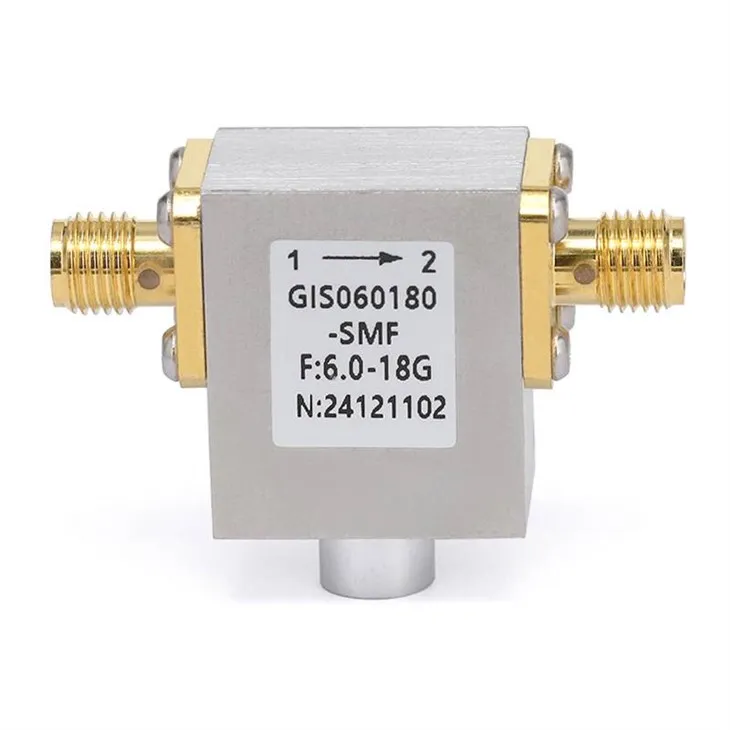

We also understand that every customer has unique requirements. That's why we offer a wide range of RF isolators with different frequency ranges, power ratings, and package sizes. Whether you need an isolator for a small - scale experiment or a large - scale industrial application, we've got you covered.
How to Choose Between RF Isolators and RF Circulators?
When deciding whether to use an RF isolator or an RF circulator, you need to consider your specific application. If your main concern is protecting a source from reflected signals, an RF isolator is the way to go. It's simple, effective, and can save your valuable components from damage.
On the other hand, if you need to route signals between multiple components or separate the transmit and receive functions in a system, an RF circulator is the better choice. It allows for more complex signal management and can significantly improve the efficiency of your system.
Contact Us for Your RF Component Needs
If you're in the market for RF isolators or have questions about the difference between RF isolators and RF circulators, don't hesitate to reach out. We're here to help you find the right solution for your RF application. Whether you're a small business, a research institution, or a large - scale manufacturer, we can provide you with high - quality RF isolators that meet your needs.
We're always happy to have a chat about your requirements and offer our professional advice. So, if you're looking to make a purchase or just want to learn more, get in touch with us. Let's work together to take your RF system to the next level.
References
- Pozar, D. M. (2011). Microwave Engineering. Wiley.
- Collin, R. E. (1992). Foundations for Microwave Engineering. McGraw - Hill.


