

What is the difference in connector loads for low - voltage and high - voltage applications?
Leave a message

As a seasoned provider of connector loads, I've witnessed firsthand the significant differences in requirements between low - voltage and high - voltage applications. These disparities are not only crucial for understanding the technical aspects but also for ensuring the safety and efficiency of electrical systems. In this blog, I'll delve into the key differences in connector loads for low - voltage and high - voltage applications.
Electrical Characteristics
One of the most fundamental differences lies in the electrical characteristics. Low - voltage applications typically operate at voltages below 1000 volts. These systems are commonly found in consumer electronics, automotive electronics, and some industrial control systems. The lower voltage means that the electrical stress on the connectors is relatively low. As a result, the insulation requirements for low - voltage connector loads are less stringent.
For example, in a smartphone charger, which is a low - voltage application, the connector only needs to handle a few volts (usually 5 volts or less). The insulation materials used in the connector can be relatively thin and lightweight. This allows for smaller and more compact connector designs, which are ideal for the space - constrained environment of consumer electronics.
On the other hand, high - voltage applications operate at voltages well above 1000 volts. Power transmission and distribution systems, high - energy physics experiments, and some industrial processes are typical high - voltage applications. The high voltage creates a much higher electrical stress on the connectors. Insulation is of utmost importance in high - voltage connector loads. Thick and high - quality insulation materials are required to prevent electrical breakdown and arcing.
For instance, in a high - voltage power transmission line, the connectors need to withstand thousands of volts. Specialized insulation materials such as porcelain or silicone rubber are used to ensure the safety and reliability of the connection. The design of high - voltage connectors also needs to take into account factors such as creepage distance (the shortest distance along the surface of the insulation between two conductive parts) and clearance distance (the shortest distance through the air between two conductive parts).
Power Handling Capability
Power handling capability is another significant difference between low - voltage and high - voltage connector loads. Power (P) is calculated as the product of voltage (V) and current (I), i.e., P = V×I. In low - voltage applications, since the voltage is low, a relatively high current may be required to achieve a certain power level.
For example, in a 12 - volt automotive electrical system, to power a 120 - watt device, the current required would be 10 amperes (I = P/V = 120W/12V). Low - voltage connector loads need to be designed to handle these relatively high currents without overheating. This often requires larger cross - sectional areas of the conductive parts in the connector to reduce resistance and minimize power losses.
In high - voltage applications, the voltage is high, so the current can be relatively low for the same power level. Consider a high - voltage power transmission line operating at 100,000 volts. To transmit 100 megawatts of power, the current would be only 1000 amperes (I = P/V = 100,000,000W/100,000V). High - voltage connector loads are designed to handle high - voltage stresses rather than high currents. However, they still need to be able to conduct the current safely without significant power losses.
Environmental and Safety Considerations
Environmental and safety considerations also vary between low - voltage and high - voltage applications. Low - voltage connector loads are generally less sensitive to environmental factors. They can often operate in a wide range of temperatures, humidity levels, and dust conditions. However, in some cases, such as in automotive or industrial environments, they still need to be protected against moisture, vibration, and mechanical stress.
High - voltage connector loads, on the other hand, require much more stringent environmental protection. The high voltage makes them more susceptible to environmental factors such as humidity, pollution, and temperature variations. For example, in a high - voltage substation located in a coastal area, the connectors need to be protected against salt - water corrosion. Special coatings and enclosures are often used to ensure the long - term reliability of high - voltage connector loads.
Safety is also a major concern in high - voltage applications. High - voltage electrical systems pose a significant risk of electric shock and fire. Therefore, high - voltage connector loads need to be designed with multiple safety features. These may include interlocks to prevent accidental contact with live parts, grounding provisions to divert fault currents safely, and warning labels to alert personnel of the high - voltage hazard.
Connector Design and Configuration
The design and configuration of connector loads are tailored to the specific requirements of low - voltage and high - voltage applications. Low - voltage connectors are often designed for easy installation and removal. They may have simple locking mechanisms or snap - fit designs. The size and shape of low - voltage connectors are also optimized for the application. For example, in consumer electronics, small and lightweight connectors are preferred to save space and reduce the overall weight of the device.
In high - voltage applications, connector design is more complex. High - voltage connectors need to be designed to minimize electrical field concentrations, which can lead to electrical breakdown. They often have special shapes and geometries to distribute the electrical field evenly. The connectors also need to be securely fastened to prevent movement or disconnection under high - voltage and high - stress conditions.
Our Product Range
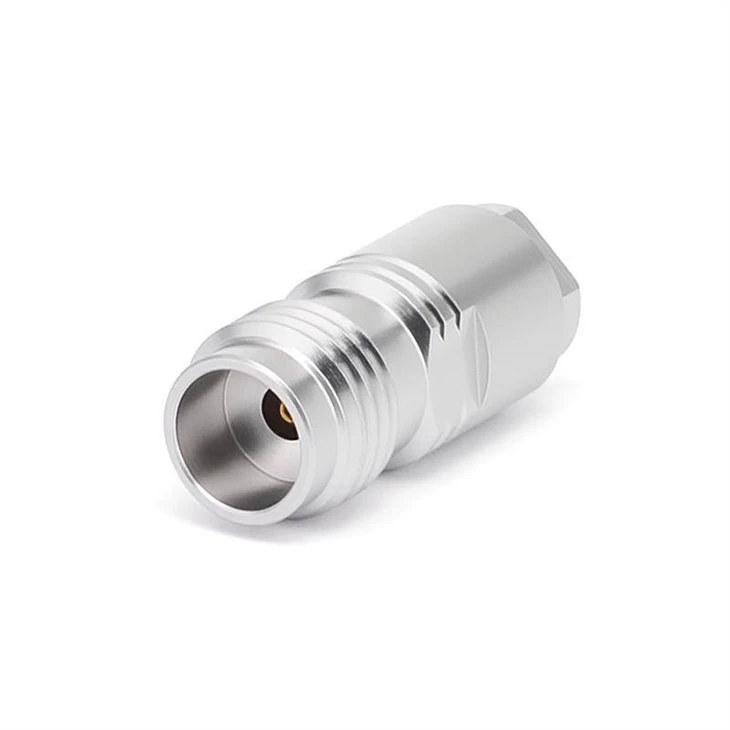
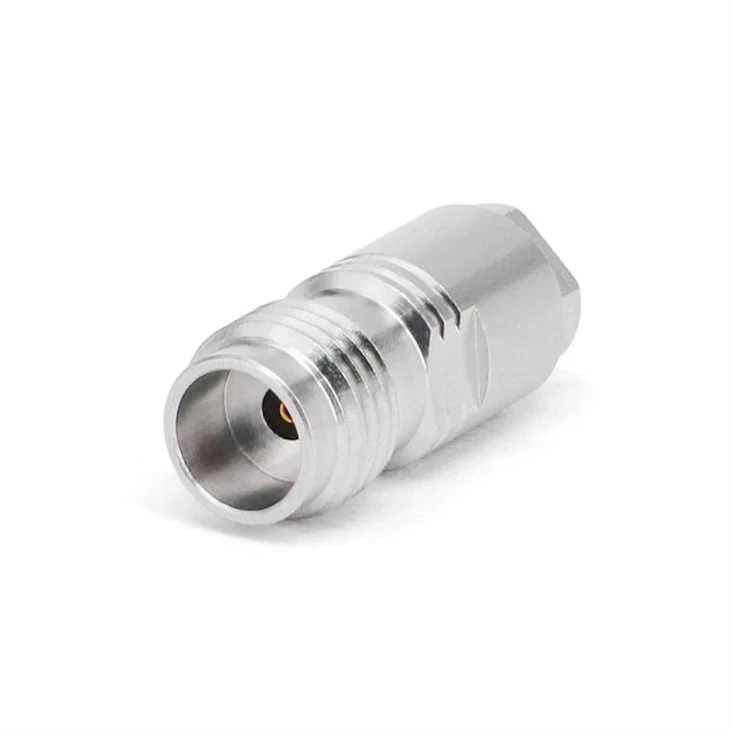
As a leading provider of connector loads, we offer a wide range of products suitable for both low - voltage and high - voltage applications. Our 3.5mm RF Loads are ideal for low - voltage RF applications. They are designed to provide excellent electrical performance and reliability in a compact package. Our 1.85mm RF Loads are suitable for high - frequency, low - voltage applications, offering high - precision performance. For high - voltage applications, our 2.4mm RF Loads are designed to handle high - voltage stresses while maintaining excellent electrical characteristics.
Conclusion
In conclusion, the differences in connector loads for low - voltage and high - voltage applications are significant. These differences span across electrical characteristics, power handling capability, environmental and safety considerations, and connector design. Understanding these differences is crucial for selecting the right connector loads for a specific application.
If you are in the market for high - quality connector loads, whether for low - voltage or high - voltage applications, we are here to help. Our team of experts can provide you with the technical support and guidance you need to make the best choice for your project. Contact us today to start a procurement discussion and find the perfect connector loads for your needs.
References
- Grover, F. W. (1946). Inductance Calculations: Working Formulas and Tables. Dover Publications.
- Kraus, J. D., & Carver, K. R. (1973). Electromagnetics. McGraw - Hill.
- Neher, J. H., & McGrath, M. H. (1957). Calculation of the Temperature Rise and Load Capability of Cable Systems. AIEE Transactions.


