
What is the directivity of an antenna?
Leave a message

Hey there! As someone working at an antennas supplier, I often get asked about antenna directivity. So, let's dive right in and break down what antenna directivity is all about.
First off, what exactly is directivity? In simple terms, antenna directivity is a measure of how well an antenna focuses its radiation pattern in a particular direction. You can think of it like a flashlight. A regular flashlight spreads light in a wide beam, illuminating a large area. But a spotlight, on the other hand, focuses the light into a narrow beam, shining brightly in one specific direction. Antennas work in a similar way.
When an antenna has high directivity, it means it can send or receive signals more effectively in a specific direction. This is super useful in many applications. For example, in satellite communication, you want the antenna on the ground to be able to send and receive signals precisely to and from the satellite. A highly directive antenna can help with that by concentrating the signal energy towards the satellite, rather than wasting it in other directions.
On the flip side, antennas with low directivity spread their signal energy over a wider area. These are great for applications where you need to cover a large space, like Wi - Fi routers in a home or office. You want the Wi - Fi signal to reach all corners of the room, so a low - directive antenna is the way to go.
Let's talk about how directivity is measured. It's usually expressed in decibels (dB). A higher dB value indicates higher directivity. For instance, an antenna with a directivity of 10 dB is more directive than one with a directivity of 5 dB.
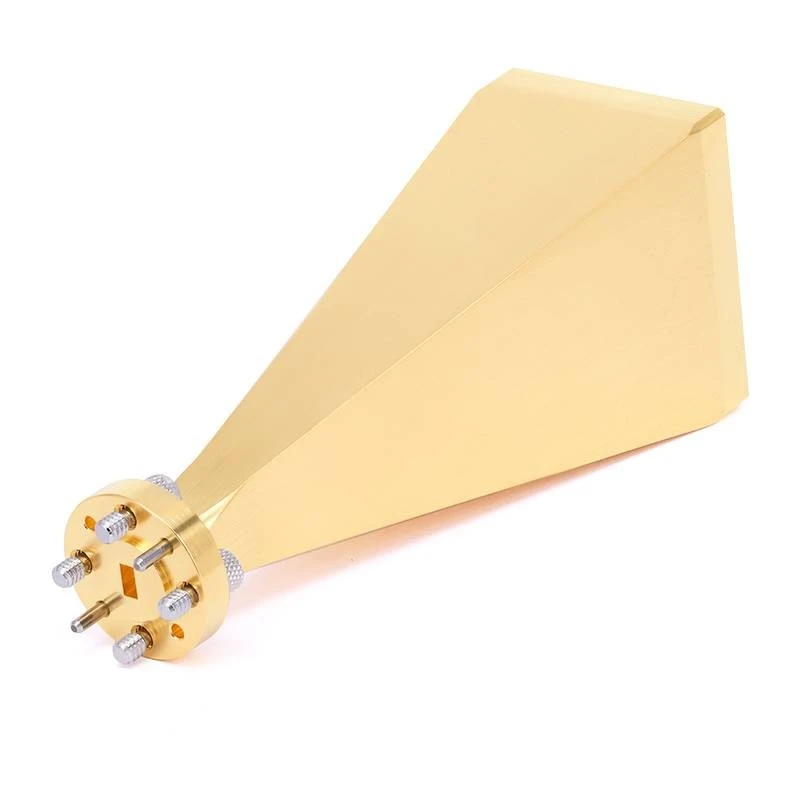
Now, different types of antennas have different levels of directivity. Take Horn Antennas for example. These antennas are known for their relatively high directivity. They have a horn - shaped structure that helps to focus the electromagnetic waves in a particular direction. Horn antennas are commonly used in radar systems, satellite communications, and microwave testing. Their high directivity allows them to send and receive signals over long distances with good signal strength.

Another type of antenna is the Log - periodic Antennas. These antennas have a unique design that gives them a wide frequency range and a moderate level of directivity. Log - periodic antennas are often used in radio and television broadcasting, as well as in some wireless communication systems. They can cover a broad spectrum of frequencies while still being able to focus the signal to some extent.
There are also omnidirectional antennas, which have very low directivity. These antennas radiate or receive signals equally in all directions in a horizontal plane. Think of a cell phone tower antenna. It needs to communicate with cell phones all around it, so an omnidirectional antenna is used to ensure that the signal can reach phones in any direction.
So, why does directivity matter? Well, it has a big impact on the performance of an antenna system. If you choose the wrong antenna with the wrong directivity for your application, you might end up with a weak signal, poor communication quality, or wasted energy.
For example, if you're setting up a point - to - point wireless link between two buildings, you'd want a highly directive antenna. This way, you can ensure that the signal is sent directly from one building to the other, minimizing interference from other directions and maximizing the signal strength at the receiving end.
On the other hand, if you're trying to provide Wi - Fi coverage in a large open area, an omnidirectional or low - directive antenna would be more appropriate. You want the signal to spread out and cover as much area as possible.
When it comes to choosing an antenna for your project, there are a few things to consider in terms of directivity. First, think about the distance between the transmitting and receiving points. If it's a long - distance communication, a high - directive antenna is usually better. Second, consider the environment. If there are a lot of obstacles or interference in the area, a highly directive antenna can help to cut through the noise and focus the signal on the desired target.
At our antennas supplier, we have a wide range of antennas with different directivities to suit various applications. Whether you need a high - directive horn antenna for a satellite project or an omnidirectional antenna for a local Wi - Fi network, we've got you covered.
We understand that every project is unique, and that's why we offer personalized advice to help you choose the right antenna. Our team of experts is always ready to answer your questions and guide you through the selection process.
If you're in the market for antennas and want to learn more about directivity or which antenna is best for your needs, don't hesitate to reach out. We're here to make sure you get the most out of your antenna system. Whether you're a small business owner looking to set up a wireless network or a large corporation working on a complex communication project, we can provide the antennas and support you need.
So, if you're interested in discussing your antenna requirements, just drop us a line. We'll be happy to have a chat and see how we can help you achieve the best performance with the right antenna directivity.
References
- Balanis, Constantine A. Antenna Theory: Analysis and Design. Wiley, 2016.
- Stutzman, Warren L., and Gary A. Thiele. Antenna Theory and Design. Wiley, 2012.


