

What is the phase stability of an SMA Adapter?
Leave a message

As a supplier of SMA Adapters, I often encounter inquiries from customers about the phase stability of these crucial RF components. Phase stability is a fundamental characteristic that significantly impacts the performance of SMA Adapters in various applications. In this blog, I'll delve into what phase stability means for an SMA Adapter, why it matters, and how we ensure high - quality phase stability in our products.
Understanding Phase Stability
Phase stability refers to the ability of an SMA Adapter to maintain a consistent phase relationship between the input and output signals over time, temperature variations, and mechanical stress. In the context of RF (Radio Frequency) systems, phase is a measure of the position of a point in time within a cycle of a waveform. When signals pass through an SMA Adapter, any changes in the phase can lead to interference, signal loss, or inaccurate data transmission.
To put it simply, imagine two signals that are supposed to be in sync. If an SMA Adapter has poor phase stability, it can cause a shift in the phase of one signal relative to the other. This phase shift can disrupt the proper functioning of a system, especially in applications where precise signal alignment is critical, such as in phased - array antennas, radar systems, and high - speed data communication networks.
Why Phase Stability Matters
1. Phased - Array Antennas
Phased - array antennas are used in a wide range of applications, including military radar, satellite communication, and 5G wireless networks. These antennas use multiple antenna elements to steer the radiation pattern electronically. The phase of the signals fed to each antenna element must be precisely controlled to achieve the desired beam direction. An SMA Adapter with poor phase stability can introduce phase errors, resulting in a distorted beam pattern, reduced antenna gain, and decreased system performance.
2. Radar Systems
In radar systems, accurate phase measurement is essential for target detection, tracking, and ranging. The phase information of the received signals is used to calculate the distance and velocity of targets. Any phase instability in the SMA Adapters used in the radar front - end can lead to errors in these measurements, potentially causing false alarms or missed detections.
3. High - Speed Data Communication
In high - speed data communication networks, such as Ethernet and fiber - optic links, phase stability is crucial for maintaining signal integrity. As data rates increase, the tolerance for phase errors decreases. SMA Adapters with good phase stability help ensure that the transmitted and received signals remain in phase, reducing bit - error rates and improving the overall reliability of the communication system.
Factors Affecting Phase Stability
1. Temperature
Temperature changes can have a significant impact on the phase stability of an SMA Adapter. As the temperature rises or falls, the electrical properties of the materials used in the adapter, such as the dielectric constant of the insulator and the conductivity of the conductors, can change. These changes can cause the phase of the signal passing through the adapter to shift. To mitigate this effect, high - quality SMA Adapters are often designed with materials that have low temperature coefficients of dielectric constant and conductivity.
2. Mechanical Stress
Mechanical stress, such as bending, twisting, or vibration, can also affect the phase stability of an SMA Adapter. When an adapter is subjected to mechanical stress, the physical dimensions of the internal components can change, leading to variations in the electrical length of the transmission line. This, in turn, can cause phase shifts in the signal. To improve mechanical stability, our SMA Adapters are designed with robust mechanical structures and high - quality connectors that can withstand normal levels of mechanical stress without significant phase changes.
3. Frequency
The phase stability of an SMA Adapter can also vary with frequency. At higher frequencies, the electrical properties of the adapter become more sensitive to changes in temperature, mechanical stress, and other factors. Therefore, it is important to select an SMA Adapter that is specifically designed for the frequency range of your application to ensure optimal phase stability.
How We Ensure Phase Stability in Our SMA Adapters
As a supplier of SMA Adapters, we take several steps to ensure high - quality phase stability in our products.
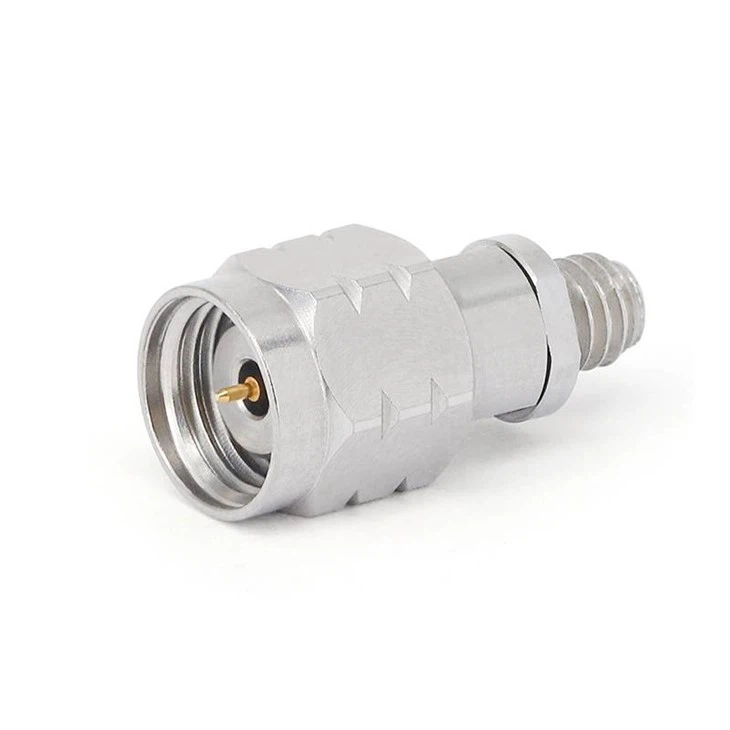
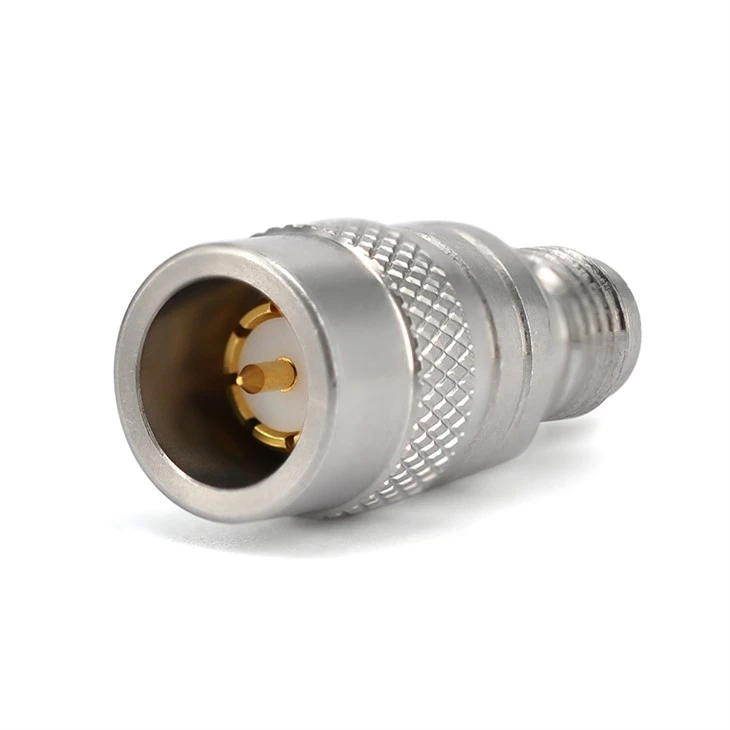
1. Material Selection
We carefully select the materials used in our SMA Adapters to minimize the effects of temperature and mechanical stress on phase stability. For example, we use high - quality dielectric materials with low temperature coefficients of dielectric constant to reduce the impact of temperature changes on the phase of the signal. We also use high - conductivity conductors to minimize signal loss and phase distortion.
2. Precision Manufacturing
Our manufacturing process is highly precise and controlled to ensure consistent electrical and mechanical properties in each SMA Adapter. We use advanced machining techniques to achieve tight tolerances on the dimensions of the internal components, which helps maintain a stable electrical length and phase relationship. Additionally, we perform rigorous quality control tests on each adapter to ensure that it meets our strict phase stability specifications.
3. Testing and Calibration
Before our SMA Adapters are shipped to customers, they undergo comprehensive testing and calibration to verify their phase stability. We use state - of - the - art test equipment to measure the phase response of the adapters over a wide range of temperatures, frequencies, and mechanical conditions. Any adapters that do not meet our phase stability requirements are either re - worked or discarded.
Comparison with Other Adapter Types
It's also worth comparing the phase stability of SMA Adapters with other types of RF adapters, such as 3.5mm Adapter and 1.0mm Adapter.
3.5mm Adapters
3.5mm Adapters are commonly used in high - frequency applications, typically up to 34 GHz. They offer good phase stability, but their performance may be slightly inferior to SMA Adapters in some cases. This is because the 3.5mm connector has a larger physical size, which can make it more susceptible to mechanical stress and temperature variations.
1.0mm Adapters
1.0mm Adapters are designed for ultra - high - frequency applications, up to 110 GHz. While they provide excellent phase stability at these high frequencies, they are also more expensive and more difficult to manufacture compared to SMA Adapters. SMA Adapters, on the other hand, offer a good balance between performance, cost, and ease of use, making them a popular choice for a wide range of RF applications.
Conclusion
Phase stability is a critical characteristic of SMA Adapters that can significantly impact the performance of RF systems. As a supplier, we understand the importance of providing high - quality SMA Adapters with excellent phase stability. By carefully selecting materials, using precision manufacturing techniques, and performing rigorous testing and calibration, we ensure that our SMA Adapters meet the strict requirements of our customers in various applications.
If you are in need of SMA Adapters with reliable phase stability for your RF project, we would be delighted to discuss your specific requirements. Whether you are working on a phased - array antenna, radar system, or high - speed data communication network, our team of experts can help you select the right SMA Adapter for your needs. Please feel free to reach out to us to start a procurement discussion. You can visit our product page for SMA Adapter to learn more about our offerings.
References
- "RF and Microwave Transmission Line Design Handbook" by Collin, R. E.
- "Antenna Theory: Analysis and Design" by Balanis, C. A.
- "High - Speed Digital Design: A Handbook of Black Magic" by Johnson, H. W., and Graham, M.


