

What is the radiation pattern of an antenna with an SMA Adapter?
Leave a message

Hey there! As a supplier of SMA Adapters, I often get asked about the radiation pattern of an antenna with an SMA Adapter. So, I thought I'd take some time to break it down for you in a way that's easy to understand.
First off, let's quickly talk about what an SMA Adapter is. SMA stands for SubMiniature version A, and it's a widely used RF (Radio Frequency) connector. SMA Adapters are used to connect different RF components, like antennas, to other devices. They're known for their high - frequency performance and durability, which makes them a popular choice in many wireless communication systems.
Now, onto the main topic: the radiation pattern of an antenna with an SMA Adapter. The radiation pattern of an antenna is basically a graphical representation of how the antenna radiates or receives electromagnetic energy in space. It shows the relative strength of the radiated field in different directions from the antenna.
Types of Radiation Patterns
There are two main types of radiation patterns: omnidirectional and directional.
Omnidirectional Radiation Pattern
An antenna with an omnidirectional radiation pattern radiates energy equally in all directions in a horizontal plane. Picture it like a doughnut shape around the antenna. This type of pattern is great for applications where you need to communicate in all directions around the antenna, like in a Wi - Fi router. When you connect an antenna with an omnidirectional pattern to an SMA Adapter, the adapter doesn't really change the basic shape of the pattern. However, it can affect the efficiency of the antenna. If the SMA Adapter has a poor impedance match, it can cause some of the energy to be reflected back, which reduces the overall radiated power.
Directional Radiation Pattern
On the other hand, a directional antenna focuses its radiated energy in a specific direction. It's like a flashlight that shines light in one direction. Directional antennas are used when you want to send or receive signals over a long distance in a particular direction, such as in point - to - point communication links. When an SMA Adapter is connected to a directional antenna, it's crucial that the adapter is properly installed. Any misalignment or poor connection can cause the radiation pattern to distort. For example, if the adapter is not tightened correctly, it can create a small gap that allows some of the energy to leak out, changing the direction and strength of the radiated field.
Factors Affecting the Radiation Pattern with an SMA Adapter
Impedance Matching
One of the most important factors is impedance matching. The impedance of the SMA Adapter, the antenna, and the connected device should all be the same. In most RF systems, the standard impedance is 50 ohms. If there's a mismatch, it can lead to standing waves on the transmission line, which in turn affects the radiation pattern. You can think of it like water flowing through a pipe. If the pipe suddenly changes size, the flow of water gets disrupted. Similarly, an impedance mismatch disrupts the flow of electromagnetic energy.
Connector Quality
The quality of the SMA Adapter also plays a big role. A high - quality adapter will have better electrical performance and mechanical stability. Cheaper or poorly made adapters may have issues like loose connections, which can cause signal loss and pattern distortion. For example, a connector with a loose center pin may not make a proper electrical contact, leading to inconsistent radiation patterns.
Frequency
The frequency at which the antenna operates is another factor. Different frequencies interact with the SMA Adapter and the antenna in different ways. At higher frequencies, the electrical properties of the adapter, such as its capacitance and inductance, become more significant. These properties can affect the phase and amplitude of the signal, which in turn changes the radiation pattern.
Real - World Applications
Let's look at some real - world applications where understanding the radiation pattern of an antenna with an SMA Adapter is important.
Mobile Communication
In mobile phones, SMA Adapters are often used to connect the internal antennas to the phone's circuit board. The radiation pattern of these antennas needs to be carefully designed to ensure good signal reception and transmission in different environments. For example, in a crowded city with lots of buildings, an omnidirectional antenna can help the phone pick up signals from different base stations. The SMA Adapter needs to be of high quality to maintain the efficiency of the antenna and ensure a stable connection.
Satellite Communication
In satellite communication systems, directional antennas are used to communicate with satellites in space. The SMA Adapter used in these systems needs to be extremely reliable and have a good impedance match. Any small change in the radiation pattern can cause a significant loss of signal strength, which can be a big problem when communicating with satellites that are thousands of kilometers away.
Related Products
If you're interested in other types of RF adapters, we also offer GPO SMP Adapter, 2.92mm Adapter, and 2.4mm Adapter. These adapters are designed for different frequency ranges and applications, and they can be a great addition to your RF system.
Conclusion
In conclusion, the radiation pattern of an antenna with an SMA Adapter is influenced by many factors, including impedance matching, connector quality, and frequency. Whether you're using an omnidirectional or directional antenna, the SMA Adapter plays a crucial role in ensuring the antenna performs as expected.

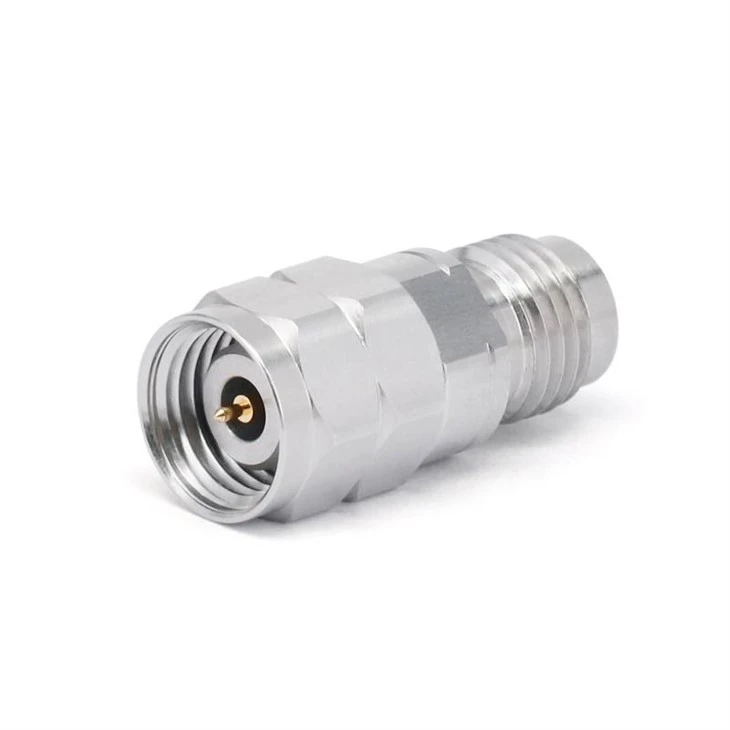
If you're in the market for high - quality SMA Adapters or any of our other RF products, we'd love to hear from you. We have a wide range of adapters to suit different needs and applications. Don't hesitate to reach out for more information or to start a procurement discussion. We're here to help you find the best solutions for your RF requirements.
References
- Balanis, Constantine A. "Antenna Theory: Analysis and Design." Wiley, 2016.
- Pozar, David M. "Microwave Engineering." Wiley, 2011.


