
What is the return loss of VNA test cables?
Leave a message

In the realm of RF (Radio Frequency) and microwave testing, Vector Network Analyzers (VNAs) are indispensable tools for measuring the electrical parameters of various RF components. Central to these measurements are VNA test cables, which act as the vital link between the VNA and the Device Under Test (DUT). One of the most critical parameters of VNA test cables is return loss, a concept that significantly impacts the accuracy and reliability of VNA measurements. In this post, as a VNA Test Cables supplier, I'll delve into what return loss of VNA test cables is, why it matters, and how to optimize it for your testing needs.
Understanding Return Loss
Return loss is a measure of how well a device or a component, in this case, a VNA test cable, matches the characteristic impedance of the system. In an ideal scenario, the impedance of the cable should match perfectly with the source (VNA) and the load (DUT). When there's a mismatch, a portion of the incident signal is reflected back towards the source instead of being fully transmitted to the load. Return loss quantifies this reflection, and it's expressed in decibels (dB).
The formula for calculating return loss is:
[RL = -20 \log_{10} \left(\left|\frac{\Gamma}{1}\right|\right)]
where $\Gamma$ is the reflection coefficient, which represents the ratio of the reflected voltage to the incident voltage. A higher return loss value indicates a lower amount of reflected signal and a better impedance match. For example, a return loss of 20 dB means that the reflected power is 1% of the incident power, while a return loss of 10 dB means the reflected power is 10% of the incident power.

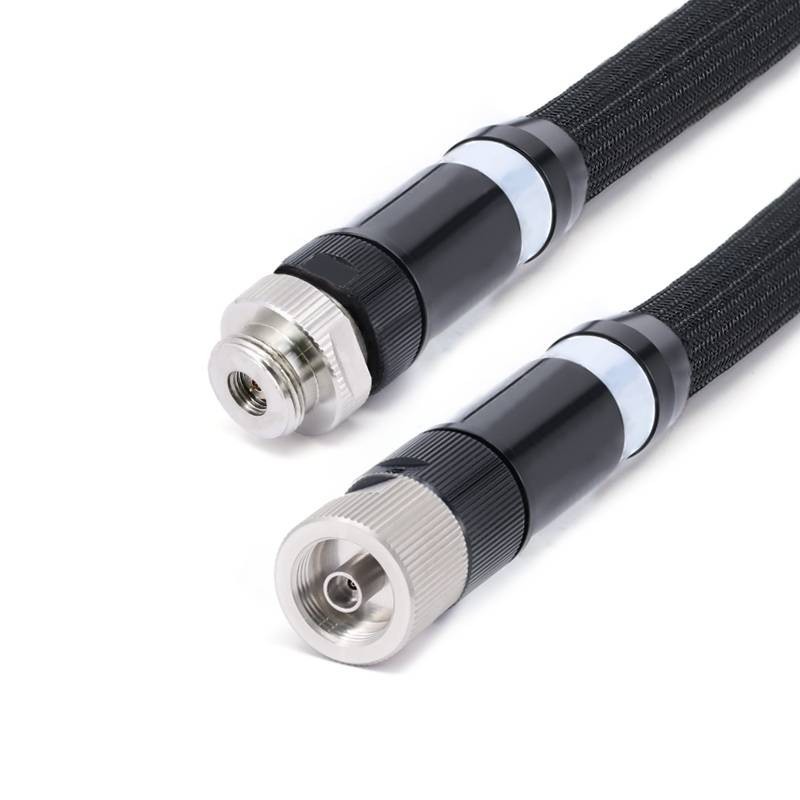
Importance of Return Loss in VNA Test Cables
Accurate measurements are the holy grail in RF and microwave testing, and the return loss of VNA test cables plays a pivotal role in achieving this. Here's why:
- Measurement accuracy: A high return loss ensures that most of the signal is transmitted through the cable to the DUT. When there are significant reflections due to poor return loss, the VNA may misinterpret the reflected signals as part of the DUT's response, leading to inaccurate measurements of parameters such as S-parameters (scattering parameters).
- System stability: Reflected signals can cause interference and instability in the test system. These reflections can interact with the incident signals, creating standing waves that distort the measurement results. By minimizing reflections through high return loss, the test system becomes more stable and reliable.
- Signal integrity: In high-frequency applications, signal integrity is crucial. A cable with poor return loss can degrade the signal quality, leading to issues such as signal attenuation, phase distortion, and increased noise. This can have a significant impact on the performance evaluation of the DUT.
Factors Affecting the Return Loss of VNA Test Cables
Several factors can influence the return loss of VNA test cables. Understanding these factors can help you select the right cables and take appropriate measures to optimize their performance.
- Cable construction: The physical construction of the cable, including the quality of the conductors, dielectric material, and shielding, can affect the return loss. High-quality conductors with low resistance and a uniform dielectric material help to minimize signal reflections.
- Connector quality: Connectors are often the weak link in the cable assembly. Poorly manufactured or damaged connectors can introduce impedance mismatches, resulting in lower return loss. It's essential to choose connectors with high precision and good electrical performance.
- Frequency: Return loss is frequency-dependent. As the frequency increases, the wavelength of the signal decreases, and even small impedance mismatches can have a more significant impact on the reflection. Therefore, the return loss of a cable may vary across different frequency ranges.
- Bending and flexing: Excessive bending or flexing of the cable can change its physical characteristics, such as the distance between the conductors and the dielectric constant. This can lead to impedance variations and a decrease in return loss.
Measuring Return Loss of VNA Test Cables
To measure the return loss of VNA test cables, a VNA is typically used. The measurement process involves the following steps:
- Calibration: Before taking any measurements, the VNA needs to be calibrated using Calibration Kits. Calibration compensates for the systematic errors in the VNA and the test setup, ensuring accurate measurements.
- Connection: The VNA test cable to be measured is connected to the VNA. One end of the cable is connected to the VNA port, and the other end is typically terminated with a well-defined load, such as a short, open, or 50-ohm load.
- Measurement: The VNA sends a test signal through the cable and measures the reflected signal. It then calculates the return loss based on the ratio of the reflected and incident signals. The measurement results are usually presented as a plot of return loss versus frequency.
Optimizing Return Loss
As a VNA Test Cables supplier, I understand the importance of providing cables with excellent return loss performance. Here are some ways to optimize the return loss of your VNA test cables:
- Choose high-quality cables: Invest in cables that are designed and manufactured to meet high standards. Look for cables with low insertion loss, high shielding effectiveness, and good return loss specifications. VNA Test Cables from reputable suppliers often undergo rigorous testing to ensure consistent performance.
- Proper cable handling: Avoid excessive bending, twisting, or pulling of the cables. Use cable management systems to keep the cables organized and prevent them from being damaged. Also, make sure to store the cables properly when not in use.
- Regular inspection and maintenance: Periodically inspect the cables and connectors for any signs of damage, such as cracks, scratches, or loose connections. Replace any damaged components promptly to maintain the cable's performance.
- Match the impedance: Ensure that the impedance of the cable matches the impedance of the VNA and the DUT. This can be achieved by using cables with the correct characteristic impedance and by using impedance-matching devices if necessary.
Conclusion
Return loss is a critical parameter for VNA test cables, as it directly affects the accuracy and reliability of RF and microwave measurements. By understanding what return loss is, why it matters, and how to optimize it, you can ensure that your test results are as accurate as possible. As a VNA Test Cables supplier, I'm committed to providing high-quality cables that meet the demanding requirements of modern testing applications. If you're in the market for VNA test cables or have any questions about return loss or other cable parameters, I encourage you to reach out for a detailed discussion and procurement negotiation. Understanding your specific needs is crucial to providing the most suitable solutions for your testing environment.
References
- Pozar, D. M. (2011). Microwave Engineering. Wiley.
- Fink, D. G., & Christiansen, D. H. (Eds.). (2009). Electronics Engineers' Handbook. McGraw-Hill Professional.


